
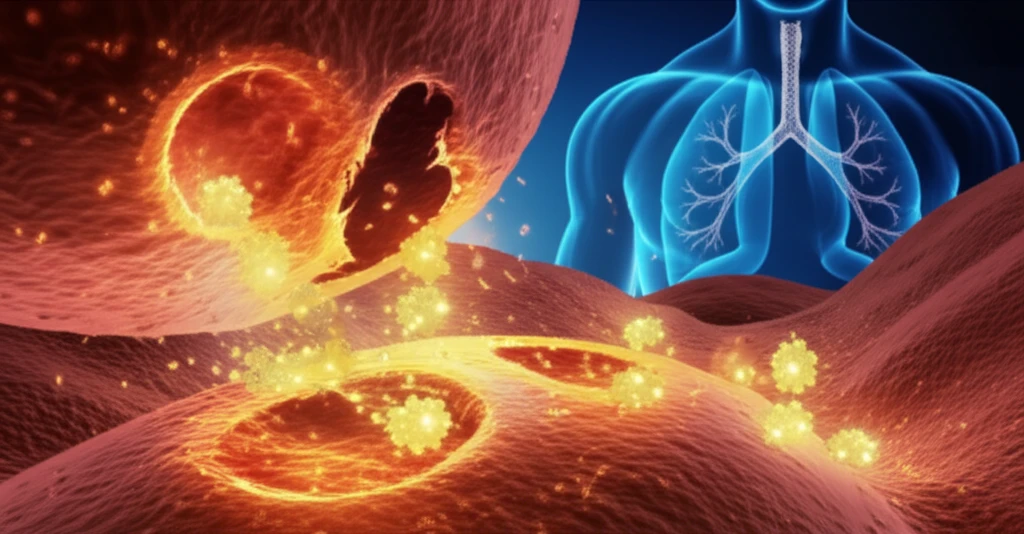
Microscopic view of airway cells healing with tissue factor molecules.

Cracking the Code: How Tissue Factor Could Revolutionize Wound Healing

"New research unveils the unexpected role of tissue factor in accelerating airway repair, offering hope for chronic respiratory conditions."


For decades, tissue factor (TF) has been primarily recognized as the trigger that sets off the coagulation cascade, essential for blood clotting. However, groundbreaking research is rewriting this narrative, revealing TF as a key player in a surprising new arena: wound healing, particularly within the delicate environment of our airways.

A recent study from researchers at Virginia Commonwealth University is challenging our understanding of TF. They've uncovered that airway epithelial cells, the cells lining our respiratory tracts, release TF in response to inflammatory stimuli. This release appears to be a critical part of the body's natural repair process, opening exciting new avenues for treating chronic respiratory conditions.

The implications of this discovery are vast. By understanding how TF influences wound healing at a cellular level, we can potentially develop targeted therapies to accelerate recovery from airway injuries, reduce inflammation, and even combat the persistent remodeling that occurs in diseases like asthma. This article delves into the details of this groundbreaking research and explores its potential to transform respiratory medicine.

The Unexpected Second Life of Tissue Factor: From Clotting to Cell Repair

Microscopic view of airway cells healing with tissue factor molecules.

Tissue factor (TF) is a protein naturally produced by various cells in the body, including those lining blood vessels and airways. Its primary role has long been understood to be initiating blood coagulation, a process vital for stopping bleeding when an injury occurs. When blood vessel damage happens TF comes into contact with a blood coagulation protein called factor VII, activating it, and starting a chain reaction that results in thrombin production and clot formation.

The study highlights that TF levels increase when airway cells are exposed to lipopolysaccharide (LPS), a potent inflammatory trigger often found in bacterial infections. This increase was observed particularly in growing, undifferentiated cells, suggesting that TF's role in repair is most active during cell proliferation and tissue regeneration.

  • Inflammation and TF Release: The presence of inflammatory stimuli, such as LPS, prompts airway epithelial cells to release TF.
  • MEK/ERK Signaling Pathway: The release of TF is mediated by the MEK/ERK signaling pathway, a crucial component of cell growth and response to external stimuli.
  • TGF-β Involvement: Transforming growth factor-beta (TGF-β), a protein involved in tissue remodeling, also plays a role in TF release and wound healing.
  • TFPI Impact: Tissue factor pathway inhibitor (TFPI), a natural inhibitor of TF, slows down cell growth and wound repair, highlighting the delicate balance required for effective healing.
The researchers further demonstrated that TF promotes wound healing in airway epithelial cells. When cells were injured, the presence of TF accelerated the healing process, while inhibiting TF slowed down repair. This indicates that TF plays an active role in facilitating the closure of wounds and restoring the integrity of the airway lining. This study reveals that differentiated NHBE cells uniformly scratched across the midline, regrew differently when exposed to TF or TFPI compared with the control group (P < .05) (Fig 6). After 55 h, those cells exposed to 500 pg/mL of TF had grown to a mean of 90% confluence within the scratch. In contrast, those cells exposed to 1 ng/mL of TFPI had grown to a mean of 32% confluence within the scratch after 55 h. The control group had grown to a mean 71% of confluence at the same time point.

A New Direction for Respiratory Therapies

These findings mark a significant step forward in our understanding of airway biology and offer a promising new direction for developing therapies for respiratory diseases. By targeting TF and its related pathways, researchers hope to create treatments that can effectively promote airway repair, reduce chronic inflammation, and improve the lives of individuals suffering from conditions like asthma, chronic obstructive pulmonary disease (COPD), and other respiratory ailments.

About this Article -

This article was crafted using a human-AI hybrid and collaborative approach. AI assisted our team with initial drafting, research insights, identifying key questions, and image generation. Our human editors guided topic selection, defined the angle, structured the content, ensured factual accuracy and relevance, refined the tone, and conducted thorough editing to deliver helpful, high-quality information.See our About page for more information.

Everything You Need To Know

1

What exactly is Tissue Factor, and what are its known functions?

Tissue Factor (TF) is a protein that has long been recognized for its role in initiating blood coagulation, which is essential for stopping bleeding. Recent research has revealed that TF also plays a significant role in wound healing, particularly in the airways. When blood vessel damage occurs, TF interacts with Factor VII, a blood coagulation protein, starting a cascade of reactions that lead to thrombin production and clot formation.

2

Why is the release of Tissue Factor important in the context of airway wound healing?

The release of Tissue Factor (TF) is important because it plays a crucial role in the body's natural repair processes within the airways. When airway epithelial cells are exposed to inflammatory stimuli, such as lipopolysaccharide (LPS), they release TF. This release helps accelerate wound healing and restore the integrity of the airway lining. Tissue Factor's ability to promote cell proliferation and tissue regeneration makes it a key factor in recovery from airway injuries and reducing inflammation.

3

What is the role of the MEK/ERK signaling pathway in Tissue Factor release?

The MEK/ERK signaling pathway mediates the release of Tissue Factor (TF). The MEK/ERK signaling pathway is a critical part of cell growth and response to external stimuli. When the MEK/ERK signaling pathway is activated, it prompts the release of TF from airway epithelial cells, contributing to the wound healing process. Understanding this pathway allows researchers to target it and potentially develop therapies to promote airway repair and reduce chronic inflammation.

4

How does Transforming growth factor-beta (TGF-β) affect Tissue Factor and wound healing?

Transforming growth factor-beta (TGF-β) is a protein that is involved in tissue remodeling and also plays a role in Tissue Factor (TF) release and wound healing. TGF-β influences the release of TF and affects the overall process of wound repair in the airways. Manipulating TGF-β levels could potentially modulate TF release and improve outcomes in chronic respiratory conditions. The researchers showed that differentiated NHBE cells uniformly scratched across the midline, regrew differently when exposed to TF or TFPI compared with the control group (P < .05).

5

What is Tissue Factor Pathway Inhibitor (TFPI), and how does it relate to Tissue Factor's role in wound healing?

Tissue Factor Pathway Inhibitor (TFPI) is a natural inhibitor of Tissue Factor (TF). TFPI slows down cell growth and wound repair, which highlights the delicate balance required for effective healing. While TF promotes wound healing, TFPI acts as a counterbalance to prevent excessive clotting and maintain proper tissue function. Understanding the interaction between TF and TFPI is essential for developing targeted therapies that can effectively promote airway repair without causing unwanted side effects.

Newsletter Subscribe

Subscribe to get the latest articles and insights directly in your inbox.