
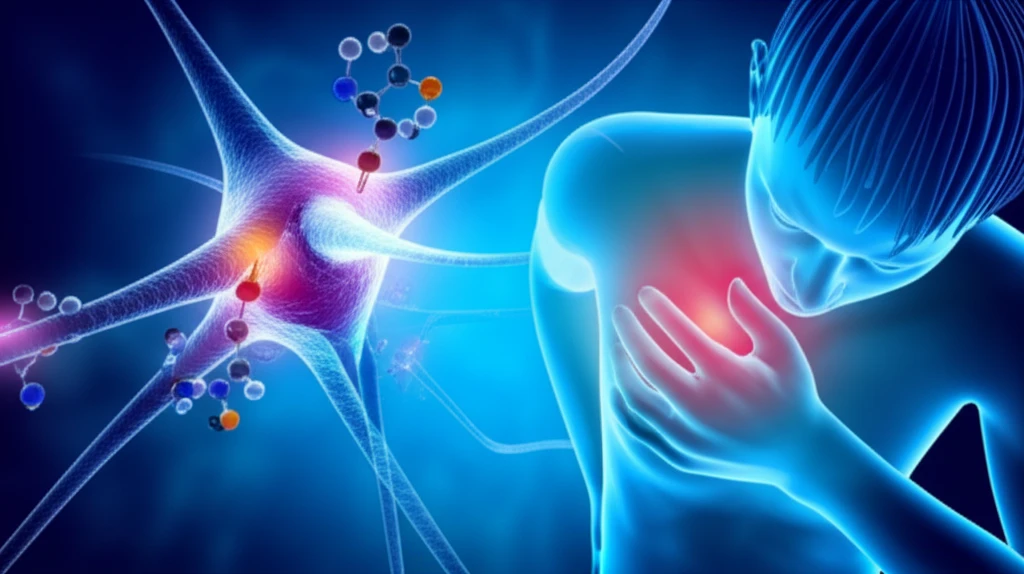
Cracking the Code: How Morphine Tolerance Changes Your Brain

"New research sheds light on the hidden mechanisms behind morphine tolerance, offering hope for more effective pain management."
Morphine, a potent pain reliever, is a cornerstone in managing severe pain. However, its long-term use often leads to tolerance, where the drug's effectiveness diminishes, requiring higher doses to achieve the same pain relief. This phenomenon not only reduces the drug's utility but also increases the risk of side effects and dependence, creating a significant challenge for patients and healthcare providers alike.
The quest to understand why morphine tolerance develops has led researchers to investigate complex interactions within the central nervous system. Key players in this process are the metabotropic glutamate receptor 5 (mGluR5) and the N-methyl-D-aspartate (NMDA) receptor, both crucial for nerve signal transmission and brain plasticity. Recent studies suggest that changes in these receptors contribute significantly to the development of morphine tolerance.
A groundbreaking study published in "Biomedicine & Pharmacotherapy" has now uncovered new insights into these receptor dynamics. The research focuses on how mGluR5 signaling influences NMDA receptor subunits during the development of morphine-induced antinociceptive tolerance (the body's reduced response to pain relief) in the mouse cortex. By understanding these intricate mechanisms, scientists hope to pave the way for more effective and targeted pain management strategies that minimize tolerance and enhance patient outcomes.
Decoding the Science: mGluR5 and NMDA Receptors in Morphine Tolerance
The study, conducted by researchers at Shanghai Jiao Tong University, delves into the interplay between mGluR5 and NMDA receptors in the context of chronic morphine exposure. The team used a combination of genetically modified mice and detailed biochemical analyses to dissect the specific roles of these receptors in the development of tolerance. By manipulating the link between mGluR5 and NMDAR signaling, they aimed to identify potential therapeutic targets for preventing or reversing morphine tolerance.
- Chronic Morphine Increases Receptor Expression: The study found that repeated morphine treatment increases the total expression of mGluR5 and the NR2A subunit of the NMDA receptor in the cortex.
- Enhanced Phosphorylation: Chronic morphine also enhances the phosphorylation of NR2B, another key subunit of the NMDA receptor. Phosphorylation can change the way a protein functions.
- mGluR5 Knockout Prevents Tolerance: Genetically modified mice lacking mGluR5 showed reduced morphine-induced tolerance and thermal hyperalgesia (increased sensitivity to heat). They also had reduced phosphorylation of NR2B.
- Shank3's Role: The researchers also looked at Shank3 AC mice, which lack a normal connection between mGluR5 and NMDAR. These mice showed similar analgesic effects to morphine as normal mice, but they also didn't have changes to NMDAR subunits like the other mice.
Hope for the Future: New Pathways for Pain Relief
This research offers a promising avenue for developing new strategies to combat morphine tolerance. By targeting mGluR5-mediated PKC signaling, scientists may be able to design drugs that prevent the changes in NMDA receptor function that lead to tolerance. Ultimately, this could lead to more effective and sustainable pain management options for patients who rely on opioid medications.