
Cracking Chirality: How a New ZIF Membrane Could Revolutionize Chemical Separations

"Scientists have developed a homochiral zeolitic imidazolate framework (ZIF) membrane that significantly improves chiral separation, opening doors for more efficient drug manufacturing and food chemistry."
Chirality, the property of molecules existing as non-superimposable mirror images, plays a pivotal role in various fields, from medicine and life sciences to food chemistry and drug manufacturing. Each enantiomer of a chiral molecule can exhibit vastly different biological activities, making the ability to separate them crucial. Traditional methods such as spontaneous crystallization and enzymatic kinetic resolution are often complex and energy-intensive.
In recent years, metal-organic frameworks (MOFs) have emerged as promising materials for molecular separation due to their tunable pore sizes, high surface areas, and good adsorption properties. However, creating MOF membranes with the ability to efficiently separate chiral molecules has remained a significant challenge, requiring precise control over the introduction of chiral functionalities.
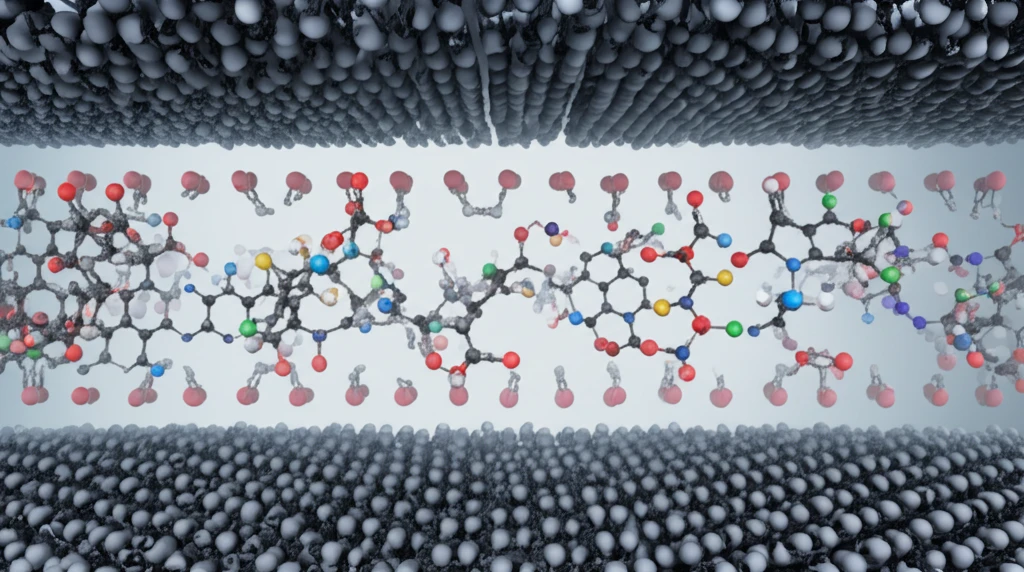
Now, researchers have announced a breakthrough in the creation of a homochiral zeolitic imidazolate framework-8 (ZIF-8) membrane, modified with the natural amino acid L-histidine (L-His). This innovative membrane demonstrates exceptional selectivity in separating the enantiomers of 1-phenylethanol, achieving a high enantiomeric excess value of up to 76%.
ZIF Membranes as a Growing Solution for Water Treatment
Zeolitic imidazolate framework (ZIF) membranes are increasingly positioned as a solution for water pollutant treatment, offering high-efficiency adsorption, good selectivity, stability, and easy recyclability. These properties make them a practical option for removing contaminants from wastewater streams. The emphasis on recyclability and stability points to the technology's potential for sustained industrial use rather than one-off applications.
From Adsorbents to Membranes: The Conventional Toolkit
Chiral separation has long relied on natural or artificial chiral-based materials used as adsorbents, an approach that has attracted significant attention for both basic research and industrial applications in analytical chemistry. High-performance liquid chromatography (HPLC) is widely regarded as ideally suited to analyze and separate chiral drugs. These established methods, however, typically depend on specialized stationary phases and adsorbent materials, which motivates the search for membrane-based alternatives.
Bringing Chiral Separation Concepts into the Classroom
Foundational ideas around molecular chirality, including its connections to the chemical origins of life, electron spin, and magnetism, have recently been packaged for a new generation of learners. A Dreyfus Foundation-sponsored short film titled "Cracking Chirality" targets high school and college students as a starting point for discussions on these topics. The effort reflects how chiral chemistry is being reframed from a niche laboratory topic into a broadly accessible scientific story.
The Innovation: L-His-ZIF-8 Membrane
The research team successfully synthesized a homochiral L-His-ZIF-8 membrane using a contra diffusion method, where L-histidine was incorporated into the ZIF-8 framework. This membrane exhibited a remarkable preference for the R-enantiomer of 1-phenylethanol over the S-enantiomer. Selectivity arises from specific interactions between the S-enantiomer and the chiral MOF framework, paving the way for highly efficient chiral separation.
- Energy-dispersive X-ray spectroscopy (EDX) showed the presence of oxygen atoms associated with the carboxy group of L-His.
- Fourier-transform infrared (FTIR) spectroscopy detected adsorption peaks corresponding to the carboxy and amine groups of L-His.
- X-ray photoelectron spectroscopy (XPS) identified the binding energy of the carboxylic group in L-His-ZIF-8.
- Solid-state nuclear magnetic resonance (NMR) revealed additional peaks attributed to L-His.
New ZIF Membranes for High-Efficiency Dye Removal
Recent work reports the successful preparation and evaluation of a new and robust ZIF membrane designed specifically for dye removal capacity. Reviews of recent advances in ZIF membranes highlight their fabrication methods, separation ability, and applications, consistently noting advantages such as high-efficiency adsorption, good selectivity, stability, and easy recyclability. Together these results indicate that ZIF membranes are maturing from laboratory curiosities into evaluated separation tools.
Challenges Facing a Single Separation Strategy
Because chiral separations are demanding, practitioners often treat membrane-based approaches as complementary rather than complete replacements for existing techniques. Membrane separation relies on selective membranes that allow certain enantiomers to pass through while blocking others, an approach that depends heavily on membrane quality and selectivity. The emphasis on complementarity signals that no single method, including membranes, has yet solved all chiral separation challenges on its own.
HPLC Versus Membrane-Based Chiral Separation
HPLC is ideally suited to analyzing and separating chiral drugs, making it a mainstay for analytical and pharmaceutical work. Membrane-based separation offers a contrasting strategy in which selective membranes allow certain enantiomers to pass while blocking others, potentially enabling larger-scale or continuous operation. Innovations in stationary phase materials, including hybrid and bio-based coatings, continue to improve the selectivity, stability, and environmental sustainability of column-based approaches, keeping both routes competitive.
Future Implications and Sustainability
This breakthrough in creating a highly selective homochiral MOF membrane opens up new avenues for chiral separation. The L-His-ZIF-8 membrane demonstrates exceptional selectivity and stability, making it a promising candidate for practical applications in the pharmaceutical, chemical, and food industries. It represents a significant step toward more efficient, sustainable, and cost-effective chiral separation processes, potentially revolutionizing the way we produce essential compounds and drugs. The successful incorporation of a natural amino acid into the MOF framework highlights the potential for designing even more sophisticated and biocompatible membranes for a wide range of separation challenges.
A Versatile Platform Beyond Water Treatment
The versatility of ZIF membranes extends across separation contexts, including gas separation where ZIF-8 can be synthesized as a membrane on a porous alumina support and has proven effective at separating CO2 from flue gas streams. The same advantages that support water pollutant treatment, including selectivity and stability, underpin this gas-separation performance. This breadth positions ZIF membranes as a general molecular-sieving platform rather than a single-purpose material.
Greener, More Selective Separation Materials
Ongoing innovation in stationary phase materials, including hybrid and bio-based coatings, is improving selectivity, stability, and environmental sustainability in chiral separation. These advances reflect a broader push toward separation technologies that perform better while leaving a smaller environmental footprint. ZIF membranes, with their tunable imidazolate frameworks, are positioned to contribute to this trajectory as fabrication and application methods continue to mature.
From Analytical Chemistry to Industrial Scale
Chiral separation has drawn attention for both basic research and industrial applications in analytical chemistry, underscoring its relevance across the scientific and commercial spectrum. The field's ongoing challenge is translating lab-proven selectivity into robust, scalable, and recyclable processes. ZIF membranes address part of this challenge through their stability and easy recyclability, though integration with existing analytical workflows remains an open question.
Making Chirality a Public Scientific Conversation
Outreach efforts such as the Dreyfus Foundation-sponsored film "Cracking Chirality" aim to make molecular chirality, electron spin, and magnetism accessible starting points for discussion among high school and college students. Beyond the laboratory, the ability to separate molecules selectively underpins cleaner water, purer pharmaceuticals, and more efficient gas handling. These real-world impacts give the technical advances a tangible human dimension.