
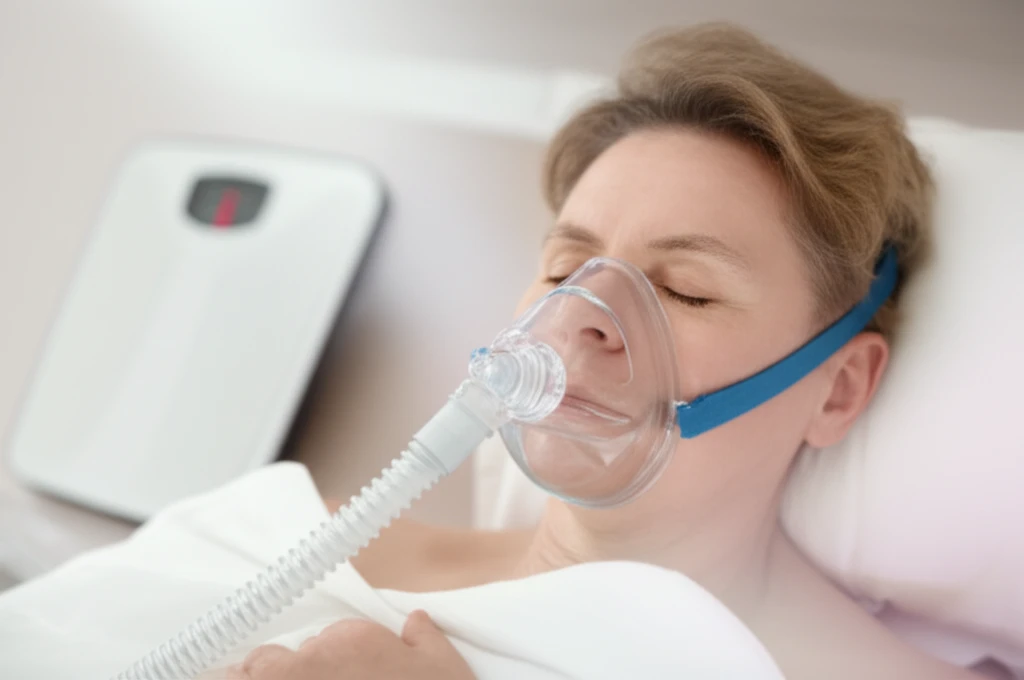
Illustration of a person sleeping with a CPAP machine, the background has a scale, showing the link between sleep apnea treatment and weight, promoting the balance in health.

CPAP and Weight Gain: Decoding the Link and What It Means for Your Health

"Unpacking the Relationship Between Sleep Apnea Treatment and Your Waistline"


If you're one of the millions using a CPAP machine to treat sleep apnea, you might be wondering about a surprising side effect: weight gain. While CPAP therapy is crucial for managing sleep apnea, a recent study has brought to light the connection between this treatment and changes in body weight.

This article dives into the science behind CPAP therapy, exploring how it influences weight and metabolic function. We'll unpack the latest research, answer your burning questions, and offer practical tips. The goal is to provide clarity and actionable advice for anyone navigating this complex issue.

We'll review how CPAP therapy affects your weight, potential contributing factors, and the bigger picture of metabolic health. Armed with this information, you can have informed conversations with your doctor and make smart choices to improve your overall well-being.

Understanding the CPAP-Weight Gain Connection: What the Science Says

Illustration of a person sleeping with a CPAP machine, the background has a scale, showing the link between sleep apnea treatment and weight, promoting the balance in health.

A recent meta-analysis of multiple studies, published in the Journal of Sleep Research, examined the effects of continuous positive airway pressure (CPAP) on weight and metabolic function. The study, a meta-analysis of data from several randomized, placebo-controlled trials, investigated whether CPAP therapy itself leads to weight gain, and if the dosage of therapy plays a role.

The study found that those using CPAP therapy experienced a slight increase in weight compared to those using a placebo. Furthermore, the analysis revealed that higher CPAP usage was associated with more weight gain. However, the study also provided important nuances to these findings.

  • Weight Gain is Modest: The increase in weight associated with CPAP therapy was, on average, relatively small.
  • No Metabolic Dysfunction: The weight gain did not appear to cause any adverse metabolic changes, such as changes in blood sugar or cholesterol levels.
  • Focus on Long-Term Health: The main takeaway is that while there's a slight weight impact, it doesn't necessarily signal a threat to overall metabolic health.
It is crucial to remember that this study looked at averages. Individual experiences can vary. Understanding the contributing factors behind weight fluctuations is crucial for a comprehensive approach.

The Bottom Line: Balancing CPAP Therapy with Your Health Goals

The research suggests that while CPAP therapy may be linked to minor weight gain, it doesn't appear to pose a major threat to metabolic health. If you're using CPAP and concerned about weight changes, focus on a well-rounded approach: consult your doctor, maintain a healthy diet, engage in regular physical activity, and prioritize overall well-being. This approach will ensure that you get the full benefits of CPAP while taking care of your health in the long run.

About this Article -

This article was crafted using a human-AI hybrid and collaborative approach. AI assisted our team with initial drafting, research insights, identifying key questions, and image generation. Our human editors guided topic selection, defined the angle, structured the content, ensured factual accuracy and relevance, refined the tone, and conducted thorough editing to deliver helpful, high-quality information.See our About page for more information.

This article is based on research published under:

DOI-LINK: 10.1111/jsr.12788, Alternate LINK

Title: Dose‐Dependent Effects Of Continuous Positive Airway Pressure For Sleep Apnea On Weight Or Metabolic Function: Individual Patient‐Level Clinical Trial Meta‐Analysis

Subject: Behavioral Neuroscience

Journal: Journal of Sleep Research

Publisher: Wiley

Authors: Camilla M. Hoyos, Swati M. Murugan, Kerri L. Melehan, Brendon J. Yee, Craig L. Phillips, Roo Killick, Elizabeth A. Cayanan, Keith K. Wong, Peter Y. Liu, Ronald R. Grunstein, Nathaniel S. Marshall

Published: 2018-11-19

Everything You Need To Know

1

Does CPAP therapy directly cause significant weight gain, and what does the research suggest about this link?

Research indicates that CPAP therapy is associated with a modest increase in weight. A meta-analysis published in the Journal of Sleep Research found that individuals using CPAP therapy experienced a slight weight increase compared to those using a placebo. The study also suggested that higher CPAP usage was associated with more weight gain, but the weight increase was relatively small and did not appear to cause adverse metabolic changes, such as altered blood sugar or cholesterol levels. It's important to note that individual experiences can vary, and the focus should be on balancing CPAP benefits with overall health goals.

2

If I'm using CPAP, what steps can I take to manage my weight effectively without compromising my sleep apnea treatment?

To effectively manage your weight while using CPAP therapy, it's recommended to adopt a well-rounded approach. Consult your doctor for personalized advice, maintain a healthy diet, engage in regular physical activity, and prioritize overall well-being. This ensures you receive the full benefits of CPAP while proactively managing your health. Remember, the study in the Journal of Sleep Research indicated that weight gain associated with CPAP doesn't necessarily signal a threat to metabolic health, but a balanced approach is always beneficial.

3

What are the potential metabolic implications of weight gain associated with CPAP, and how should I monitor my metabolic health?

The study published in the Journal of Sleep Research indicated that the slight weight gain associated with CPAP therapy did not appear to cause adverse metabolic changes, such as alterations in blood sugar or cholesterol levels. However, it's still prudent to monitor your metabolic health. Regular check-ups with your doctor, including blood tests to assess glucose and cholesterol levels, can help ensure that you maintain overall metabolic well-being. Pay attention to diet and exercise as well to promote a healthy metabolism, and address any concerns with your healthcare provider.

4

Besides weight gain, are there any other potential side effects associated with CPAP therapy that I should be aware of, and how can I mitigate them?

While the focus is often on weight gain, CPAP therapy can have other side effects such as dry mouth, nasal congestion, skin irritation from the mask, and aerophagia (swallowing air). To mitigate dry mouth and nasal congestion, consider using a CPAP machine with a heated humidifier or a nasal saline spray. Ensure your mask fits properly to prevent skin irritation, and adjust the machine's pressure settings if you experience aerophagia. Consulting with your healthcare provider or a sleep specialist can help you address and manage any side effects effectively.

5

How does the effectiveness of CPAP in treating sleep apnea relate to the observed weight changes, and what is the long-term perspective on using CPAP for overall health?

CPAP therapy is highly effective in treating sleep apnea by providing continuous positive airway pressure, which keeps the airways open during sleep. This reduces apneas and hypopneas, improving sleep quality and reducing the risk of associated health issues like cardiovascular problems. While some individuals may experience minor weight gain, the benefits of CPAP in managing sleep apnea and improving overall health generally outweigh this concern. The study in the Journal of Sleep Research emphasized that this minor weight impact doesn't necessarily signal a threat to overall metabolic health, underscoring the importance of focusing on long-term health goals by balancing CPAP therapy with a healthy lifestyle.

Newsletter Subscribe

Subscribe to get the latest articles and insights directly in your inbox.