
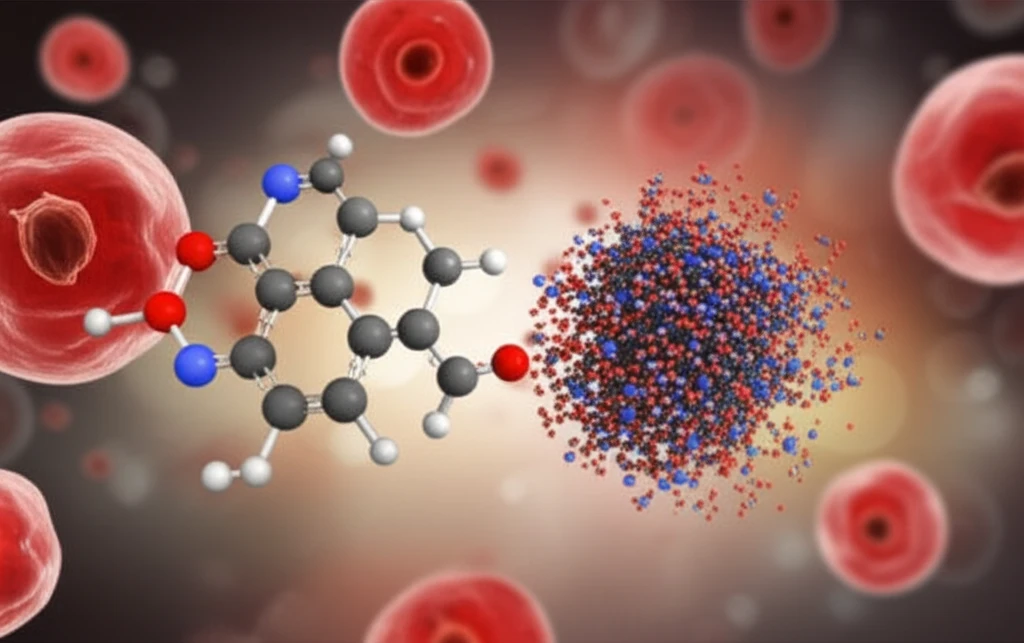
Fusidic acid transforming cancer cells into healthy cells, symbolizing hope.

Could This New Drug Be the Answer? Unlocking Fusidic Acid's Potential in Cancer Treatment

"Scientists discover novel fusidic acid derivatives that show promise in fighting cancer, offering hope for more effective and less toxic treatments."


Cancer remains one of the most formidable health challenges worldwide. Despite significant advancements in treatment, the quest for therapies that are both effective and gentle on the body continues. Traditional treatments like chemotherapy often come with harsh side effects, spurring researchers to explore alternative approaches.

Fusidic acid (FA), an antibiotic known for its ability to combat bacterial infections, has now emerged as a surprising contender in the fight against cancer. While FA itself has been well-studied and deemed non-toxic, scientists are now exploring how modified versions of this compound can target and destroy cancer cells.

This article delves into a recent study that uncovers the potential of novel fusidic acid derivatives in cancer treatment. We'll explore how these modified compounds work, what makes them unique, and what this discovery could mean for the future of cancer therapy.

What Makes These Fusidic Acid Derivatives Different?

Fusidic acid transforming cancer cells into healthy cells, symbolizing hope.

The key to this breakthrough lies in the strategic modification of the fusidic acid molecule. Researchers synthesized a series of novel FA derivatives, focusing on introducing amino-terminal groups at the 3-hydroxyl position. This modification proved crucial, as it significantly enhanced the compounds' ability to combat cancer cells.

The study involved creating and testing various FA derivatives against several cancer cell lines, including Hela (cervical cancer), KBV (drug-resistant oral cancer), U87 (glioma), and MKN45 (gastric cancer). The goal was to identify compounds that could effectively inhibit cancer cell growth without causing significant harm to healthy cells.

  • Enhanced Anti-Tumor Activity: The modified FA derivatives demonstrated superior anti-tumor activity compared to the original FA compound.
  • Targeted Action: These derivatives were designed to specifically target cancer cells, reducing the potential for widespread toxicity.
  • Apoptosis Induction: Compound 4, in particular, was found to induce apoptosis (programmed cell death) in Hela cells, effectively eliminating cancer cells.
  • Protein Synthesis Inhibition: The derivatives, especially compound 4, could inhibit protein synthesis in cancer cells, disrupting their ability to grow and proliferate.
  • In Vivo Efficacy: Compound 4 showed promising results in in vivo studies, effectively reducing tumor growth in xenograft models without apparent toxicity.
Among the synthesized compounds, one stood out: Compound 4. This novel derivative exhibited remarkable anti-proliferative activity against a range of cancer cell lines. Further investigation revealed that Compound 4 induced apoptosis in Hela cells by increasing the ratio of cells in the Sub-G0/G1 phase and decreasing the synthesis of new proteins.

A Promising Step Forward

This research marks a significant step forward in the development of more effective and less toxic cancer treatments. By modifying fusidic acid, scientists have unlocked new possibilities for targeting cancer cells and disrupting their growth. While further studies are needed to fully understand the potential of these compounds, the initial results offer a beacon of hope for the future of cancer therapy.

About this Article -

This article was crafted using a human-AI hybrid and collaborative approach. AI assisted our team with initial drafting, research insights, identifying key questions, and image generation. Our human editors guided topic selection, defined the angle, structured the content, ensured factual accuracy and relevance, refined the tone, and conducted thorough editing to deliver helpful, high-quality information.See our About page for more information.

Everything You Need To Know

1

What is fusidic acid, and why is it being researched for cancer treatment?

Fusidic acid is an antibiotic that is now being explored in modified forms to potentially treat cancer. The original fusidic acid is known to be non-toxic, and researchers are modifying its molecular structure to target and destroy cancer cells. This is significant because it opens up new avenues for cancer treatment using a compound already established as safe.

2

How are these new fusidic acid derivatives different from the original fusidic acid?

The novel fusidic acid derivatives are different because they have been modified with amino-terminal groups at the 3-hydroxyl position. This change enhances their ability to combat cancer cells by improving anti-tumor activity and allowing them to target cancer cells more specifically. Additionally, these derivatives can induce apoptosis (programmed cell death) and inhibit protein synthesis in cancer cells.

3

What is Compound 4, and what makes it stand out in this research?

Compound 4 is a specific fusidic acid derivative that has shown particular promise. It exhibits strong anti-proliferative activity against various cancer cell lines and can induce apoptosis in Hela cells. Compound 4 increases the ratio of cells in the Sub-G0/G1 phase and decreases the synthesis of new proteins, disrupting cancer cell growth. In in vivo studies, it has also demonstrated effectiveness in reducing tumor growth without apparent toxicity.

4

What is apoptosis, and why is it important in the context of cancer treatment?

Apoptosis, or programmed cell death, is crucial in cancer treatment because it is a natural process that eliminates damaged or unnecessary cells. Cancer cells often evade apoptosis, allowing them to grow uncontrollably. By inducing apoptosis in cancer cells, treatments like Compound 4 can effectively eliminate these cells, halting tumor growth and spread. This targeted approach is important for minimizing harm to healthy cells.

5

What cancer cell lines were used in the study, and why were they important?

The study used various cancer cell lines such as Hela (cervical cancer), KBV (drug-resistant oral cancer), U87 (glioma), and MKN45 (gastric cancer) to test the efficacy of the fusidic acid derivatives. These cell lines represent different types of cancers, allowing researchers to assess how broadly effective the derivatives might be. By testing against these lines, researchers can identify derivatives with the most potential for development into cancer treatments.

Newsletter Subscribe

Subscribe to get the latest articles and insights directly in your inbox.