
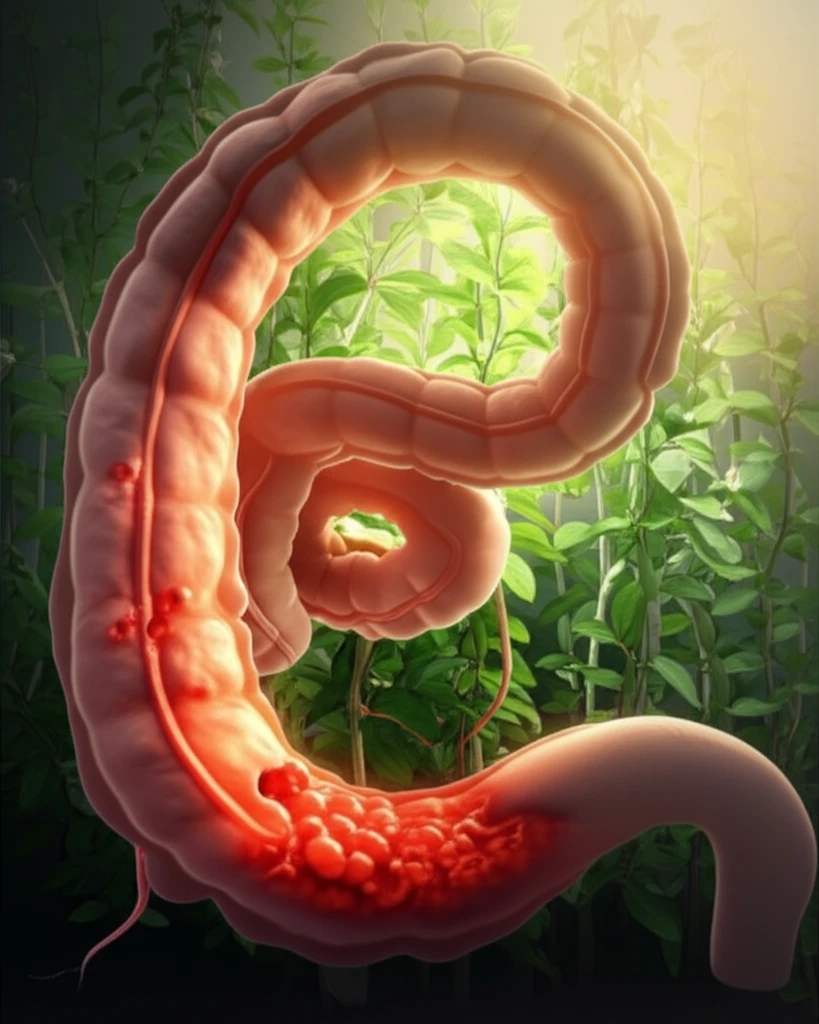
Could This Chinese Herb Be the Answer to Ulcerative Colitis?

"New research explores how a pectic polysaccharide from Rauvolfia verticillata could offer a natural way to manage ulcerative colitis symptoms by targeting key inflammatory pathways."
Ulcerative colitis (UC) is a chronic inflammatory condition affecting millions worldwide, characterized by inflammation and ulcers in the colon and rectum. While current treatments offer some relief, they often come with significant side effects and aren't always effective for everyone. This has led researchers to explore alternative, natural therapies that can better manage UC symptoms and improve patients' quality of life.
Traditional Chinese medicine has long utilized herbal remedies for various ailments, including digestive disorders. One such herb, Rauvolfia verticillata, has shown promise due to its potential anti-inflammatory properties. Scientists are now investigating the specific compounds within this herb, particularly a type of complex carbohydrate called pectic polysaccharide (PP), to understand its effects on UC.
This article delves into recent research that examines how pectic polysaccharides extracted from Rauvolfia verticillata can alleviate ulcerative colitis symptoms by modulating key inflammatory pathways in the body. We'll explore the science behind this natural approach and discuss its potential implications for future UC treatments.
Unlocking the Potential of Rauvolfia verticillata: A Natural Approach to UC
A recent study investigated the effects of pectic polysaccharides (PP) extracted from Rauvolfia verticillata on ulcerative colitis (UC) in mice. The research aimed to understand how PP influences the disease and whether it could offer a viable treatment option. Researchers focused on the impact of PP on key inflammatory pathways known as MAPKs and NF-κB, which play a crucial role in the development and progression of UC.
- Disease Activity Index (DAI): A measure of overall disease severity, including weight loss, stool consistency, and bleeding.
- Physical Activity: General activity levels of the mice.
- Histological Scores: Microscopic examination of colon tissue to assess inflammation and damage.
- Inflammatory Markers: Levels of key inflammatory molecules, such as TNF-α and IL-6.
- MAPK and NF-κB Pathways: Activity of these signaling pathways in colon tissue and immune cells.
Implications and Future Directions
This study provides compelling evidence that pectic polysaccharides from Rauvolfia verticillata offer a promising natural approach to managing ulcerative colitis. By modulating the MAPKs and NF-κB pathways, PP can effectively reduce inflammation and alleviate UC symptoms in mice.
While these results are encouraging, it's important to note that this research was conducted on animal models. Further studies are needed to confirm the efficacy and safety of PP in human patients with UC. Clinical trials will be crucial to determine the optimal dosage, delivery method, and potential side effects of this natural compound.
If future research confirms these findings, pectic polysaccharides from Rauvolfia verticillata could represent a valuable addition to the UC treatment landscape, offering a more natural and potentially less harmful alternative to existing medications. This could significantly improve the lives of individuals struggling with this chronic inflammatory condition.