
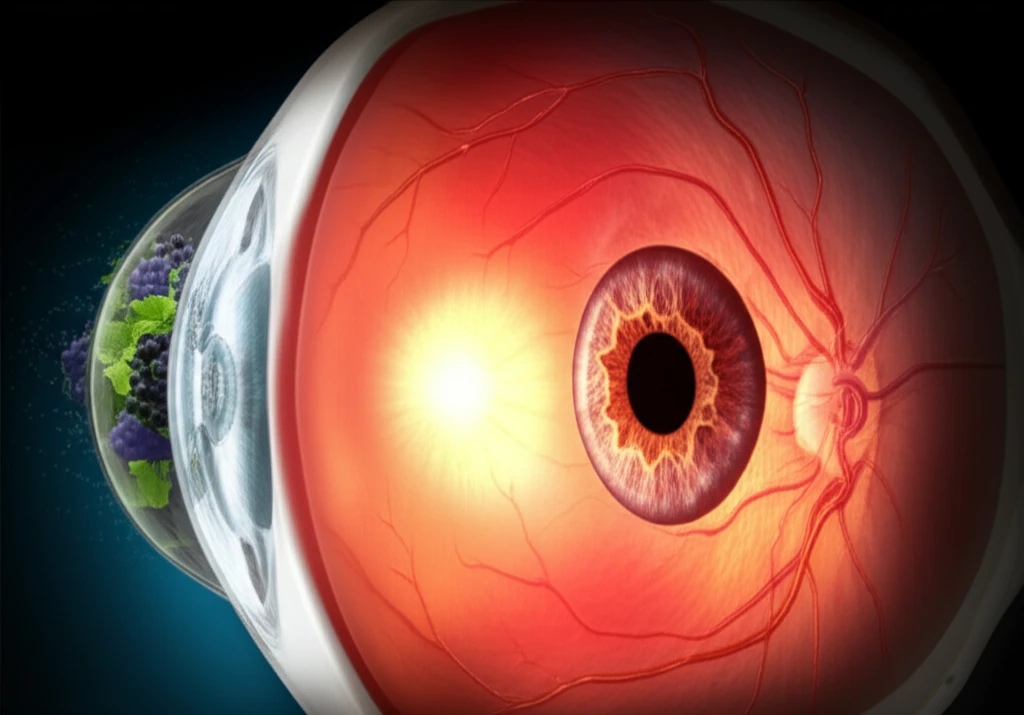
A digital illustration showing a healthy eye with the retinal cells surrounded by grape seed extract, as a shield to represent the protective properties of thioredoxin.

Could a Grape Seed Extract Hold the Key to Preventing Diabetic Retinopathy?

"New research suggests that thioredoxin, boosted by a grape seed extract, may offer a potential shield against vision loss linked to diabetes."


The world of medical breakthroughs is constantly evolving, with researchers tirelessly searching for innovative solutions to combat debilitating diseases. Among these, diabetic retinopathy, a leading cause of blindness among adults, has been the focus of extensive study. Recent findings have illuminated a promising avenue: the potential of a natural compound derived from grape seeds to protect against the progression of this sight-threatening condition. This breakthrough offers renewed hope for those grappling with diabetes and the associated risks to their vision.

Diabetic retinopathy, characterized by damage to the blood vessels in the retina, is often considered a microvascular disease. However, recent research has unveiled a more complex reality, suggesting that neurodegenerative processes also play a significant role. This insight has prompted a deeper dive into understanding the molecular mechanisms at play and, more importantly, identifying potential therapeutic interventions to prevent and treat this condition.

This article explores the latest findings on the anti-apoptotic effects of a grape seed proanthocyanidin extract (GSPE). It delves into how GSPE may upregulate the expression of thioredoxin (Trx) to potentially prevent and treat neurodegenerative diseases, especially diabetic retinopathy. This exciting research paves the way for a fresh perspective on managing diabetes-related eye complications, and other neurodegenerative diseases.

Understanding Diabetic Retinopathy: A Growing Concern

A digital illustration showing a healthy eye with the retinal cells surrounded by grape seed extract, as a shield to represent the protective properties of thioredoxin.

Diabetic retinopathy is a condition that arises due to prolonged high blood sugar levels, which can damage the delicate blood vessels in the retina. This damage can lead to vision impairment and, in severe cases, blindness. The initial stages of diabetic retinopathy may not present any noticeable symptoms, making regular eye check-ups essential, especially for those with diabetes. As the disease progresses, symptoms can include blurred vision, floaters, and eventually, significant vision loss.

Beyond the well-known microvascular damage, recent research has also identified neurodegenerative aspects in the development of diabetic retinopathy. This means that the disease not only affects the blood vessels but also leads to the degeneration of nerve cells in the retina. Understanding these dual mechanisms is critical for developing effective strategies to prevent and treat this sight-threatening condition.

  • Microvascular Damage: Damage to the blood vessels in the retina.
  • Neurodegenerative Aspects: Degeneration of nerve cells in the retina.
  • Vision Impairment: Leads to blurred vision, floaters, and potential vision loss.
  • Essential Eye Check-ups: Critical for early detection, particularly for those with diabetes.
The complexity of diabetic retinopathy underscores the need for multifaceted approaches to treatment and prevention. This includes not only managing blood sugar levels but also exploring interventions that can protect the nerve cells in the retina. The exploration of GSPE and its potential benefits is therefore a significant step forward in the ongoing battle against this prevalent disease.

The Road Ahead: Hope and Ongoing Research

The study on GSPE and its impact on diabetic retinopathy is a promising development. While the current research highlights the potential of GSPE, it also emphasizes the need for continued investigation. Future studies could explore optimal dosages, long-term effects, and potential combinations with other treatments. As researchers continue to unravel the complexities of diabetic retinopathy, the hope is that natural compounds like GSPE may become key components of a more comprehensive approach to protecting vision and improving the quality of life for millions around the globe.

About this Article -

This article was crafted using a human-AI hybrid and collaborative approach. AI assisted our team with initial drafting, research insights, identifying key questions, and image generation. Our human editors guided topic selection, defined the angle, structured the content, ensured factual accuracy and relevance, refined the tone, and conducted thorough editing to deliver helpful, high-quality information.See our About page for more information.

Everything You Need To Know

1

What is diabetic retinopathy, and why is it a significant health concern?

Diabetic retinopathy is a sight-threatening condition caused by damage to the blood vessels in the retina due to prolonged high blood sugar levels. It can lead to vision impairment and, in severe cases, blindness. It's a significant health concern because it is a leading cause of blindness among adults, underscoring the need for effective prevention and treatment strategies.

2

How does a grape seed extract (GSPE) potentially help in the fight against diabetic retinopathy?

GSPE, specifically a grape seed proanthocyanidin extract, is being researched for its potential to combat diabetic retinopathy. This extract may upregulate the expression of thioredoxin (Trx). Thioredoxin is a protein that may offer a potential shield against vision loss, thus protecting the retina and mitigating the effects of the disease.

3

Beyond blood vessel damage, what other aspects of diabetic retinopathy are being researched?

Recent research highlights the neurodegenerative aspects of diabetic retinopathy. This means that besides damaging blood vessels in the retina (microvascular damage), the disease also involves the degeneration of nerve cells in the retina. This dual mechanism is critical for developing effective treatment and prevention strategies, broadening the scope of research beyond traditional treatments.

4

What are the main symptoms of diabetic retinopathy, and why are regular eye check-ups essential for people with diabetes?

The symptoms of diabetic retinopathy include blurred vision, floaters, and eventual significant vision loss. However, in its initial stages, the disease may not present any noticeable symptoms. Therefore, regular eye check-ups are essential, especially for those with diabetes, for early detection and timely intervention to prevent vision loss.

5

What future research directions are anticipated for grape seed extract (GSPE) and its role in treating diabetic retinopathy?

Future research will explore the optimal dosages, long-term effects, and potential combinations of GSPE with other treatments. The goal is to refine the understanding of how GSPE, through the upregulation of thioredoxin, can be a key component of a comprehensive approach to protect vision and improve the quality of life for individuals affected by diabetic retinopathy. This involves continued investigation to validate and optimize its use in managing the condition effectively.

Newsletter Subscribe

Subscribe to get the latest articles and insights directly in your inbox.