
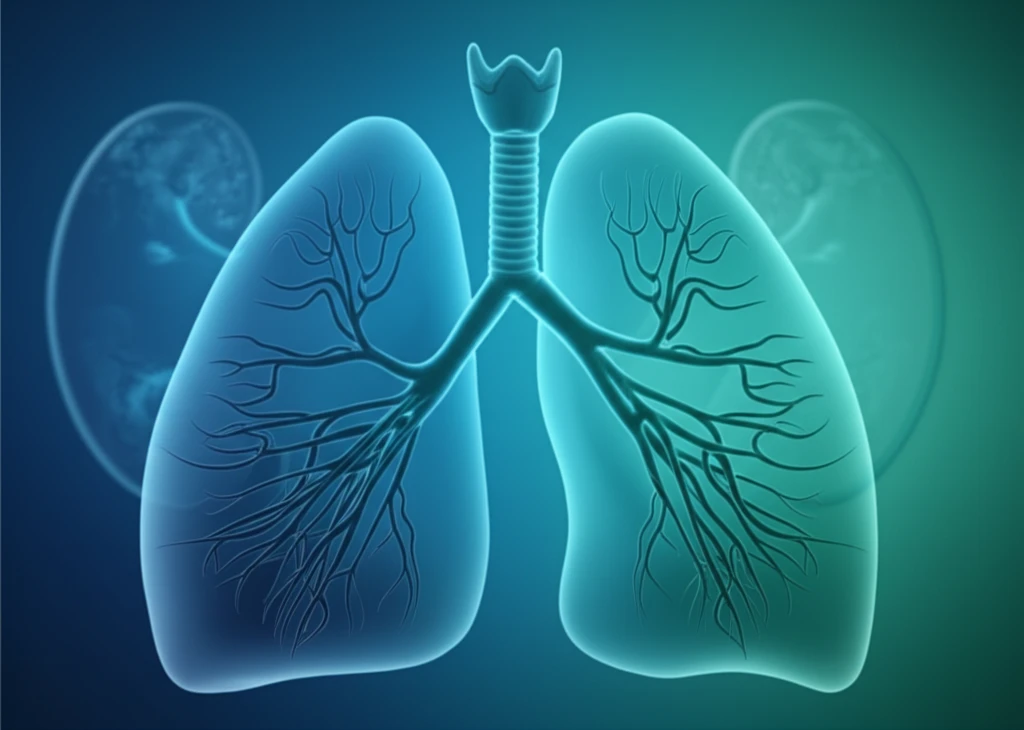
Surreal illustration of lungs and blood vessels with a kidney shape in the background, representing the connection between COPD and cardiovascular health.

COPD and Hidden Risks: How Microalbuminuria Could Be a Game Changer

"New research reveals a surprising link between COPD, kidney function, and heart health, offering a potential early warning system for cardiovascular risks."


Chronic Obstructive Pulmonary Disease (COPD) is more than just a lung condition; it's a complex disease with effects that reach far beyond the respiratory system. Defined by persistent airflow limitation, COPD is often associated with significant extra-pulmonary effects, impacting the severity and management of the disease. Understanding these broader implications is crucial for comprehensive patient care.

While COPD is known for its respiratory symptoms, cardiovascular disease emerges as a leading cause of mortality in these patients, especially those with mild to moderate COPD. Detecting subclinical cardiovascular abnormalities in daily practice hinges on employing sensitive diagnostic tools. This is where the concept of microalbuminuria (MAB) comes into play, offering a new lens through which to view and manage COPD.

Recent research has explored the relationship between microalbuminuria (MAB) and COPD, suggesting MAB as a marker of cardiovascular risk in COPD patients. This article delves into a study that investigates the practical role of microalbuminuria in COPD, its relationship with hypoxemia, and its frequency in stable COPD patients. By understanding this connection, healthcare professionals and patients can work together to identify and mitigate potential cardiovascular risks early on.

What is Microalbuminuria and Why Does It Matter in COPD?

Surreal illustration of lungs and blood vessels with a kidney shape in the background, representing the connection between COPD and cardiovascular health.

Microalbuminuria (MAB) refers to a condition where the kidneys excrete abnormally small amounts of albumin in the urine. Albumin is a protein that should generally stay in the bloodstream. MAB is a sign of endovascular dysfunction, marking increased cardiovascular risk. It is consistently associated with arterial stiffness and worse cardiovascular outcomes in patients with diabetes and hypertension.

In the context of COPD, microalbuminuria suggests that the chronic inflammation and hypoxemia (low blood oxygen) associated with COPD may be affecting the delicate blood vessels in the kidneys and other organs. This connection highlights how COPD's impact extends beyond the lungs, increasing the risk of cardiovascular complications.

  • Early Detection of Cardiovascular Risk: MAB serves as an early indicator of potential heart problems in COPD patients, allowing for timely intervention.
  • Personalized Treatment Strategies: Identifying MAB can help tailor treatment plans to address both respiratory and cardiovascular health.
  • Improved Patient Outcomes: Monitoring MAB may lead to better management of COPD and reduced cardiovascular-related mortality.
The study featured 97 stable COPD patients and 94 age-matched smokers without COPD. Researchers measured urinary albumin levels and various health indicators. The results indicated microalbuminuria was more prevalent in COPD patients than in the control group. Furthermore, lower blood oxygen levels (hypoxemia) were associated with higher microalbuminuria levels in COPD patients. Multivariate analysis identified low oxygen levels as an independent predictor of MAB, even when considering other cardiovascular risk factors.

Taking Control: What Does This Mean for COPD Management?

The study's findings underscore the importance of considering microalbuminuria as a potential marker for cardiovascular risk in COPD patients. Regular screening for MAB, especially in those with hypoxemia, could provide valuable insights into a patient's overall health and guide more comprehensive treatment strategies.

While the determination of MAB is simple, inexpensive, and noninvasive, further research is needed to fully understand its role in COPD management. Longitudinal studies with larger populations are essential to validate these findings and explore the practical implications of MAB screening in diverse clinical settings.

By staying informed about the latest research and working closely with healthcare providers, individuals with COPD can take proactive steps to manage their condition and mitigate potential cardiovascular risks. Incorporating microalbuminuria screening into routine COPD care may ultimately lead to improved patient outcomes and a better quality of life.

About this Article -

This article was crafted using a human-AI hybrid and collaborative approach. AI assisted our team with initial drafting, research insights, identifying key questions, and image generation. Our human editors guided topic selection, defined the angle, structured the content, ensured factual accuracy and relevance, refined the tone, and conducted thorough editing to deliver helpful, high-quality information.See our About page for more information.

This article is based on research published under:

DOI-LINK: 10.4172/2161-105x.1000280, Alternate LINK

Title: Microalbuminuria And Hypoxemia In Patients With Copd

Subject: General Medicine

Journal: Journal of Pulmonary & Respiratory Medicine

Publisher: OMICS Publishing Group

Authors: Khalid Mehmood Fayaz Ahmad Sofi

Published: 2015-01-01

Everything You Need To Know

1

What exactly is microalbuminuria (MAB), and why should COPD patients be concerned about it?

Microalbuminuria (MAB) is when the kidneys excrete abnormally small amounts of albumin in the urine. Albumin is a protein that should generally stay in the bloodstream. In COPD, microalbuminuria suggests that the chronic inflammation and hypoxemia may be affecting the blood vessels in the kidneys and other organs, increasing the risk of cardiovascular complications. MAB is a sign of endovascular dysfunction and marks increased cardiovascular risk.

2

What does recent research reveal about the connection between microalbuminuria and COPD?

Research indicates microalbuminuria is more prevalent in COPD patients, especially those with hypoxemia. Lower blood oxygen levels are associated with higher microalbuminuria levels in COPD patients. Identifying MAB can help tailor treatment plans to address both respiratory and cardiovascular health, potentially leading to better management of COPD and reduced cardiovascular-related mortality.

3

How does the presence of microalbuminuria suggest that COPD impacts organs beyond just the lungs?

The presence of microalbuminuria suggests that COPD has systemic effects beyond the lungs, impacting the kidneys and cardiovascular system. Chronic inflammation and hypoxemia, common in COPD, can damage the delicate blood vessels in these organs, leading to increased cardiovascular risk. This highlights the importance of managing COPD not just as a respiratory illness, but as a multi-system condition.

4

What are the practical implications of screening for microalbuminuria in COPD management?

Screening for microalbuminuria, especially in COPD patients with hypoxemia, can provide valuable insights into a patient's overall health and guide more comprehensive treatment strategies. Detecting microalbuminuria early can allow for timely intervention to mitigate potential heart problems, leading to better management of COPD and reduced cardiovascular-related mortality. Regular screening can help prevent further complications.

5

What other factors beyond microalbuminuria should be considered for comprehensive COPD management and cardiovascular risk reduction?

Beyond microalbuminuria, it's crucial to manage other cardiovascular risk factors in COPD patients, such as smoking, hypertension, and high cholesterol. Lifestyle modifications, including smoking cessation, a healthy diet, and regular exercise, are also important. Regular monitoring of blood pressure, cholesterol levels, and kidney function is essential for comprehensive COPD management and cardiovascular risk reduction. More research is needed to see how MAB impacts other diseases related to COPD.

Newsletter Subscribe

Subscribe to get the latest articles and insights directly in your inbox.