
Cool Under Pressure: How to Modernize Your Power Transformer Cooling Systems

"Discover innovative strategies to upgrade oil transformer cooling for enhanced reliability and efficiency, even in the hottest conditions."
In many developed countries, aging power transformer infrastructure is a growing concern. The majority of transformers are operating well beyond their intended service lives, leading to potential dangers for both consumers and maintenance personnel. The risk of overheating, equipment failure, and even fire or explosion increases significantly, particularly during hot seasons when cooling systems are pushed to their limits.
Given the limitations in replacing aging equipment, innovative solutions are needed to enhance the cooling of electrical devices. These solutions must effectively remove heat from transformer windings, thereby increasing operational reliability and preventing costly failures. One promising approach involves upgrading oil transformer cooling systems using thermoelectric converters.
Imagine a device that works smarter, not harder, to keep your critical infrastructure running smoothly. A solution that not only addresses current problems but also anticipates future challenges. This is the promise of modernized power transformer cooling systems.
Cooling Fin Trends 2026: Efficiency Drives Demand
Transformer cooling fins trends for 2026 center on high-efficiency designs, smart monitoring integration, and aluminum fin innovations, with top solutions being sought for data centers and utility grids. The broader thermal power unit transformer market is positioned for steady growth, supported by infrastructure expansion, technological innovation, and evolving regulatory landscapes. These forces point to cooling hardware as a growing strategic focus rather than a commodity component.
ONAN and ONAF: The Conventional Cooling Classes
The standard approaches to transformer cooling are typically classified by methods such as ONAN (oil natural, air natural) and ONAF (oil natural, air forced), each with distinct differences in how heat is removed from the transformer and its windings. Understanding these cooling classes is essential because each method carries its own thermal limits and operating trade-offs. These conventional classes remain the baseline against which newer cooling technologies are measured.
From Oil-Immersed Roots to Modern Designs
Oil-immersed technology has long kept transformers efficient, establishing the foundation on which modern cooling systems are built. An inspiring milestone in this lineage is engineer Solomon Ukoha, who engineered a transformer using crude oil to power buildings in Nigeria. Such innovations illustrate how the basic principle of oil-based cooling has been adapted and extended across very different real-world settings.
The Power of Thermoelectric Cooling
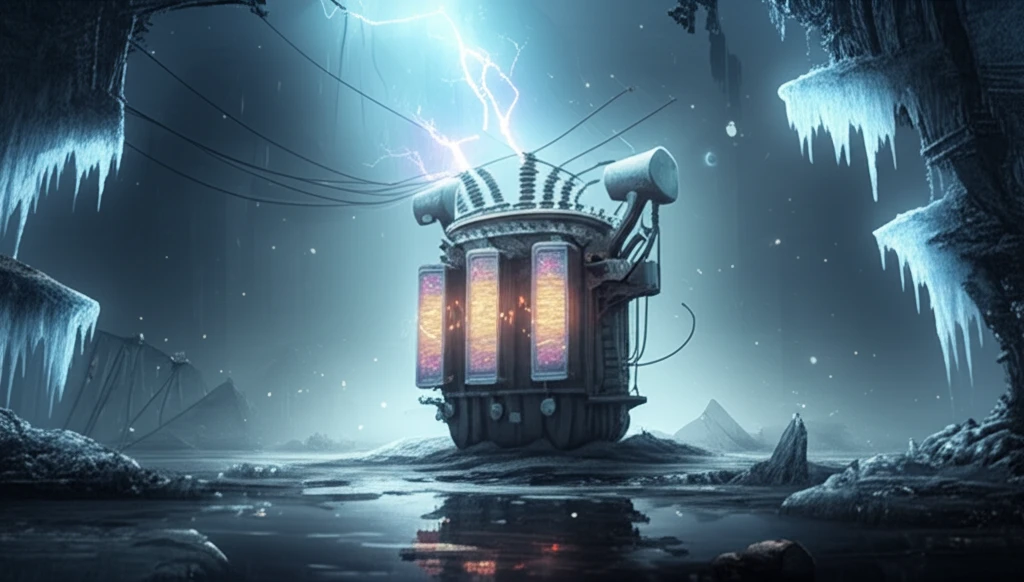
One innovative solution involves a device for additional cooling of an oil transformer using thermoelectric converters. This system strategically leverages temperature differences to enhance cooling efficiency. During nighttime, when ambient temperatures are at their lowest, the device actively accumulates cold. This is achieved by forming an ice layer on extended fins of a thermoelectric converter, all within an insulated container filled with water.
- Nighttime Ice Formation: Thermoelectric converters create ice on metal fins.
- Daytime Cooling: Melting ice absorbs excess heat from transformer oil.
- Temperature Regulation: Prevents overheating during peak load periods.
- Increased Reliability: Reduces the risk of failures and extends equipment life.
Smart Radiators: From Passive Parts to Active Systems
The humble power transformer radiator is undergoing a transformation of its own, moving from a passive cooling component to an active thermal management system. Smart radiator technologies are setting new benchmarks for efficiency as monitoring and control become integrated directly into the cooling loop. This shift reframes the radiator as a dynamic participant in transformer reliability rather than a static accessory.
When Simple Maintenance Is Not Enough
Even well-intentioned upkeep has limits: in ductless mini split air conditioners, cleaning the filters alone is often not sufficient, and a deeper clean is required to restore performance. The same lesson applies to transformer cooling hardware, where surface-level maintenance can mask accumulating degradation. Practitioners warn that ignoring the need for thorough, periodic deep cleaning undermines the efficiency that new cooling designs promise.
Evaporative Cooling vs. Conventional Classes
In contrast to the conventional ONAN and ONAF classes, advanced evaporative cooling designs harness a cutting-edge liquid insulating material as the cooling medium, a substance with a range of significant attributes. This approach uses phase-change physics to remove heat rather than relying solely on natural or forced air circulation over oil surfaces. The comparison highlights how alternative coolants and mechanisms can push beyond the thermal ceilings of traditional oil-air methods.
Future-Proofing Your Transformers
Modernizing power transformer cooling systems using technologies like thermoelectric converters offers a practical and effective way to extend the lifespan and improve the reliability of critical infrastructure. By proactively addressing the challenges of aging equipment and increasing operational demands, businesses can ensure greater stability and efficiency in their power distribution networks. Investing in these innovative solutions is not just about maintaining current performance; it's about building a resilient and sustainable future.
The Grid Under Pressure Needs Smarter Cooling
Traditional electricity grids were built for a much more predictable world, and that predictability is eroding under rising demand and shifting load patterns. The bigger message is clear: the grid that powers the AI revolution may itself need AI to remain reliable. Smarter, instrumented cooling systems are a natural part of that reliability equation, giving operators the visibility to act before thermal failures occur.
Thermoelectric Frontiers: Precision and Beyond
Thermoelectric cooling is not a niche technology; it has found diverse applications in the HVAC industry and beyond, pointing toward broader adoption in thermal management. Emerging work on asymmetric conductance thermoelectric cooling modules for cryogenic applications signals continuing precision-driven development. These advances suggest a future where solid-state cooling complements oil, air, and evaporative methods across very different temperature regimes.
Market Forces and Regulatory Pressures
The thermal power unit transformer market is positioned for steady growth driven by infrastructure expansion, technological innovation, and evolving regulatory landscapes. Each of these drivers reshapes cooling requirements: larger grids demand more heat dissipation, innovation raises efficiency expectations, and regulation pushes toward more accountable energy performance. Modernization of transformer cooling is therefore not just an engineering choice but a response to system-level market and policy pressures.
Innovation With Human Impact
Cooling technology reaches its real purpose when it changes lives, as demonstrated by engineer Solomon Ukoha, who engineered a transformer using crude oil to power buildings in Nigeria. Oil-immersed technology, the same principle that underpins conventional transformer cooling, remains efficient and adaptable enough to be reinvented in resource-constrained settings. The "Cool Under Pressure" spirit captures how human ingenuity continually squeezes more capability from established cooling methods.