
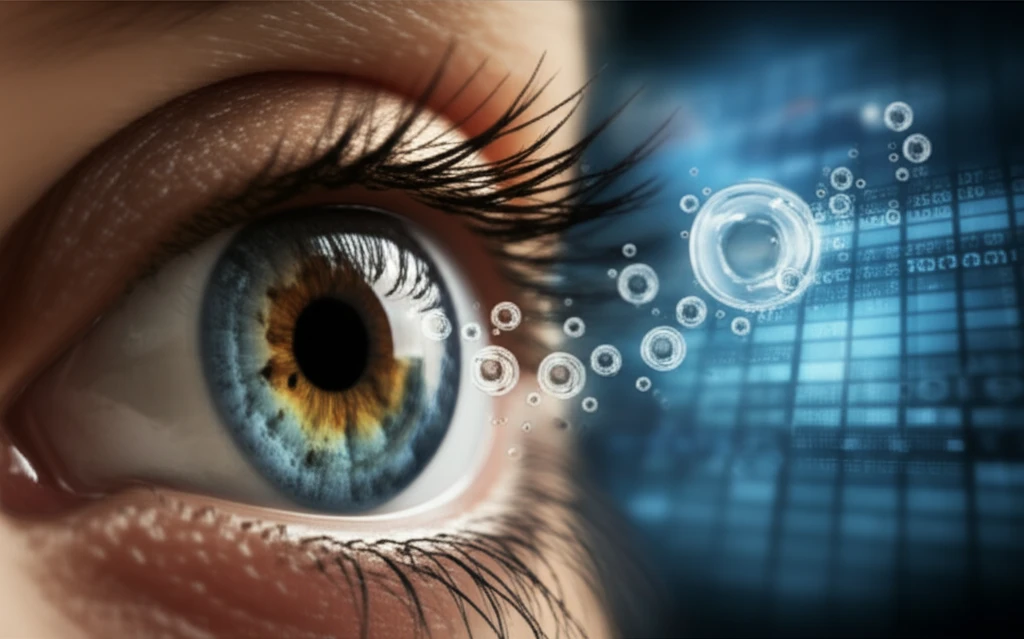
Contact lens allowing oxygen to reach the cornea.

Contact Lenses: Are Your Eyes Getting Enough Oxygen?

"Explore how lens materials and designs impact eye health and comfort, especially for those with digital eye strain."


Contact lenses offer freedom from glasses, but they also introduce a barrier between your cornea and the air. Your cornea needs oxygen to stay healthy, and contact lenses can sometimes limit this supply. This article dives into how different lens materials and designs impact corneal oxygenation, and what you can do to ensure your eyes get what they need.

We'll explore research presented in scientific journals, focusing on how lens materials (like silicone hydrogel) and lens designs (including those for multifocal vision and orthokeratology) affect oxygen transmission to the cornea. We'll also touch on how these factors relate to common issues like digital eye strain and accommodative micro-fluctuations.

Whether you're a long-time contact lens wearer or considering making the switch, understanding these factors is crucial for maintaining comfortable and healthy vision. This article will equip you with the knowledge to make informed choices about your contact lenses.

Oxygen, Comfort, and Lens Materials: What's the Connection?

Contact lens allowing oxygen to reach the cornea.

The primary material used in contact lenses significantly influences oxygen permeability. Silicone hydrogel lenses are designed to allow more oxygen to pass through to the cornea compared to traditional hydrogel lenses. This is because silicone has a higher oxygen permeability than water, which is the main component of hydrogel lenses.

However, material isn't the only factor. Lens design also plays a crucial role. For example, orthokeratology lenses, which are worn overnight to reshape the cornea, need to strike a balance between vision correction and corneal health. Similarly, multifocal lenses, designed to correct presbyopia (age-related blurry near vision), have different zones and thicknesses that can affect oxygen transmission.

  • Silicone Hydrogel: Allows more oxygen to the cornea.
  • Hydrogel: Traditional material, lower oxygen permeability.
  • Lens Design: Thickness and zones impact oxygen flow.
Recent research highlights these points. Studies have investigated how different multifocal contact lens designs affect relative peripheral refraction and optical quality, factors that can indirectly relate to corneal health and comfort. Furthermore, research explores the impact of contact lens wear on accommodative micro-fluctuations (AMF), a potential indicator of eye fatigue and ciliary muscle stress, especially relevant for those who spend extended periods using digital devices. The research emphasizes the importance of lens design in managing visual fatigue.

Making Informed Choices for Healthy Eyes

Choosing the right contact lenses involves more than just correcting your vision. It's about understanding how different materials and designs can impact the long-term health and comfort of your eyes. If you experience discomfort, dryness, or eye fatigue, especially with increased digital device use, it's important to discuss these concerns with your eye care professional.

Consider silicone hydrogel lenses for improved oxygen permeability, and ask about lens designs that are optimized for both vision correction and corneal health. If you're considering orthokeratology, ensure that your practitioner carefully monitors your corneal health during the fitting process.

Ultimately, the best contact lenses are those that provide clear vision, comfort, and maintain the health of your eyes. By staying informed and working closely with your eye care professional, you can find the perfect fit for your individual needs.

About this Article -

This article was crafted using a human-AI hybrid and collaborative approach. AI assisted our team with initial drafting, research insights, identifying key questions, and image generation. Our human editors guided topic selection, defined the angle, structured the content, ensured factual accuracy and relevance, refined the tone, and conducted thorough editing to deliver helpful, high-quality information.See our About page for more information.

This article is based on research published under:

DOI-LINK: 10.1016/j.clae.2018.04.009, Alternate LINK

Title: Changes In Accommodative Micro-Fluctuations After Wearing Contact Lenses Of Different Optical Designs

Subject: Optometry

Journal: Contact Lens and Anterior Eye

Publisher: Elsevier BV

Authors: Gary Orsborn, Masayoshi Kajita, Taku Muraoka, Jose Vega

Published: 2018-06-01

Everything You Need To Know

1

How do silicone hydrogel lenses compare to traditional hydrogel lenses in terms of oxygen permeability?

Silicone hydrogel lenses are designed to allow more oxygen to pass through to the cornea, supporting corneal health. Traditional hydrogel lenses have lower oxygen permeability because their primary component is water, which is less permeable to oxygen compared to silicone. This difference in material directly affects how much oxygen reaches the cornea during lens wear.

2

Besides the lens material, what role does lens design play in corneal oxygenation?

Lens design significantly impacts oxygen transmission to the cornea. For instance, orthokeratology lenses, which reshape the cornea overnight, must balance vision correction with ensuring adequate oxygen supply to the eye. Similarly, multifocal lenses, designed to correct presbyopia, have varying thicknesses and zones that can influence oxygen flow. These design elements play a crucial role in maintaining corneal health and comfort.

3

How is digital eye strain related to wearing contact lenses, and what factors contribute to this?

Digital eye strain is related to contact lens wear through factors like accommodative micro-fluctuations (AMF) and overall eye fatigue. Studies show that contact lens wear can affect AMF, indicating ciliary muscle stress, especially during prolonged digital device use. Choosing lenses that optimize oxygen permeability and minimize visual fatigue is important for individuals who experience digital eye strain. Addressing peripheral refraction with appropriate lens design is also important. However, the text lacks specific details on how different lens designs and materials directly alleviate digital eye strain symptoms; more research is needed to establish these links conclusively.

4

What steps can I take to make sure my eyes are getting enough oxygen while wearing contact lenses?

To ensure your eyes get enough oxygen while wearing contact lenses, you should consider silicone hydrogel lenses, which allow more oxygen to reach the cornea compared to traditional hydrogel lenses. It's also important to discuss your lifestyle and visual needs with your eye care professional to determine the best lens design for your specific situation. Regular check-ups and proper lens care are essential for maintaining corneal health and preventing complications related to oxygen deficiency.

5

What does research say about the effects of multifocal contact lens designs on corneal health and visual comfort?

Research indicates that multifocal contact lens designs can impact relative peripheral refraction and optical quality, which indirectly affects corneal health and comfort. Furthermore, studies explore the relationship between contact lens wear and accommodative micro-fluctuations (AMF), a sign of eye fatigue and ciliary muscle stress, especially during digital device use. The implications of these findings suggest that careful consideration of lens design is vital for managing visual fatigue and ensuring comfortable vision, especially for those with presbyopia or those who spend a lot of time using digital devices. However, the research does not fully detail the long-term effects of these designs on corneal health, indicating an area for further study.

Newsletter Subscribe

Subscribe to get the latest articles and insights directly in your inbox.