
Composite Resin Fluorescence: Does Polishing Matter?

"Uncover the Impact of Surface Polishing and Storage on the Optical Brilliance of Composite Resin in Dental Restorations"
In the ever-evolving field of cosmetic dentistry, the quest for natural-looking restorations is paramount. Patients seek not only functional improvements but also aesthetic enhancements that seamlessly blend with their natural teeth. Composite resins have emerged as a versatile and cost-effective solution, allowing dentists to create beautiful smiles in both the anterior and posterior segments.
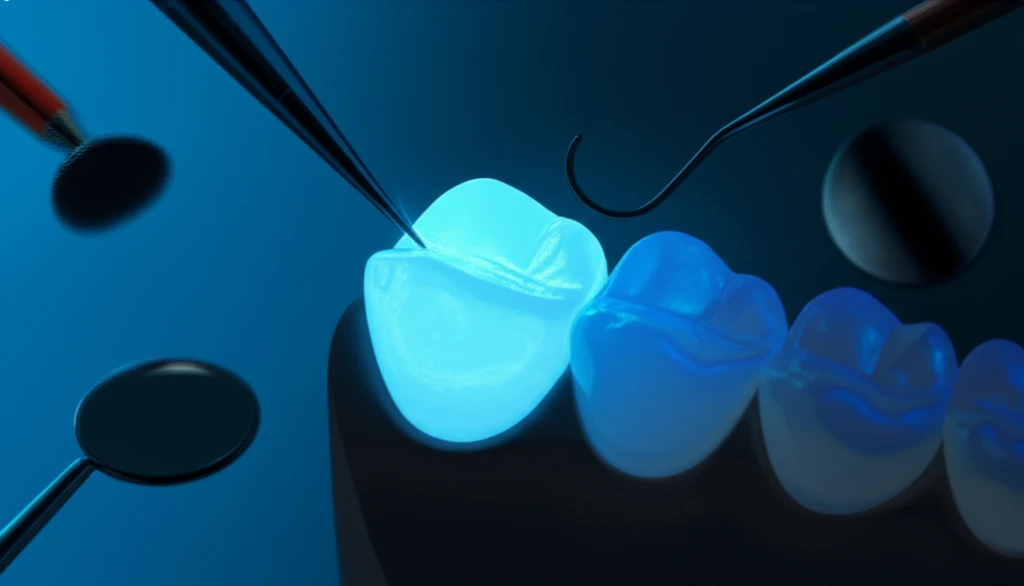
One of the key optical properties that contribute to the lifelike appearance of composite resins is fluorescence. This phenomenon, where a material emits light upon exposure to ultraviolet (UV) radiation, is crucial for replicating the natural vitality of teeth. Natural teeth emit a bluish-white glow when exposed to UV light, and dental materials that mimic this effect can create more natural-looking restorations.
However, achieving optimal fluorescence in composite resin restorations is not without its challenges. Factors such as surface polishing techniques and storage conditions can influence the material's optical properties. A recent study published in the "Revista de Odontologia da UNESP" investigated the impact of these variables on the fluorescence intensity of composite resins, shedding light on how to optimize dental practices for superior aesthetic outcomes.
How Does Polishing Affect Resin Fluorescence?
The research team prepared seventy circular specimens using a microhybrid composite resin (Opallis, A2E, FGM). These specimens were then subjected to different surface polishing protocols, including the use of sandpaper grits of 600, 1200, and 2500. A control group received no polishing, maintaining the standard matrix strip finish. The fluorescence intensity values were measured using a Cary Eclipse Fluorescence Spectrophotometer after specific intervals.
- No Significant Impact: The various polishing protocols, despite creating different surface characteristics, did not significantly influence the fluorescence intensity of the composite resin.
- Surface Characteristics: The property of fluorescence was not sensitive to the surface alterations caused by polishing.
Key Takeaways for Dental Professionals
The study provides valuable insights for dental professionals seeking to enhance the aesthetic outcomes of composite resin restorations. While surface polishing is undoubtedly crucial for achieving a smooth and lustrous finish, it may not significantly impact the fluorescence of the material. Instead, factors such as the choice of composite resin and storage conditions appear to play a more prominent role in modulating this essential optical property. By carefully considering these variables, dentists can create more lifelike and natural-looking restorations that meet the aesthetic demands of their patients.