
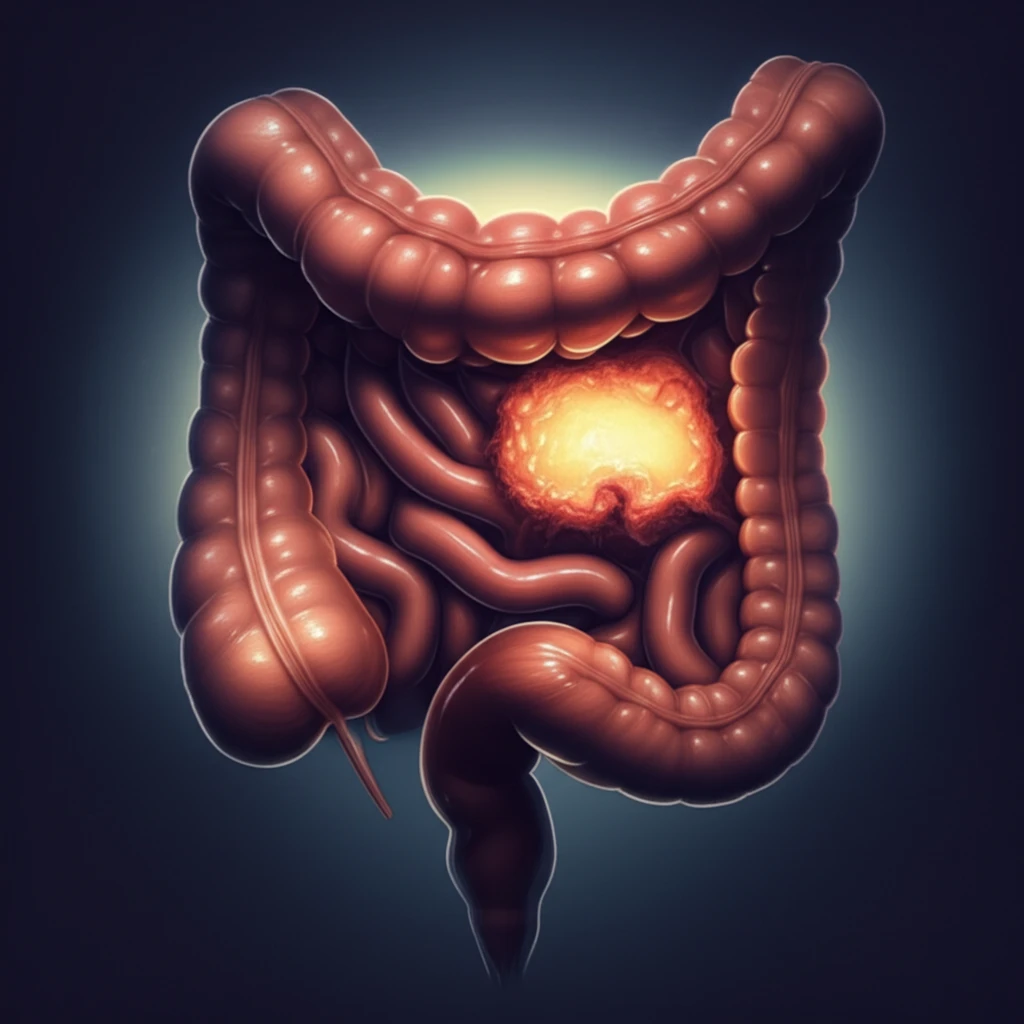
Surreal illustration of a colon with a subtle tear, representing delayed perforation.

Colonoscopy Complications: What You Need to Know About Delayed Perforation

"A rare but serious risk of colonoscopies, delayed perforation can lead to severe complications. Learn about its causes, symptoms, and the latest treatment approaches."


Colonoscopies are a cornerstone of preventive healthcare, allowing doctors to detect and remove precancerous polyps before they turn into cancer. This procedure involves inserting a long, flexible tube with a camera into the colon to visualize its lining. While colonoscopies are generally safe, it's important to be aware of potential complications, one of which is delayed perforation.

Perforation, or a tear in the colon wall, is a rare but serious complication that can occur during or after a colonoscopy. When it happens days after the procedure, it's known as delayed perforation. This can lead to peritonitis, a dangerous infection of the abdominal cavity, requiring prompt medical attention.

While the risk of delayed perforation is low, understanding the factors that contribute to it, recognizing the symptoms, and knowing the available treatment options can help ensure the best possible outcome. This article aims to provide a comprehensive overview of delayed perforation after colonoscopy, drawing on the latest research and clinical practices.

What Causes Delayed Perforation After a Colonoscopy?

Surreal illustration of a colon with a subtle tear, representing delayed perforation.

Several factors can contribute to delayed perforation following a colonoscopy. One key factor is the use of endoscopic submucosal dissection (ESD), a technique used to remove larger or more complex polyps. While ESD allows for the en bloc resection of lesions, it can also increase the risk of complications like perforation.

The colon's anatomy also plays a role. The colon wall is thinner than that of the stomach, making it more susceptible to injury during procedures, especially in the deep colon where scope maneuverability can be challenging. Certain patient-related factors, such as age, the presence of diverticulitis, or the use of certain medications, can also increase the risk.

  • ESD Technique: The complexity of ESD, while effective for removing large polyps, inherently carries a higher risk of perforation compared to standard polypectomy techniques.
  • Colon Wall Thickness: The colon's thinner wall, particularly in the cecum, makes it more vulnerable to injury.
  • Patient Factors: Older age, presence of diverticulitis, and certain medications can increase susceptibility.
  • Thermocoagulation: Excessive use of heat to stop bleeding after polyp removal can weaken the colon wall, leading to delayed perforation.
Another potential cause is excessive thermocoagulation, a technique used to stop bleeding after polyp removal. While necessary, excessive heat application can weaken the colon wall and increase the risk of delayed perforation. A study of a delayed perforation after colonic ESD indicated excessive thermocoagulation might have occurred during the coagulation of blood vessels in the post-dissection ulcer bed.

The Future of Colonoscopy Safety

While delayed perforation remains a rare complication, ongoing research and technological advancements are paving the way for safer colonoscopies. Improved imaging techniques, more precise polyp removal tools, and better understanding of risk factors will continue to minimize the likelihood of this complication. By staying informed and working closely with your healthcare provider, you can confidently prioritize your colon health.

About this Article -

This article was crafted using a human-AI hybrid and collaborative approach. AI assisted our team with initial drafting, research insights, identifying key questions, and image generation. Our human editors guided topic selection, defined the angle, structured the content, ensured factual accuracy and relevance, refined the tone, and conducted thorough editing to deliver helpful, high-quality information.See our About page for more information.

This article is based on research published under:

DOI-LINK: 10.5387/fms.2018-04, Alternate LINK

Title: Delayed Perforation After Endoscopic Submucosal Dissection For Mucosal Colon Cancer: A Conservatively Treated Case

Subject: General Medicine

Journal: FUKUSHIMA JOURNAL OF MEDICAL SCIENCE

Publisher: The Fukushima Society of Medical Science

Authors: Kazumasa Kawashima, Takuto Hikichi, Tatsuo Fujiwara, Naohiko Gunji, Jun Nakamura, Ko Watanabe, Kyoko Katakura, Hiromasa Ohira

Published: 2018-01-01

Everything You Need To Know

1

What exactly is delayed perforation following a colonoscopy, and why is it a concern?

Delayed perforation is a rare but serious complication where a tear in the colon wall occurs days after a colonoscopy. This is concerning because it can lead to peritonitis, a dangerous infection of the abdominal cavity. While colonoscopies are generally safe for detecting and preventing colon cancer, understanding potential complications like delayed perforation is crucial for ensuring the best possible patient outcomes. Prompt medical attention is required if delayed perforation is suspected.

2

What are the primary factors that increase the risk of delayed perforation after a colonoscopy?

Several factors contribute to the risk of delayed perforation. The use of endoscopic submucosal dissection (ESD) to remove large polyps is a key factor, as this technique carries a higher risk of perforation than standard polypectomy techniques. The colon's anatomy, specifically its thinner wall, also makes it more vulnerable to injury, especially in the cecum. Additionally, patient-related factors like older age, the presence of diverticulitis, or the use of certain medications can increase susceptibility. Excessive thermocoagulation to stop bleeding after polyp removal can also weaken the colon wall and elevate the risk of delayed perforation.

3

How does endoscopic submucosal dissection (ESD) contribute to the risk of delayed perforation?

Endoscopic submucosal dissection (ESD) is a technique used to remove larger or more complex polyps en bloc. While effective, ESD inherently carries a higher risk of perforation compared to standard polypectomy techniques. The complexity of the procedure and the deeper manipulation of the colon wall during ESD can increase the likelihood of a tear, which might not be immediately apparent but can manifest as delayed perforation days later. Standard polypectomy carries less risk as it is for smaller less complex polyps.

4

In what ways can the colon's anatomy make it more susceptible to delayed perforation?

The colon wall is thinner than that of the stomach, making it more susceptible to injury during colonoscopies. This vulnerability is particularly pronounced in the cecum, where the wall is the thinnest and scope maneuverability can be challenging. This anatomical characteristic means that even minor trauma during the procedure, such as over-inflation or excessive force, can potentially lead to a delayed perforation.

5

What advancements are being made to improve colonoscopy safety and reduce the risk of complications like delayed perforation?

Ongoing research and technological advancements are paving the way for safer colonoscopies. Improved imaging techniques allow for more precise visualization of the colon lining, enabling doctors to identify potential areas of weakness or vulnerability. More precise polyp removal tools are being developed to minimize trauma to the colon wall during procedures such as endoscopic submucosal dissection (ESD). A better understanding of patient-related risk factors, such as the impact of age, diverticulitis, and certain medications, also contributes to improved safety protocols. These advancements collectively aim to minimize the likelihood of complications like delayed perforation.

Newsletter Subscribe

Subscribe to get the latest articles and insights directly in your inbox.