
Coconut Aroma from Sugarcane Waste: The Sweet Smell of Sustainability

"Transforming sugarcane bagasse into a valuable resource for natural aroma production."
In a world increasingly focused on sustainability, innovative approaches to waste management are crucial. Agro-industrial byproducts, often discarded, represent a significant loss of potential resources. However, what if these waste materials could be transformed into something valuable? This is where the concept of solid-state fermentation (SSF) comes in, offering a promising solution for converting agricultural residues into useful products.
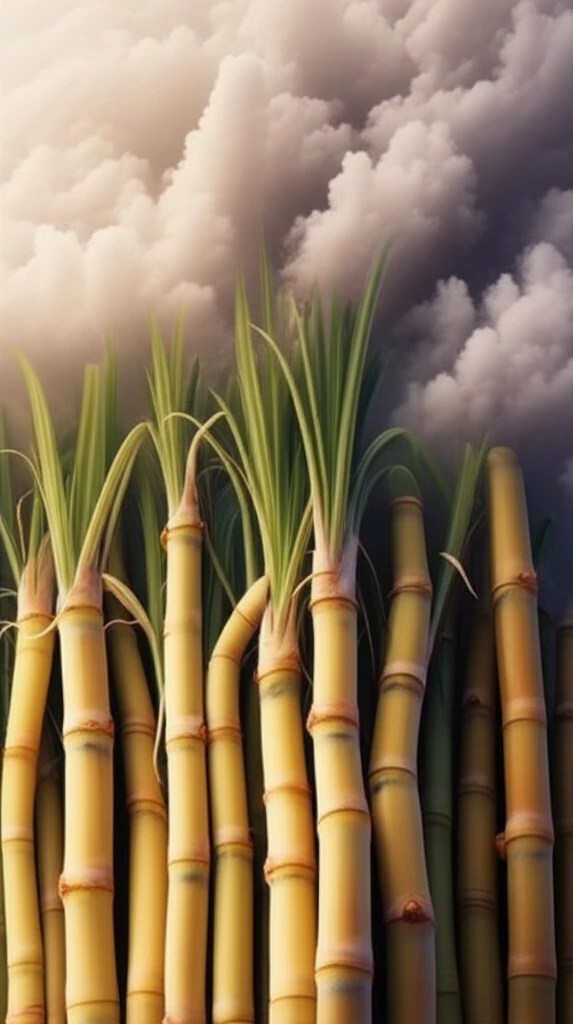
Sugarcane, a major crop in Brazil and worldwide, generates substantial amounts of bagasse—the fibrous residue left after juice extraction. Traditionally, bagasse has been used as fuel or simply discarded, contributing to environmental concerns. But researchers have discovered a way to harness the potential of sugarcane bagasse, transforming it into a source of natural aroma compounds through SSF.
This article explores how sugarcane bagasse can be used as a support matrix for the production of 6-pentyl-α-pyrone (6-PP), a compound with a characteristic coconut aroma, using the fungus Trichoderma harzianum. We'll delve into the process, the benefits, and the implications of this sustainable approach to aroma production.
Turning Waste into Aroma: The Solid-State Fermentation Process
Solid-state fermentation offers an environmentally friendly method for biotransforming agro-industrial residues. Unlike submerged fermentation, SSF involves microorganisms growing on a solid substrate with low moisture content. This method is particularly well-suited for utilizing materials like sugarcane bagasse due to its cost-effectiveness and simplicity.
Aromatic Future: The Potential of Sugarcane Bagasse
The successful conversion of sugarcane bagasse into a source of coconut aroma highlights the potential of agro-industrial residues in creating valuable products. This approach not only addresses waste management challenges but also offers a sustainable alternative to chemical synthesis for aroma production.
By using sugarcane bagasse as a support, Trichoderma harzianum IOC4042 can produce 93 ppm of 6-PP on the 7th day of fermentation, this reinforces the potential industrial applications.
As consumer demand for natural and sustainable products continues to grow, innovative bioconversion processes like this one will play an increasingly important role. Future research could focus on optimizing the fermentation process, exploring different fungal strains, and scaling up production for commercial applications.