
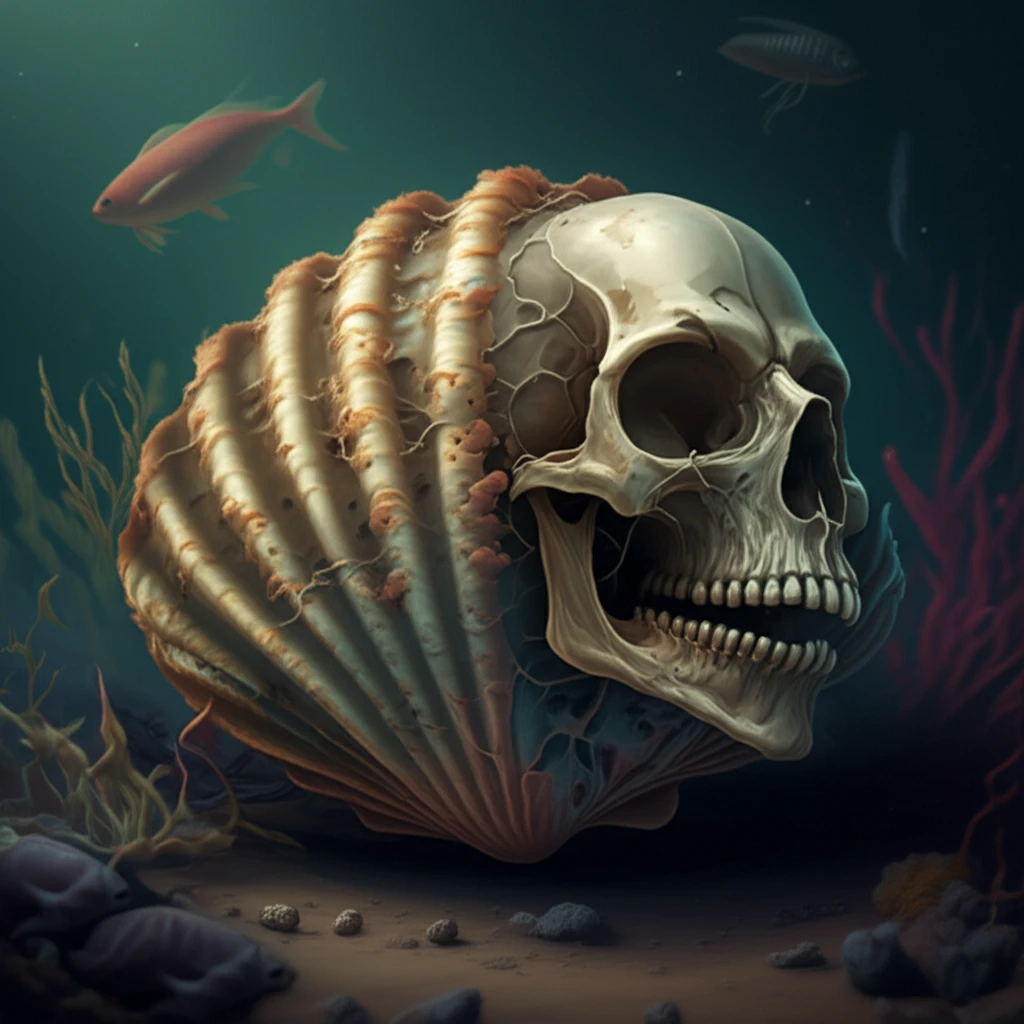
Cockle Health Check: Are Portugal's Coastal Ecosystems at Risk?

"New research reveals surprising trends in trematode parasites, suggesting potential threats to Portugal's Ria de Aveiro."
Cockles, a popular seafood in Europe, play a crucial role in coastal ecosystems. These humble shellfish are a favorite food source for many and an indicator of environmental health. However, like all living things, they're susceptible to parasites, which can tell us a lot about the state of their environment.
Trematodes, a type of parasite, are common in cockles. Understanding how these parasites affect cockles can provide insights into the overall health of the ecosystem. Scientists recently investigated trematode communities in Cerastoderma edule cockles from Ria de Aveiro, Portugal, to assess the ecological status of this important area.
The study, conducted in 2012 and 2016, challenged the initial hypothesis that trematode communities would be spatially and seasonally diverse and stable over time. The results revealed a different story, highlighting the complex interactions within this coastal environment and raising questions about its long-term health.
The Parasite Puzzle: What the Study Revealed
The research focused on the spatio-temporal distribution of trematodes, common parasites in cockles, collected from several stations within the Ria de Aveiro lagoon. Scientists dissected cockles to identify and count the different trematode species present. By comparing data from different years and locations, they aimed to understand the dynamics of these parasite communities.
- Unexpected Homogeneity: Despite initial expectations, the trematode communities showed a surprising degree of homogeneity across different locations and seasons. This suggests that environmental conditions within the Ria de Aveiro may be relatively uniform.
- Interannual Heterogeneity: The biggest surprise was the significant difference in trematode communities between 2012 and 2016. This interannual variation was more pronounced than differences between locations or seasons, suggesting a shift in the ecosystem over time.
- Loss of Diversity: The study revealed a worrisome decline in trematode diversity and prevalence between 2012 and 2016, potentially indicating a decline in overall biodiversity or changes in environmental conditions.
Cockles as Canary: What Does This Mean for the Future?
The observed changes in trematode communities could signal broader environmental challenges in the Ria de Aveiro. The decline in trematode diversity and prevalence raises concerns about the overall health and resilience of the ecosystem.
Potential drivers of these changes include:
<ul> <li>Climate Change: Rising temperatures and altered weather patterns could be impacting parasite life cycles and host-parasite interactions.</li> <li>Overharvesting: Excessive harvesting of cockles could disrupt the ecosystem balance and affect parasite transmission.</li> <li>Pollution: Increased pollution from human activities could be weakening cockles and making them more susceptible to disease.</li> </ul>