
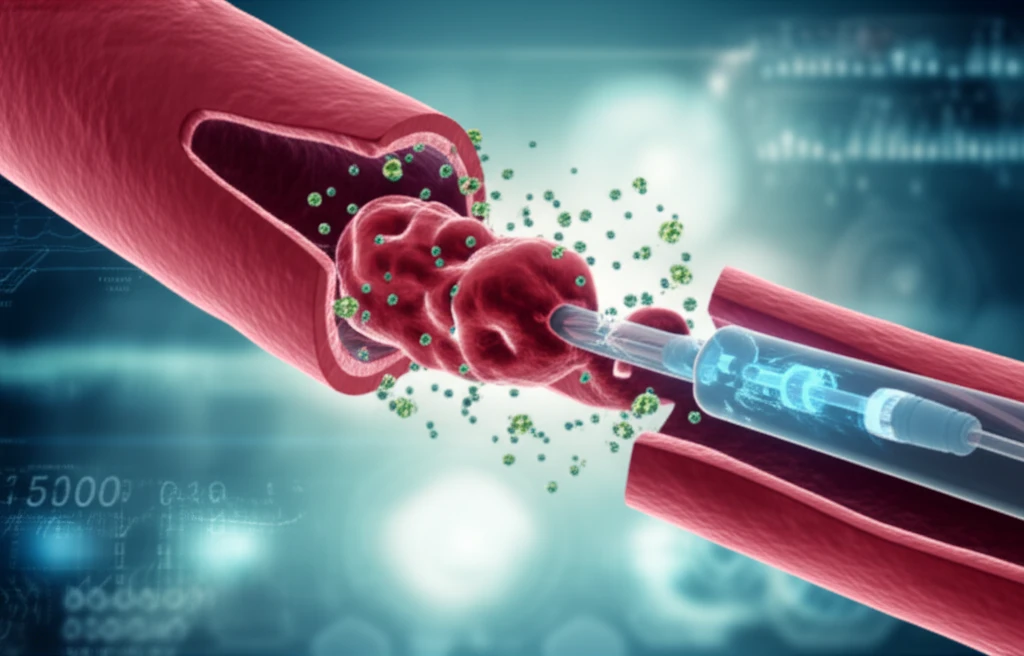
Clot Crusaders: How a Combined Therapy is Revolutionizing Treatment for a Rare Blood Clot

"Unlocking the Secrets of IVC Thrombosis: A Breakthrough Approach to Treatment."
In the intricate world of medicine, innovation is the driving force behind progress, constantly reshaping how we understand and treat complex conditions. Among these conditions, inferior vena cava (IVC) thrombosis stands out as a particularly challenging and often under-recognized entity. This rare but serious condition, involving blood clots in the major vein that carries blood from the lower body to the heart, poses significant risks and has historically been associated with high mortality rates.
The landscape of treatment for IVC thrombosis is evolving, with new approaches offering hope where options were once limited. Traditional methods have often fallen short, prompting a search for more effective and less invasive solutions. One such solution is the innovative use of a combined therapy, a strategy that merges advanced techniques to provide patients with the best possible outcomes.
This article dives into the details of this combined therapy, exploring how it is revolutionizing the treatment of IVC thrombosis. We'll dissect the components of this approach – catheter-directed thrombolysis and factor Xa inhibitors – and explore the significant impact they have on patient outcomes. This combined approach marks a significant leap forward in the treatment of this condition, bringing new promise to those affected.
Understanding IVC Thrombosis: A Deep Dive into a Rare but Serious Condition
IVC thrombosis, or blood clots in the inferior vena cava, is a complex medical condition that requires a comprehensive understanding. This section of the article will explore the intricacies of IVC thrombosis, covering its causes, symptoms, and the challenges it presents in medical treatment. We'll look at how this condition differs from other types of blood clots, why it is often overlooked, and the critical need for timely and effective intervention.
- Causes: Prolonged bed rest, certain medical conditions (e.g., cancer), genetic factors.
- Symptoms: Leg swelling, pain, abdominal discomfort, and potential complications like pulmonary embolism.
- Challenges: Often underdiagnosed and requires specialized treatment approaches.
The Future of IVC Thrombosis Treatment: A New Era of Hope and Innovation
As we look ahead, the advancements in treating IVC thrombosis point toward a future where this condition is effectively managed with a combination of innovative techniques and therapies. Continued research and development will undoubtedly bring more options for patients, improving outcomes and reducing the risks associated with this challenging condition. This combined therapy represents a critical step in the evolution of medical care and the ongoing quest for better outcomes.