
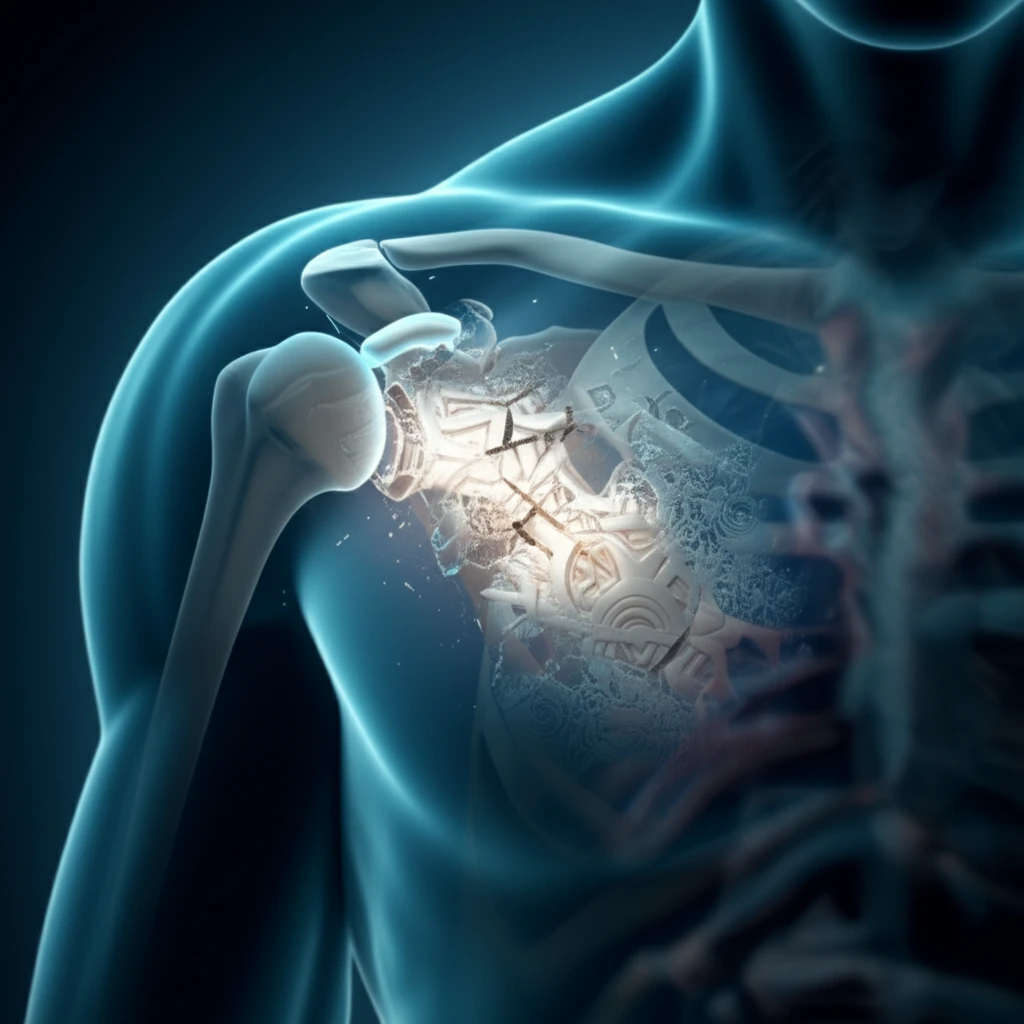
Innovative clavicle fracture fixation

Clavicle Fracture Breakthrough: Innovative Plate Fixation for Faster Healing

"Discover how a novel surgical technique is transforming the treatment of medial clavicle fractures, offering new hope for athletes and active individuals."


Clavicle fractures, commonly known as broken collarbones, are a frequent injury, particularly among athletes and active individuals. While many clavicle fractures heal with non-surgical treatments like slings and pain management, fractures at the medial end of the clavicle—closest to the sternum—present unique challenges. Traditional treatments often lead to non-union (failure to heal) or persistent pain and limited function, prompting a search for more effective surgical solutions.

A recent study published in the Journal of Shoulder and Elbow Surgery introduces an innovative surgical technique that shows promise in improving outcomes for displaced medial end clavicle fractures. The study explores the use of an inverted distal clavicle locking plate, contoured through 90 degrees, to provide better fixation and promote faster healing. This method aims to minimize surgical invasiveness while optimizing screw trajectory insertion for enhanced stability.

This article delves into the details of this groundbreaking approach, examining how it addresses the limitations of previous techniques, the potential benefits for patients, and what the future holds for clavicle fracture treatment. Whether you're an athlete, a healthcare professional, or someone simply interested in the latest medical advancements, this information could be pivotal in understanding the evolving landscape of orthopedic care.

Why This New Surgical Approach Could Change Clavicle Fracture Treatment

Innovative clavicle fracture fixation

The study, conducted at Addenbrooke's Hospital, Cambridge University Hospitals Trust, assessed the effectiveness of using an inverted distal clavicle locking plate twisted through 90 degrees. This technique allows surgeons to approach the fracture with less invasiveness and improves the angle at which screws can be inserted. Traditional methods often struggle with adequate stabilization due to the small size and location of the medial clavicle fragment, as well as the proximity to vital mediastinal structures.

Researchers reviewed the cases of eight patients with acute, displaced medial end clavicle fractures who underwent this procedure. The surgical technique involves:

  • Incision and Exposure: Making an inferior incision to access the anterior surface of the medial end of the clavicle, protecting the sternocleidomastoid (SCM) muscle.
  • Plate Contouring and Positioning: Contouring an ipsilateral distal clavicle plate through 90° and fixing it to the anterior surface of the medial clavicle.
  • Screw Insertion: Inserting unicortical locking and nonlocking screws into the flared medial end of the plate from anterior to posterior, and bicortical cortex screws into the lateral end of the plate.
  • Fracture Reduction: Reducing comminuted and intra-articular fractures using bone clamps or Kirschner wires before securing fragments with multiple screws.
The results indicated that all patients achieved clinical and radiographic union at 4 months. The Disabilities of the Arm, Shoulder, and Hand (DASH) score, a measure of upper extremity function, averaged 0.6 (range, 0-2.3), indicating minimal disability. All patients returned to their pre-injury level of activity without complications.

Looking Ahead: The Future of Clavicle Fracture Care

This study suggests that using an inverted distal clavicle plate contoured through 90 degrees is a promising technique for treating medial clavicle fractures, offering improved fixation and better protection of surrounding soft tissue structures. While the study's sample size is small and the follow-up period relatively short, the results are encouraging. Further research with larger patient groups and longer follow-up times will help validate these findings and refine the surgical technique. As medical technology advances, innovative approaches like this one are set to play a crucial role in enhancing patient outcomes and accelerating recovery from clavicle fractures.

About this Article -

This article was crafted using a human-AI hybrid and collaborative approach. AI assisted our team with initial drafting, research insights, identifying key questions, and image generation. Our human editors guided topic selection, defined the angle, structured the content, ensured factual accuracy and relevance, refined the tone, and conducted thorough editing to deliver helpful, high-quality information.See our About page for more information.

This article is based on research published under:

DOI-LINK: 10.1016/j.jse.2018.08.047, Alternate LINK

Title: Displaced Medial End Clavicular Fractures Treated With An Inverted Distal Clavicle Plate Contoured Through 90 Degrees

Subject: Orthopedics and Sports Medicine

Journal: Journal of Shoulder and Elbow Surgery

Publisher: Elsevier BV

Authors: Andrew Titchener, Abbas See, Lee Van Rensburg, Graham Tytherleigh-Strong

Published: 2019-04-01

Everything You Need To Know

1

What is this new approach for treating clavicle fractures?

A clavicle fracture, commonly known as a broken collarbone, is an injury that can be effectively addressed with a novel surgical technique. This technique involves the use of an inverted distal clavicle locking plate, which is contoured through 90 degrees. The purpose of this method is to provide improved fixation and promote faster healing of the fracture, particularly in cases of displaced medial end clavicle fractures. This approach represents a significant advancement in orthopedic care.

2

Why is using an inverted distal clavicle plate contoured through 90 degrees a better approach?

The inverted distal clavicle plate contoured through 90 degrees offers a less invasive surgical approach. This is important because traditional methods often struggle with adequate stabilization due to the small size and location of the medial clavicle fragment and its proximity to vital mediastinal structures. This new method enhances the angle at which screws can be inserted, leading to better fixation and stability, which are crucial for successful healing.

3

What are the specific steps involved in performing the surgery using this new technique?

The surgical procedure involves several key steps: First, an incision is made to access the anterior surface of the medial end of the clavicle, with careful protection of the sternocleidomastoid (SCM) muscle. Next, an ipsilateral distal clavicle plate is contoured through 90 degrees and fixed to the anterior surface of the medial clavicle. Unicortical locking and nonlocking screws are then inserted into the flared medial end of the plate, and bicortical cortex screws are inserted into the lateral end. Finally, any comminuted and intra-articular fractures are reduced using bone clamps or Kirschner wires before securing the fragments with screws.

4

What were the results of the study using the inverted distal clavicle plate?

The study showed promising results with all patients achieving clinical and radiographic union at 4 months. The Disabilities of the Arm, Shoulder, and Hand (DASH) score averaged 0.6, indicating minimal disability, and all patients returned to their pre-injury level of activity without complications. These outcomes suggest that the inverted distal clavicle plate contoured through 90 degrees is an effective method for treating medial clavicle fractures.

5

What further research is needed to fully understand the benefits of this surgical technique?

Future research should focus on larger patient groups and longer follow-up times to validate the findings further and refine the surgical technique. While the initial results are encouraging, more extensive studies will help establish the long-term efficacy and potential benefits of using an inverted distal clavicle plate contoured through 90 degrees in treating medial clavicle fractures. Continued advancements in medical technology are expected to play a crucial role in enhancing patient outcomes and accelerating recovery from these types of fractures.

Newsletter Subscribe

Subscribe to get the latest articles and insights directly in your inbox.