
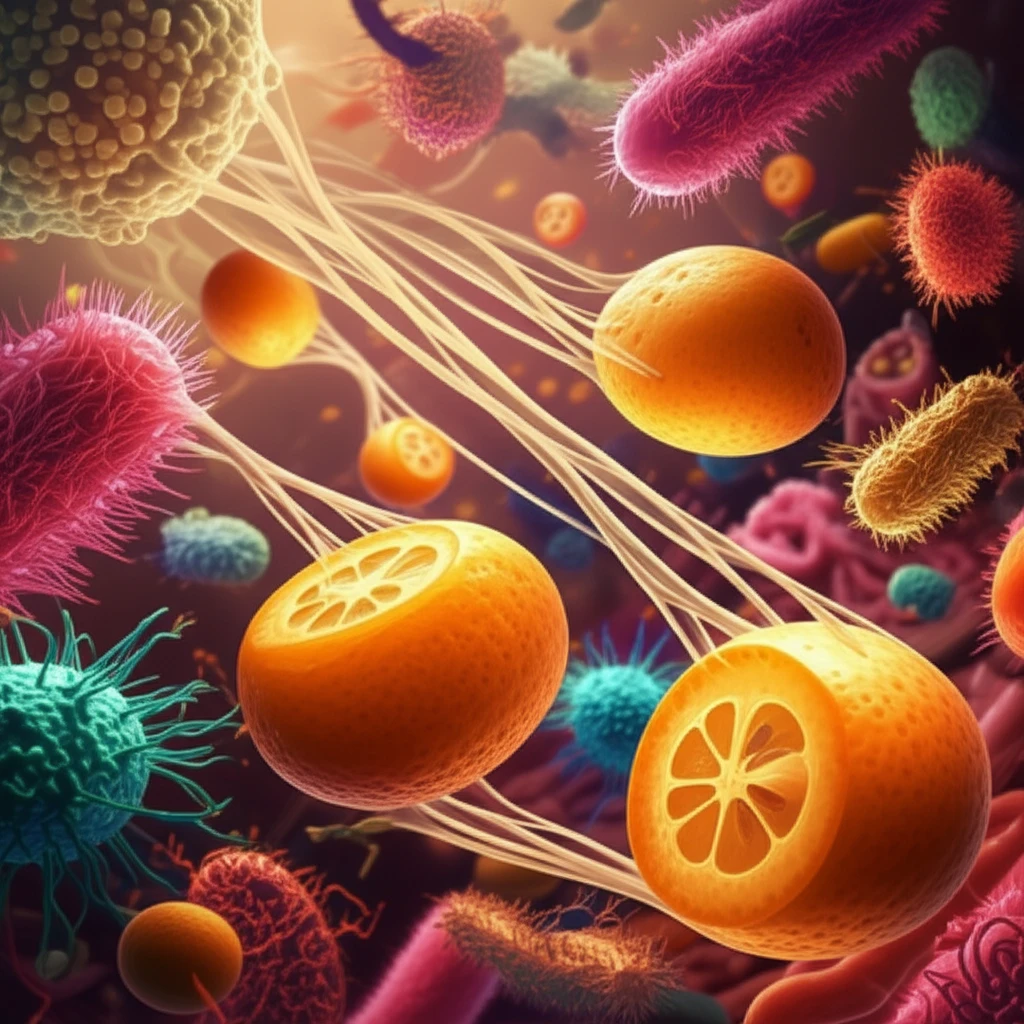
Microscopic view of polysaccharides from kumquats nourishing gut bacteria.

Citrus Secrets: How This Fruit's Sugars Could Boost Your Gut Health

"Discover the unexpected prebiotic powers hidden in Fortunella margarita and how they can transform your digestive wellness."


In the ever-evolving world of wellness, maintaining a balanced gut flora is paramount. The gut, often referred to as the body's second brain, plays a crucial role in everything from immunity to mental health. Recent research highlights the potential of natural substances to foster a thriving ecosystem of beneficial bacteria, particularly focusing on prebiotics that nourish these microorganisms.

Among the innovative solutions being explored is Fortunella margarita, commonly known as kumquat. This vibrant citrus fruit isn't just a tasty treat; it's a powerhouse of unique polysaccharides. These complex sugars are now being studied for their remarkable ability to support the growth of Bifidobacterium adolescentis, a key player in a healthy gut.

A groundbreaking study has uncovered how polysaccharides extracted from Fortunella margarita can significantly enhance the proliferation of this beneficial bacteria while undergoing structural changes that may further boost their prebiotic effects. This research opens new avenues for harnessing the power of nature to improve digestive health and overall well-being, spotlighting the potential of kumquats as a functional food.

Unlocking Kumquat's Prebiotic Potential: What the Science Says

Microscopic view of polysaccharides from kumquats nourishing gut bacteria.

Recent studies have investigated the relationships between polysaccharide fractions derived from the citrus shrub Fortunella margarita and their impact on Bifidobacterium adolescentis ATCC 15703, a bacterium known for its beneficial effects on gut health. The research specifically looks at how these fractions alter structurally following fermentation—a process key to their prebiotic function.

Scientists extracted four polysaccharide fractions—FP20, FP40, FP60, and FP80—through graded precipitation using different ethanol concentrations (20%, 40%, 60%, and 80%, respectively). The results indicated that the fractions, particularly FP20, FP40, and FP60, significantly enhanced the growth of B. adolescentis. These fractions proved more effective than inulin or glucose, common prebiotics used as controls.

  • Enhanced Bacterial Growth: Polysaccharide fractions, particularly FP20, FP40, and FP60, significantly boosted the proliferation of Bifidobacterium adolescentis.
  • Structural Changes: The molecular weight of these polysaccharide fractions decreased after fermentation, altering their structural conformations.
  • Organic Acid Production: Acetic acid was mainly produced during fermentation, further contributing to the probiotic environment.
  • Potential Prebiotic Applications: These polysaccharides show promise as potential prebiotics, supporting a healthy gut microbiome.
Further analysis revealed that fermentation led to a reduction in the molecular weight of the polysaccharides, shifting their structure from tightly bound chains to more branched configurations. This structural change is crucial as it affects how the bacteria interact with and utilize these sugars. Additionally, the fermentation process resulted in the increased production of acetic acid, a short-chain fatty acid known to promote gut health.

The Future of Gut Health: Natural Solutions for a Balanced Microbiome

The discovery that polysaccharides from Fortunella margarita can selectively promote the growth of beneficial gut bacteria offers promising new directions for managing digestive health. As research continues to unfold, incorporating such natural prebiotics into our diets could become a key strategy for preventing digestive disorders and enhancing overall wellness. These findings not only highlight the importance of a balanced diet but also pave the way for future studies exploring the full potential of natural compounds in supporting a healthy gut microbiome.

About this Article -

This article was crafted using a human-AI hybrid and collaborative approach. AI assisted our team with initial drafting, research insights, identifying key questions, and image generation. Our human editors guided topic selection, defined the angle, structured the content, ensured factual accuracy and relevance, refined the tone, and conducted thorough editing to deliver helpful, high-quality information.See our About page for more information.

This article is based on research published under:

DOI-LINK: 10.1016/j.ijbiomac.2018.11.163, Alternate LINK

Title: Polysaccharide Fractions From Fortunella Margarita Affect Proliferation Of Bifidobacterium Adolescentis Atcc 15703 And Undergo Structural Changes Following Fermentation

Subject: Molecular Biology

Journal: International Journal of Biological Macromolecules

Publisher: Elsevier BV

Authors: Peilin Chen, Qingxiang You, Xin Li, Qing Chang, Yi Zhang, Baodong Zheng, Xiaoke Hu, Hongliang Zeng

Published: 2019-02-01

Everything You Need To Know

1

What makes Fortunella margarita special for gut health?

Fortunella margarita, also known as kumquat, contains unique polysaccharides. These complex sugars are being studied for their potential to support the growth of Bifidobacterium adolescentis, a key bacterium for a healthy gut. This could lead to improved digestive health.

2

How do polysaccharides from Fortunella margarita affect my gut?

Polysaccharides from Fortunella margarita promote the growth of beneficial bacteria like Bifidobacterium adolescentis in the gut. They also undergo structural changes during fermentation, enhancing their prebiotic effects and contributing to a healthier gut environment.

3

What is the role of acetic acid in gut health when fermenting polysaccharides from Fortunella margarita?

During the fermentation of polysaccharides from Fortunella margarita, acetic acid is produced. Acetic acid is a short-chain fatty acid that is known to promote gut health by further contributing to a probiotic environment.

4

What are FP20, FP40, FP60 and FP80, and how are they related to Fortunella margarita and gut health?

Scientists extracted four polysaccharide fractions—FP20, FP40, FP60, and FP80—from Fortunella margarita. Research indicated that the fractions, particularly FP20, FP40, and FP60, significantly enhanced the growth of Bifidobacterium adolescentis, proving more effective than common prebiotics like inulin or glucose. These polysaccharide fractions show promise as potential prebiotics, supporting a healthy gut microbiome.

5

What is the future of using Fortunella margarita for gut health?

The discovery of how polysaccharides from Fortunella margarita selectively boost beneficial gut bacteria offers new strategies for managing digestive health. Including such natural prebiotics in our diets could help prevent digestive disorders and improve overall wellness. Further research can explore the full potential of natural compounds in supporting a healthy gut microbiome, in addition to a well-balanced diet.

Newsletter Subscribe

Subscribe to get the latest articles and insights directly in your inbox.