
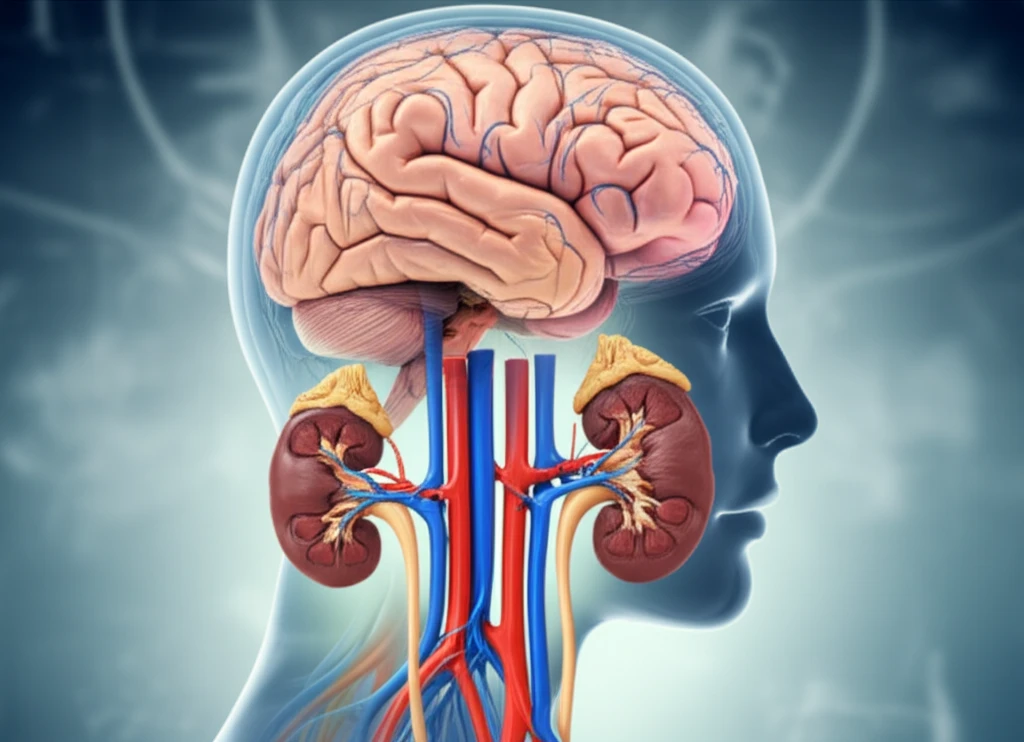
Illustration depicting the interconnectedness of brain and kidneys in the context of stroke, with streams of contrast dye.

CIN and Stroke: Unpacking the Risks and Uncertainties

"Deciphering the Complexities of Contrast-Induced Nephropathy in Stroke Patients and Its Implications"


Stroke, a critical condition affecting millions globally, often necessitates advanced imaging techniques such as CT angiography and CT perfusion for accurate diagnosis and timely intervention. These procedures frequently involve the use of iodinated contrast agents, which, while essential for visualization, have raised concerns regarding their potential impact on kidney health. This article examines the complexities of contrast-induced nephropathy (CIN) in stroke patients.

Recent studies have attempted to clarify the risks associated with CIN in the context of acute stroke, with varying conclusions. Some studies suggest that the use of contrast does not increase the risk of acute kidney injury (AKI), while others highlight potential concerns. This article aims to unpack these findings, providing a nuanced perspective on the current understanding and the need for careful consideration.

The goal is to offer a comprehensive overview, focusing on the factors that influence the development of CIN, the limitations of current research, and the implications for clinical practice. By synthesizing the available evidence, we seek to provide a clear, informative, and actionable resource for both healthcare professionals and individuals affected by stroke.

Understanding the Risks: What is CIN in Stroke Patients?

Illustration depicting the interconnectedness of brain and kidneys in the context of stroke, with streams of contrast dye.

Contrast-induced nephropathy (CIN) is a form of kidney injury that can occur after exposure to contrast agents, primarily those used in medical imaging. It is defined by a decline in kidney function within a few days of contrast administration. In the context of stroke, where rapid and accurate diagnosis is paramount, the use of contrast agents in CT scans is a standard practice. However, this raises the question: How does the use of contrast affect kidney health in this vulnerable patient population?

Several factors increase the risk of CIN. Pre-existing kidney disease is a major risk factor, as are conditions like diabetes, hypertension, and heart failure. The volume and type of contrast agent used, as well as the patient's hydration status, also play a role. Understanding these risk factors is crucial for healthcare providers to make informed decisions about the use of contrast and implement appropriate preventive measures.

  • Pre-existing kidney disease.
  • Diabetes mellitus.
  • Hypertension.
  • Heart failure.
  • Advanced age.
  • Dehydration.
  • High contrast agent dose.
The studies, including the one referenced, provide valuable insights, but they also have limitations. One issue is the variability in how CIN and AKI are defined across different studies. This makes it difficult to compare results and draw definitive conclusions. The timing of creatinine measurements, a common marker of kidney function, also varies, which can affect the assessment of renal injury.

Conclusion: Navigating the Uncertainties

The relationship between contrast agents and kidney health in stroke patients remains complex and requires careful consideration. While current research offers valuable insights, it also highlights the need for caution, especially given the variability in study designs and the limitations in defining and assessing CIN. Healthcare professionals must weigh the benefits of contrast-enhanced imaging against the potential risks, utilizing a patient-centered approach that considers individual risk factors and implements appropriate preventive measures. Future research should aim to standardize definitions, incorporate larger and more diverse patient populations, and explore innovative strategies to mitigate the risks associated with contrast use. This will lead to improved outcomes and a better understanding of how to balance the critical need for accurate stroke diagnosis with the imperative to protect kidney health.

About this Article -

This article was crafted using a human-AI hybrid and collaborative approach. AI assisted our team with initial drafting, research insights, identifying key questions, and image generation. Our human editors guided topic selection, defined the angle, structured the content, ensured factual accuracy and relevance, refined the tone, and conducted thorough editing to deliver helpful, high-quality information.See our About page for more information.

This article is based on research published under:

DOI-LINK: 10.1161/strokeaha.117.018897, Alternate LINK

Title: Letter By Malhotra Et Al Regarding Article, “Neurons Over Nephrons: Systematic Review And Meta-Analysis Of Contrast-Induced Nephropathy In Patients With Acute Stroke”

Subject: Advanced and Specialized Nursing

Journal: Stroke

Publisher: Ovid Technologies (Wolters Kluwer Health)

Authors: Ajay Malhotra, Xiao Wu, Long H. Tu

Published: 2017-10-01

Everything You Need To Know

1

What is Contrast-Induced Nephropathy (CIN), and how does it relate to stroke?

Contrast-Induced Nephropathy (CIN) is kidney injury that can occur after exposure to contrast agents, primarily those used in medical imaging. In stroke patients, advanced imaging techniques like CT angiography and CT perfusion are frequently used for diagnosis. These procedures often involve iodinated contrast agents. The use of these contrast agents raises concerns about their potential impact on kidney health, specifically the development of CIN. This is particularly important in stroke because the condition itself can affect kidney function, and the use of contrast adds another potential stressor.

2

What factors increase the risk of Contrast-Induced Nephropathy (CIN) in patients undergoing stroke treatment?

Several factors increase the risk of Contrast-Induced Nephropathy (CIN). Pre-existing kidney disease is a major risk factor. Other factors include diabetes mellitus, hypertension, heart failure, advanced age, dehydration, and the use of a high contrast agent dose. Understanding these risk factors is critical for healthcare providers to make informed decisions about contrast use and implement preventive measures, such as ensuring adequate hydration.

3

What are the current uncertainties surrounding the relationship between contrast agents and kidney health in stroke patients?

The relationship between contrast agents and kidney health in stroke patients is complex. Current research offers valuable insights but also highlights uncertainties. One key issue is the variability in how CIN and acute kidney injury (AKI) are defined across different studies. This variability makes it difficult to compare results and draw definitive conclusions. The timing of creatinine measurements, a common marker of kidney function, also varies, which can affect the assessment of renal injury. Furthermore, studies sometimes show conflicting results regarding the risk of acute kidney injury (AKI) following contrast use.

4

How do healthcare professionals approach the use of contrast agents in stroke patients, considering the risk of CIN?

Healthcare professionals must carefully weigh the benefits of contrast-enhanced imaging against the potential risks, utilizing a patient-centered approach. This involves considering individual risk factors such as pre-existing kidney disease, diabetes, hypertension, and hydration status. They implement appropriate preventive measures when using contrast agents, such as ensuring adequate hydration, which is particularly important to help protect the kidneys. The goal is to balance the critical need for accurate stroke diagnosis with the imperative to protect kidney health.

5

What are the limitations of current research on Contrast-Induced Nephropathy (CIN) in stroke patients, and what future research directions are needed?

Current research on Contrast-Induced Nephropathy (CIN) has several limitations. One major issue is the variability in how CIN and acute kidney injury (AKI) are defined across different studies, making comparisons and definitive conclusions difficult. The timing of creatinine measurements also varies, affecting the assessment of renal injury. Future research should aim to standardize definitions of CIN and AKI, incorporate larger and more diverse patient populations, and explore innovative strategies to mitigate the risks associated with contrast use. These advancements will lead to improved outcomes and a better understanding of how to balance accurate stroke diagnosis with the protection of kidney health.

Newsletter Subscribe

Subscribe to get the latest articles and insights directly in your inbox.