
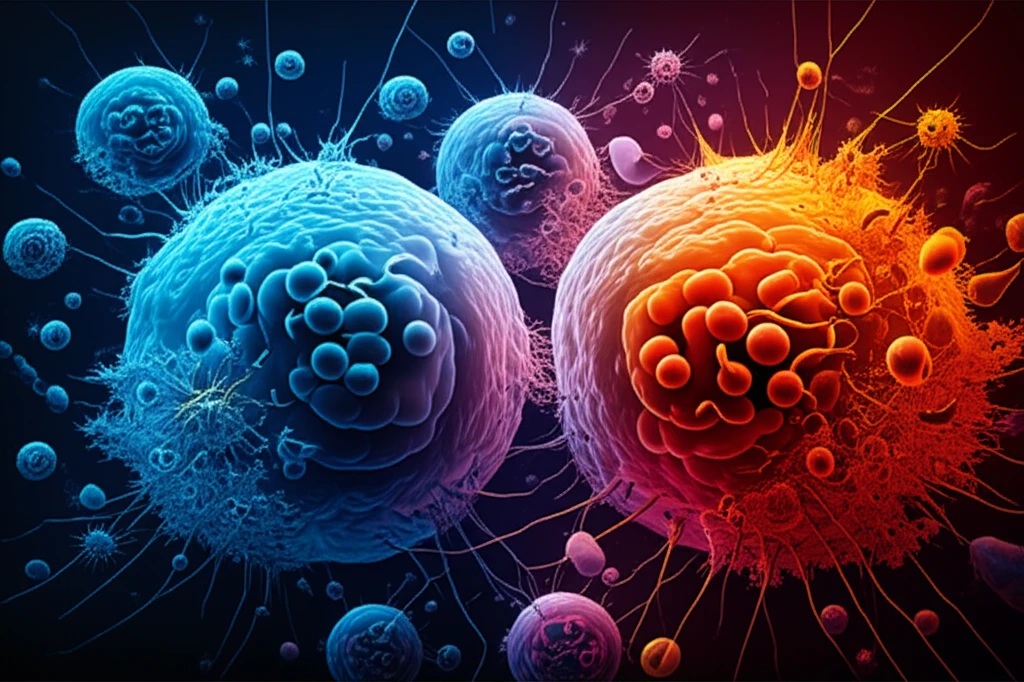
Illustration of Chlamydia trachomatis infecting cells, highlighting processes of apoptosis and necrosis.

Chlamydia and Your Body: Unmasking a Stealthy Threat and its Impact

"New research reveals how Chlamydia, a common STI, outsmarts the body and undermines its defenses, with implications for your health."


Sexually transmitted infections (STIs) are a significant public health concern, impacting millions of people worldwide. Among these, Chlamydia trachomatis stands out as one of the most common bacterial STIs. Often asymptomatic, it can silently wreak havoc on the body, leading to serious health complications if left untreated. Recent research is shedding light on how Chlamydia outmaneuvers the body's defenses, which is crucial for understanding and managing this prevalent infection.

The body's immune system is designed to protect against invading pathogens, including bacteria like Chlamydia. However, Chlamydia has evolved sophisticated strategies to evade and manipulate these defenses. A key area of interest is how Chlamydia interacts with the host cells, specifically how it impacts the process of cell death. Understanding these interactions is essential for developing effective treatment and prevention strategies.

This article delves into the intricate world of Chlamydia infection, exploring the latest findings on its impact on host cells. We'll examine how the bacteria influences the body's natural responses, focusing on the mechanisms of infection and the implications for long-term health. Our goal is to provide a clear, accessible overview of the science, offering actionable insights for readers concerned about their health and well-being.

Chlamydia's Stealth Tactics: How the Bacteria Manipulates Host Cells

Illustration of Chlamydia trachomatis infecting cells, highlighting processes of apoptosis and necrosis.

Chlamydia's ability to establish and maintain an infection relies on its interaction with host cells, particularly the cells lining the reproductive tract. The bacteria enters these cells, creating a niche to replicate and proliferate. Research has shown that Chlamydia employs cunning tactics to protect this niche from the body's natural defense mechanisms, including cell death.

One of the ways the body fights infection is through programmed cell death, a process called apoptosis. Apoptosis eliminates infected cells to prevent the spread of pathogens. However, Chlamydia has developed ways to thwart this process. It appears that the bacteria initially suppresses apoptosis in infected cells, allowing them to survive long enough for Chlamydia to reproduce. This is a key factor in the bacteria's ability to establish a successful infection.

  • Inhibition of Apoptosis: Chlamydia actively blocks the activation of caspases, key enzymes that trigger apoptosis.
  • Necrosis as a Defense Mechanism: When the body attempts to induce cell death, Chlamydia-infected cells often die through necrosis, a different form of cell death that may not limit the spread of infection as effectively.
  • Disruption of the Cell Cycle: Chlamydia can manipulate the host cell cycle to create a more favorable environment for replication.
Scientists have found that while Chlamydia can initially protect cells from apoptosis, it doesn't guarantee their long-term survival. Cells infected with Chlamydia, when exposed to pro-apoptotic stimuli, often undergo necrosis, a more inflammatory type of cell death. This shift from apoptosis to necrosis suggests that the bacteria's anti-apoptotic strategies are not foolproof and may have implications for the infection's progression and the host's response.

Empowering Health: Knowledge and Action

Understanding the intricacies of Chlamydia infection and its impact on the body is essential for protecting your health. By staying informed and taking proactive steps, such as regular STI screenings and safe sexual practices, you can reduce your risk and protect yourself. Remember, knowledge is a powerful tool in the fight against Chlamydia and other STIs. If you suspect you may have Chlamydia, it's important to consult with a healthcare professional for accurate diagnosis and treatment.

About this Article -

This article was crafted using a human-AI hybrid and collaborative approach. AI assisted our team with initial drafting, research insights, identifying key questions, and image generation. Our human editors guided topic selection, defined the angle, structured the content, ensured factual accuracy and relevance, refined the tone, and conducted thorough editing to deliver helpful, high-quality information.See our About page for more information.

This article is based on research published under:

DOI-LINK: 10.1038/s41418-018-0224-2, Alternate LINK

Title: Chlamydia Trachomatis Fails To Protect Its Growth Niche Against Pro-Apoptotic Insults

Subject: Cell Biology

Journal: Cell Death & Differentiation

Publisher: Springer Science and Business Media LLC

Authors: Barbara S. Sixt, Carlos Núñez-Otero, Oliver Kepp, Raphael H. Valdivia, Guido Kroemer

Published: 2018-10-30

Everything You Need To Know

1

What is Chlamydia trachomatis and why is it a concern?

Chlamydia trachomatis is a common sexually transmitted infection (STI) that often presents without symptoms, making it a 'stealthy threat.' If left untreated, Chlamydia trachomatis can lead to serious health complications. Recent research focuses on how Chlamydia trachomatis manipulates the body's defenses, which is vital for managing this widespread infection. Understanding its mechanisms is crucial for developing effective treatment and prevention strategies. Further research into Chlamydia trachomatis could reveal more about its interaction with the host immune system, potentially leading to novel therapeutic targets. Topics such as the long-term effects on fertility and the development of antibiotic resistance were not discussed.

2

How does Chlamydia manipulate host cells to establish an infection?

Chlamydia establishes an infection by entering host cells, particularly those lining the reproductive tract, creating a replication niche. To protect this niche, Chlamydia employs tactics to evade the body's defense mechanisms, including inhibiting apoptosis (programmed cell death). By initially suppressing apoptosis, Chlamydia allows infected cells to survive long enough to reproduce. However, when the body induces cell death, Chlamydia-infected cells often undergo necrosis, which may not effectively limit the spread of the infection. In addition, Chlamydia can manipulate the host cell cycle to create a favorable environment for replication, enhancing its ability to thrive. Aspects like the specific proteins involved in these processes and the genetic changes induced in the host cells are areas for further exploration.

3

What is apoptosis, and how does Chlamydia interfere with this process?

Apoptosis is programmed cell death, a natural defense mechanism where the body eliminates infected cells to prevent the spread of pathogens. Chlamydia interferes with apoptosis by actively blocking the activation of caspases, which are key enzymes that trigger apoptosis. This inhibition allows Chlamydia to survive and replicate within the host cells. However, this anti-apoptotic strategy is not always successful; when cells infected with Chlamydia are exposed to pro-apoptotic stimuli, they often undergo necrosis, a more inflammatory type of cell death. This shift suggests that Chlamydia's control over cell death is not absolute and may have consequences for the infection's progression. The signaling pathways involved in this process and the specific stimuli that trigger necrosis were not discussed.

4

What is the difference between apoptosis and necrosis in the context of a Chlamydia infection?

Apoptosis and necrosis are two distinct forms of cell death. Apoptosis is programmed cell death that is a controlled process that eliminates infected cells to limit pathogen spread. Chlamydia initially suppresses apoptosis to facilitate its replication. Necrosis, on the other hand, is a more inflammatory type of cell death that occurs when Chlamydia-infected cells are exposed to pro-apoptotic stimuli, suggesting that Chlamydia's anti-apoptotic strategies are not entirely effective. Necrosis may not limit the spread of infection as effectively as apoptosis. Understanding the factors that determine whether cells undergo apoptosis or necrosis could lead to new therapeutic approaches. The specific molecular mechanisms and triggers that differentiate these pathways need further investigation.

5

What actions can I take to protect myself from Chlamydia?

To protect yourself from Chlamydia, it is essential to stay informed and take proactive steps. Regular STI screenings are crucial for early detection and treatment. Practicing safe sexual behaviors, such as using condoms consistently and correctly, can significantly reduce your risk. If you suspect you may have Chlamydia, consulting with a healthcare professional for accurate diagnosis and treatment is important. Early treatment can prevent serious health complications and further spread. Information on vaccine development and more detailed discussion on different safe sex practices was not discussed. Public health initiatives and educational programs also play a key role in preventing the spread of Chlamydia.

Newsletter Subscribe

Subscribe to get the latest articles and insights directly in your inbox.