
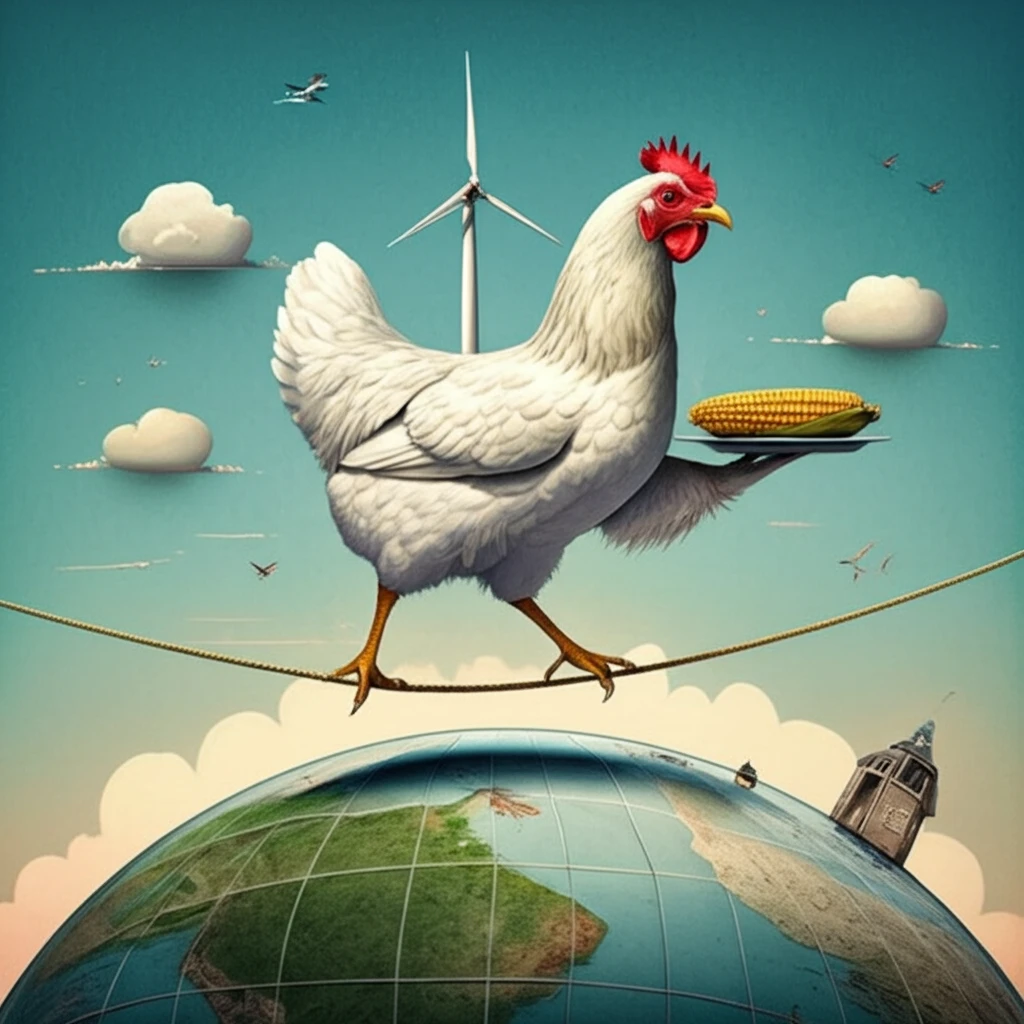
Chicken's Carbon Footprint: Unveiling the Environmental Impact of Your Meal

"From farm to fork, explore the surprising environmental costs behind chicken production and what you can do to make a difference."
Chicken has become a staple in diets worldwide, prized for its versatility, affordability, and lean protein content. However, the ease with which we can access this popular poultry often obscures a complex web of environmental consequences. From the sprawling fields where feed is grown to the energy-intensive processing plants, each stage of chicken production leaves a significant footprint on our planet.
A recent life cycle assessment (LCA) digs deep into the environmental performance of the entire chicken meat chain. This comprehensive study, encompassing numerous farms, processing facilities, and households, reveals the specific impacts at each stage – from chicken farm to slaughterhouse, meat processing plant, retail, and household consumption.
Understanding these impacts is the first step towards making more sustainable choices. By examining the key environmental performance indicators, such as global warming potential, energy consumption, and waste generation, we can identify areas where changes – both big and small – can lead to a more eco-friendly food system. Let's uncover the hidden costs of your chicken dinner and explore how you can help reduce its environmental impact.
What are the Biggest Environmental Impacts in the Chicken Production Chain?
The life cycle assessment highlights several critical areas where chicken production significantly impacts the environment:
- Global Warming Potential: Measures the total greenhouse gas emissions, including carbon dioxide, methane, and nitrous oxide.
- Cumulative Energy Demand: Total energy consumed throughout the entire production chain.
- Ozone Layer Depletion: Impact on the ozone layer.
- Acidification Potential: Emissions that lead to acid rain.
- Eutrophication Potential: Excess nutrients in water bodies, leading to algal blooms.
Small Changes, Big Impact: What You Can Do
While the challenges of sustainable chicken production are significant, there are actionable steps consumers and producers can take to lessen the environmental burden. Here are a few starting points: <ul> <li>Reduce Chicken Consumption: Eating less chicken, and meat in general, is the most direct way to lower your footprint.</li> <li>Choose Sustainable Brands: Look for certifications or brands committed to sustainable farming practices, reduced energy use, and responsible waste management.</li> <li>Reduce Food Waste: Properly storing and using leftovers minimizes waste and the resources used to produce that food.</li> <li>Support Farms: Advocate for policies that support sustainable agriculture, renewable energy, and responsible land use.</li> </ul> By making informed choices and supporting sustainable practices, we can all play a part in creating a more environmentally responsible food system. Every small change contributes to a healthier planet.