
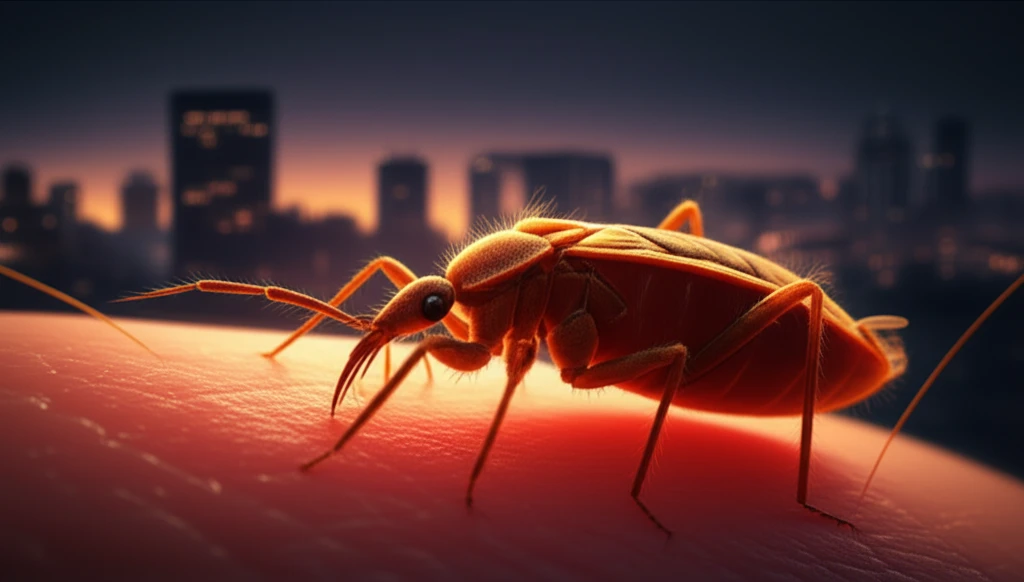
Illustration of a kissing bug feeding on human skin, highlighting microscopic mouthpart details.

Chagas Disease: Unmasking the Bite of the "Kissing Bug"

"Discover how microscopic techniques are revealing the intricate feeding habits of the insect vector behind this Latin American health challenge."


Chagas disease, or American trypanosomiasis, is caused by the protozoan parasite Trypanosoma cruzi and primarily transmitted through blood-sucking insects known as triatomines—often called "kissing bugs." These insects, belonging to the Hemiptera: Reduviidae family, are notorious for their nocturnal feeding habits, often biting humans on the face while they sleep. Rhodnius prolixus stands out as the most significant vector of T. cruzi in Colombia, underscoring the importance of understanding its biology and feeding behavior.

Microscopic techniques offer invaluable insights into the biological structures and processes involved in the transmission of diseases. By visualizing the mouthparts and feeding mechanisms of R. prolixus, researchers gain a deeper understanding of how the parasite is transmitted from insect to host.

This article delves into the blood-feeding process of Rhodnius prolixus, showcasing microscopic images and histological features that highlight the insect's feeding behavior. We will explore how these insects obtain blood meals, the role of their mouthparts, and the implications for Chagas disease transmission, with a focus on research conducted in Colombia.

The Mechanics of a Blood Meal: How Rhodnius Prolixus Feeds

Illustration of a kissing bug feeding on human skin, highlighting microscopic mouthpart details.

Rhodnius prolixus employs a sophisticated method to acquire blood meals. Unlike some insects that create small hemorrhages, triatomines directly tap into blood vessels—a process known as solenophagy or capillary feeding. This approach allows them to efficiently extract blood from their vertebrate hosts. These insects use carbon dioxide to locate their sleeping hosts.

The feeding process, which lasts approximately 20 to 30 minutes, involves a series of precise movements. The insect swings its proboscis forward, piercing the skin with rapid, alternating motions of its mandibles. These mandibles penetrate the superficial tissues, paving the way for the maxillae (maxillary bundle) to delve deeper into the dermis.

  • Mandible Mastery: Resistant mandibles penetrate the skin's surface.
  • Maxillary Precision: The maxillae (maxillary bundle) then deeply penetrate into the dermis with restless twisting movements.
  • Salivary Arsenal: Bioactive molecules in the saliva facilitate blood flow by reducing hemostasis, inflammation, and immune activation.
Saliva plays a crucial role in facilitating blood flow. R. prolixus saliva contains a variety of bioactive molecules that counteract the host's physiological responses, such as blood clotting, inflammation, and immune activation. This saliva is deposited into the host's skin throughout the probing and engorgement phases, ensuring a smooth and uninterrupted blood meal.

Why Understanding Insect Feeding Matters

The intricate feeding mechanism of Rhodnius prolixus underscores the complexity of Chagas disease transmission. By understanding how these insects feed, scientists and public health officials can develop more effective strategies to control the spread of this debilitating disease.

Ongoing research into the saliva composition and mouthpart mechanics of triatomines may pave the way for innovative interventions. For example, identifying and neutralizing the bioactive molecules in the saliva could disrupt the feeding process, preventing parasite transmission.

Continued vigilance and vector control efforts remain essential in Latin America to combat Chagas disease. Understanding the interplay between the insect vector, the parasite, and the human host is key to achieving lasting public health improvements.

About this Article -

This article was crafted using a human-AI hybrid and collaborative approach. AI assisted our team with initial drafting, research insights, identifying key questions, and image generation. Our human editors guided topic selection, defined the angle, structured the content, ensured factual accuracy and relevance, refined the tone, and conducted thorough editing to deliver helpful, high-quality information.See our About page for more information.

This article is based on research published under:

DOI-LINK: 10.7705/biomedica.v37i3.3304, Alternate LINK

Title: Blood-Feeding Of Rhodnius Prolixus

Subject: General Biochemistry, Genetics and Molecular Biology

Journal: Biomédica

Publisher: Instituto Nacional de Salud (Colombia)

Authors: Kevin Escandón-Vargas, Carlos A. Muñoz-Zuluaga, Liliana Salazar

Published: 2017-09-01

Everything You Need To Know

1

What exactly is Chagas disease and how does someone get it from a 'kissing bug'?

Chagas disease, also known as American trypanosomiasis, is caused by the protozoan parasite Trypanosoma cruzi. The primary mode of transmission is through triatomines, often called 'kissing bugs,' which are blood-sucking insects. These insects, particularly Rhodnius prolixus, transmit the parasite when they defecate after feeding, allowing the parasite to enter the host through the bite wound or mucous membranes.

2

How does Rhodnius prolixus, the 'kissing bug,' actually manage to suck blood from its victims?

Rhodnius prolixus uses a feeding method called solenophagy, or capillary feeding, to efficiently extract blood directly from blood vessels. The process involves the insect using carbon dioxide to locate their sleeping hosts. The insect then swings its proboscis forward, piercing the skin with rapid, alternating motions of its mandibles. The mandibles penetrate the superficial tissues, paving the way for the maxillae (maxillary bundle) to delve deeper into the dermis. Saliva is then used to reduce hemostasis, inflammation, and immune activation.

3

What's so special about the saliva of Rhodnius prolixus, and how does it help the insect feed so efficiently?

The saliva of Rhodnius prolixus contains bioactive molecules that counteract the host's natural responses like blood clotting, inflammation, and immune activation. These molecules ensure a smooth, uninterrupted blood meal by reducing hemostasis, inflammation, and immune activation. The saliva is deposited into the host's skin during both the probing and engorgement phases of feeding, facilitating efficient blood flow.

4

How do microscopic techniques help us understand the spread of Chagas disease through 'kissing bugs'?

Microscopic techniques enable researchers to visualize the mouthparts and feeding mechanisms of Rhodnius prolixus, providing critical insights into how Trypanosoma cruzi is transmitted. By understanding these intricate details, scientists can develop targeted strategies to disrupt the transmission cycle of Chagas disease. This includes identifying potential targets for interventions, such as molecules in the insect's saliva that facilitate blood feeding or specific aspects of the insect's behavior that contribute to disease spread.

5

Why is it so important to understand exactly how Rhodnius prolixus feeds, and what impact does this understanding have on fighting Chagas disease?

Understanding the feeding mechanisms of Rhodnius prolixus is crucial for developing effective control strategies for Chagas disease. By studying how these insects feed, scientists and public health officials can identify vulnerabilities in the transmission process. Further research is needed to find new ways to target the behavior and biology of Rhodnius prolixus, which could lead to more effective interventions to prevent the spread of this disease.

Newsletter Subscribe

Subscribe to get the latest articles and insights directly in your inbox.