
Cervical Cancer Breakthrough: Unlocking New Prognostic Markers for Improved Treatment

"A network-based genomic analysis reveals key proteins linked to pancreatic adenocarcinoma up-regulating factor (PAUF), offering new hope for predicting and improving cervical cancer outcomes."
Cervical cancer remains a significant global health challenge, ranking as the second most common cancer among women worldwide. While advancements in screening and prevention through HPV vaccinations have made strides, the recurrence of invasive cervical cancer continues to be a major concern. This highlights the urgent need for more precise methods to predict how the cancer will behave in individual patients, paving the way for more effective, personalized treatment strategies.
Currently, clinical factors like the International Federation of Gynecology and Obstetrics (FIGO) stage, the presence of lymph node metastasis, and tumor size are used to assess prognosis. However, these factors have limitations in accurately predicting long-term survival. The answer lies in molecular markers: measurable substances in the body that can indicate the presence or severity of a disease. The rise of molecular biology and accessible large-scale data sets like The Cancer Genome Atlas (TCGA) have made the search for these markers more promising than ever.
Previous research has identified pancreatic adenocarcinoma up-regulated factor (PAUF) as a potential prognostic marker in cervical cancer. High levels of PAUF are often found in glandular cells or adenocarcinomas, and its presence in the cell’s cytoplasm has been linked to poorer survival rates. However, a deeper dive is needed to understand exactly how PAUF affects cancer development, which is where the power of network analysis comes into play. This method examines the complex interactions between genes, understanding that a single genetic change can trigger a cascade of effects along interconnected pathways.
Decoding the Genomic Network: How Key Proteins Impact Cervical Cancer Prognosis
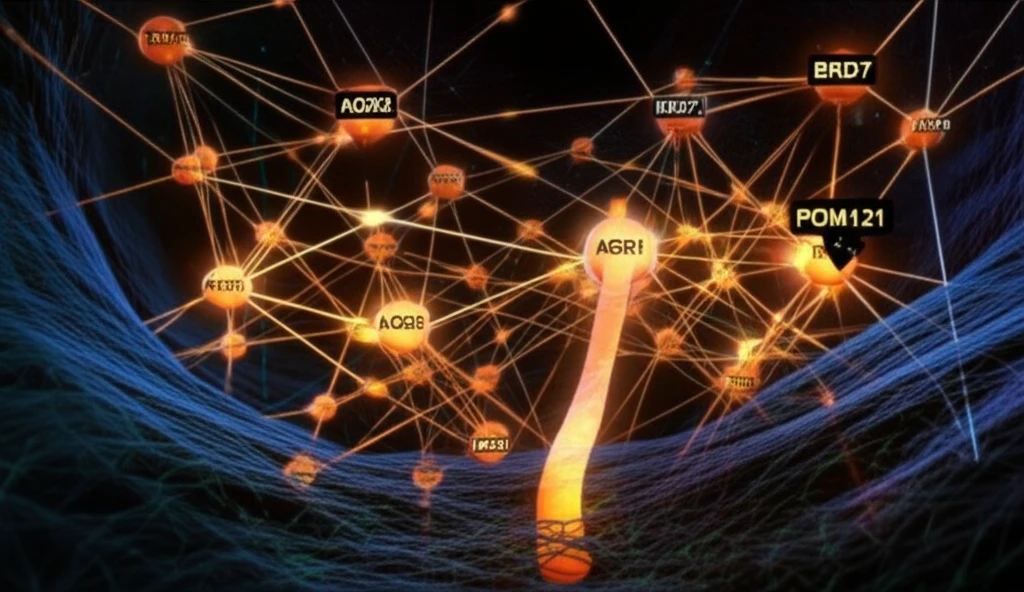
To identify new molecular markers related to PAUF, researchers analyzed data from the Gene Expression Omnibus (GEO) and TCGA datasets. This involved sifting through vast amounts of genetic information to pinpoint genes whose expression patterns correlated with PAUF. Imagine it as searching for specific stars within a constellation whose movements are linked to a central, brighter star.
- AGR2 (Anterior Gradient 2): Involved in protein folding and secretion, and often elevated in various cancers.
- BRD7 (Bromodomain-Containing Protein 7): A protein involved in gene regulation and has been implicated as a tumor suppressor.
- POM121 (Nuclear Pore Membrane Protein 121): A component of the nuclear pore complex, which regulates the transport of molecules into and out of the cell nucleus.
The Future of Cervical Cancer Treatment: Personalized Approaches Based on Molecular Insights
This research underscores the potential of using genomic network-based approaches to identify new biomarkers for cervical cancer prognosis. By understanding the complex interplay of proteins like AGR2, BRD7, and POM121, clinicians can potentially develop more accurate prognostic models and tailor treatment strategies to individual patients. While more research is needed to fully elucidate the mechanisms by which these proteins influence cervical cancer progression, these findings offer a promising step towards improving outcomes for women affected by this disease.