
CELS to the Rescue: How Combined Surgery Can Help with Difficult Colon Polyps

"Discover the innovative approach of combined endoscopic and laparoscopic surgery (CELS) for removing challenging colon polyps, offering a safer alternative to traditional resections."
Colon polyps, those small clumps of cells that form on the lining of the colon, are often discovered during routine screenings. While most are harmless, some can develop into cancer if left untreated. Removing these polyps is a crucial step in preventing colorectal cancer, but what happens when a polyp is too large or located in a difficult-to-reach spot?
Traditionally, complex colon polyps that couldn't be removed with standard colonoscopy techniques required a more invasive procedure: a segmental colectomy, or surgical resection of a portion of the colon. While laparoscopic techniques have improved outcomes, any bowel resection carries significant risks and a potentially long recovery period.
Enter combined endoscopic and laparoscopic surgery, or CELS. This innovative approach combines the best of both worlds, using colonoscopy and laparoscopy to remove challenging polyps with greater precision and potentially fewer complications. This article will explore how CELS works, who might benefit from it, and why it's changing the landscape of colon polyp treatment.
What is Combined Endoscopic and Laparoscopic Surgery (CELS)?
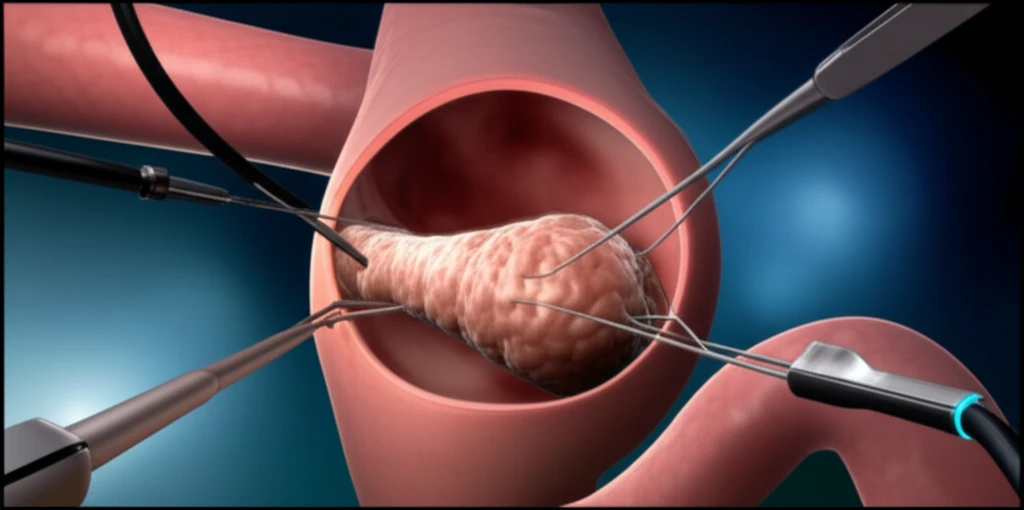
CELS is a minimally invasive surgical technique that combines colonoscopy with laparoscopy to remove large or difficult-to-access colon polyps. The procedure begins with a standard colonoscopy to locate and assess the polyp. Next, small incisions are made in the abdomen through which a laparoscope (a thin, flexible tube with a camera) and other surgical instruments are inserted.
- Minimally Invasive: Smaller incisions mean less pain, scarring, and a faster recovery compared to traditional open surgery.
- Precise Polyp Removal: The combined view allows for more accurate and complete removal of the polyp.
- Reduced Risk of Complications: Laparoscopic visualization helps prevent accidental damage to the colon wall, and any injuries can be repaired immediately.
- Avoidance of Bowel Resection: CELS can often remove polyps that would otherwise require a more extensive surgery.
The Future of Colon Polyp Treatment
Combined endoscopic and laparoscopic surgery represents a significant advancement in the treatment of challenging colon polyps. By combining the strengths of colonoscopy and laparoscopy, CELS offers a less invasive and potentially more effective way to remove polyps, reducing the need for major bowel resections and improving patient outcomes. As technology advances and more surgeons become proficient in CELS, this technique is likely to become an increasingly important tool in the fight against colorectal cancer.