
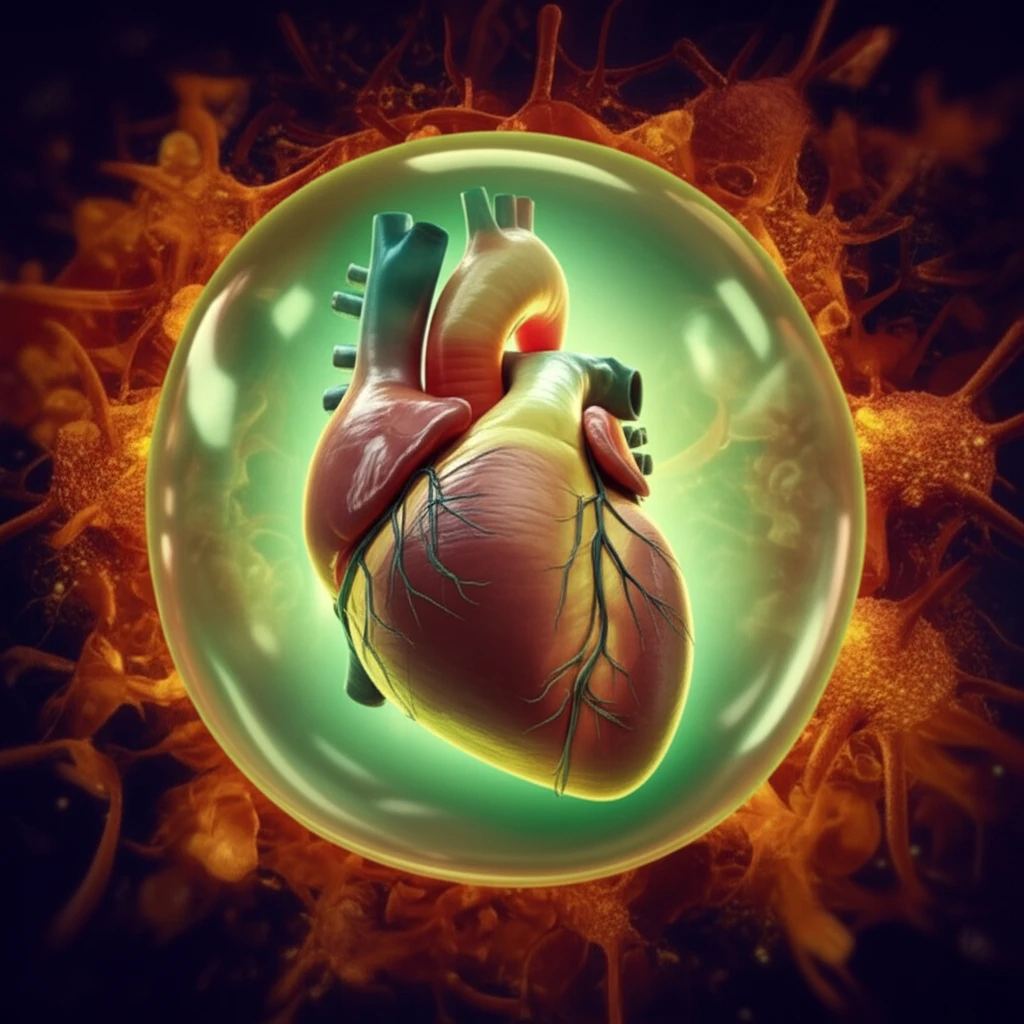
Cellular Stress and Heart Health: Can We Protect Our Hearts from Within?

"Exploring the role of salubrinal in shielding heart cells from damage caused by cellular stress, offering new hope for cardiovascular protection."
Cardiovascular disease remains a leading cause of death worldwide, making the search for effective treatments an urgent priority. One significant factor in heart disease is hypoxia, a condition where the heart muscle doesn't receive enough oxygen. This can lead to a cascade of harmful effects, including cell death.
While existing treatments often focus on managing symptoms or addressing risk factors, a growing body of research is exploring ways to protect the heart at a cellular level. One promising area of study involves endoplasmic reticulum (ER) stress, a condition where cells struggle to fold proteins correctly, leading to cellular dysfunction and apoptosis (cell death).
New research published in the Journal of Geriatric Cardiology sheds light on a potential solution: salubrinal, a compound known for its protective effects against ER stress. This article dives into the study's findings, explaining how salubrinal could safeguard heart cells from damage caused by hypoxia and other cellular stressors.
How Does Salubrinal Protect Heart Cells?
The study, led by Chun-Lei Liu and colleagues, investigated the effects of salubrinal on rat cardiomyocytes (heart muscle cells) exposed to tunicamycin (TM) and hypoxic conditions. Tunicamycin induces ER stress, mimicking the effects of hypoxia on the cells. The researchers aimed to determine if salubrinal could prevent cell death under these stressful conditions.
- HCS (High Content Screening) Apoptosis Assay: A sophisticated method to measure various parameters of cell death.
- TUNEL Assay: A common technique to detect DNA fragmentation, a hallmark of apoptosis.
- Flow Cytometry: A method to count and analyze cells, distinguishing between healthy and apoptotic cells.
- Western Blotting: A technique to measure the levels of specific proteins involved in ER stress and apoptosis.
- Immunocytochemistry: A method to visualize the location of specific proteins within cells.
Looking Ahead: Salubrinal and the Future of Heart Health
The findings from this study offer a promising glimpse into the potential of salubrinal as a cardioprotective agent. By targeting ER stress and promoting cell survival, salubrinal could represent a new approach to preventing and treating heart disease. While further research is needed to fully understand its long-term effects and optimal applications, this study provides a strong foundation for exploring salubrinal's therapeutic potential.