
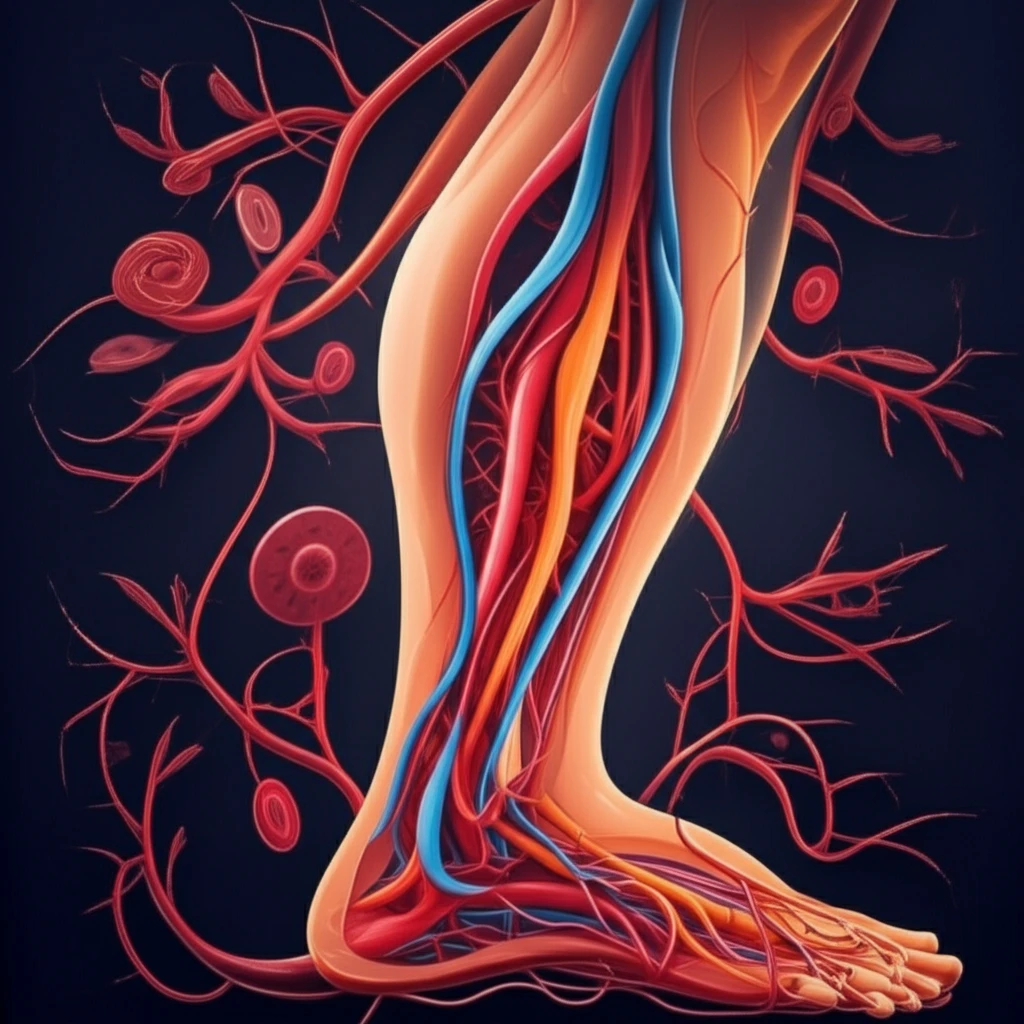
Stylized illustration of cell therapy promoting blood vessel growth in a leg.

Cell Therapy for Peripheral Arterial Disease: A New Hope for Aching Limbs?

"Exploring the latest advancements in cell-based therapies and how they could revolutionize treatment for peripheral arterial disease."


Peripheral arterial disease (PAD) affects millions, causing leg pain, ulcers, and even amputation. Traditional treatments like surgery and medication aren't always effective, leaving many searching for alternatives. Cell-based therapies are emerging as a potential solution, offering a new way to restore blood flow and heal damaged tissues.

This article dives into the exciting world of cell therapy for PAD. We'll explore the different types of cells being used, how they work, and what clinical trials reveal about their safety and effectiveness. Whether you're a patient, caregiver, or simply curious about medical advancements, this is your guide to understanding this cutting-edge treatment.

While gene therapies initially showed promise using proangiogenic growth factors, the discovery of somatic stem/progenitor cells, such as bone marrow-derived endothelial progenitor cells (EPCs) and mesenchymal stem cells (MSCs), has significantly advanced therapeutic angiogenesis for CLI.

How Does Cell Therapy Work for Peripheral Arterial Disease?

Stylized illustration of cell therapy promoting blood vessel growth in a leg.

Cell therapy aims to repair damaged blood vessels and promote new blood vessel growth in ischemic limbs. The process involves harvesting cells from the patient's own body (autologous) or from a donor (allogeneic), processing them in a lab, and then delivering them to the affected area. There are several types of cells being investigated for PAD treatment:

  • Bone Marrow-Derived Mononuclear Cells (BM-MNCs): These cells are extracted from bone marrow and contain a mix of stem and progenitor cells. BM-MNCs were among the first cell types used in clinical trials for PAD, showing promising results in terms of safety and feasibility.
  • Peripheral Blood Mononuclear Cells (PB-MNCs): Similar to BM-MNCs, these cells are harvested from peripheral blood. Some PB-MNC therapies involve mobilizing cells from the bone marrow into the bloodstream using granulocyte colony-stimulating factor (G-CSF).
  • Endothelial Progenitor Cells (EPCs): These specialized cells have the ability to differentiate into endothelial cells, which line blood vessels. By delivering EPCs to ischemic areas, researchers hope to directly contribute to new vessel formation.
  • Mesenchymal Stem Cells (MSCs): MSCs are multipotent stromal cells that can differentiate into various cell types, including bone, cartilage, and fat cells. They also secrete growth factors that promote angiogenesis and tissue repair.

The table below highlight each cell-based options
Each cell type offers unique advantages and potential mechanisms of action. Researchers believe that these cells not only contribute to new vessel growth but also release growth factors that stimulate resident cells, reduce inflammation, and protect tissues from damage.

The Future of Cell Therapy for PAD: What's on the Horizon?

Cell therapy for PAD is a rapidly evolving field, and ongoing research is paving the way for more effective and targeted treatments. Some key areas of future development include:

<ul><li><b>Optimizing Cell Selection:</b> Researchers are working to identify the most potent cell populations for promoting angiogenesis and tissue repair. This may involve selecting specific subtypes of EPCs or MSCs, or genetically modifying cells to enhance their therapeutic effects.</li><li><b>Improving Delivery Methods:</b> The way cells are delivered to the ischemic limb can impact their survival and effectiveness. Novel delivery methods, such as injectable scaffolds or targeted nanoparticles, are being explored to improve cell engraftment and distribution.</li><li><b>Combination Therapies:</b> Combining cell therapy with other treatments, such as medication or lifestyle changes, may lead to synergistic benefits. Clinical trials are investigating the potential of combination therapies to improve outcomes for PAD patients.</li></ul>

While challenges remain, cell therapy offers a compelling new approach to treating PAD. As research progresses and clinical trials continue, cell-based therapies may become an increasingly important tool for improving the lives of individuals affected by this debilitating condition.

About this Article -

This article was crafted using a human-AI hybrid and collaborative approach. AI assisted our team with initial drafting, research insights, identifying key questions, and image generation. Our human editors guided topic selection, defined the angle, structured the content, ensured factual accuracy and relevance, refined the tone, and conducted thorough editing to deliver helpful, high-quality information.See our About page for more information.

This article is based on research published under:

DOI-LINK: 10.4172/2157-7633.1000234, Alternate LINK

Title: Cell-Based Therapies For Peripheral Arterial Disease

Subject: General Medicine

Journal: Journal of Stem Cell Research & Therapy

Publisher: OMICS Publishing Group

Authors: Atsuhiko Kawamoto

Published: 2014-01-01

Everything You Need To Know

1

How does cell therapy work to treat peripheral arterial disease, and what types of cells are currently being used?

Cell therapy for peripheral arterial disease aims to repair damaged blood vessels and stimulate the growth of new ones in limbs affected by ischemia. This process involves collecting cells, either from the patient (autologous) or a donor (allogeneic), processing them in a specialized lab, and then delivering them to the area needing treatment. Currently, Bone Marrow-Derived Mononuclear Cells, Peripheral Blood Mononuclear Cells, Endothelial Progenitor Cells, and Mesenchymal Stem Cells are the primary cells being researched for their therapeutic potential. These cells are believed to contribute to new vessel growth and release growth factors that can stimulate resident cells, reduce inflammation, and protect tissues from further damage.

2

What are Bone Marrow-Derived Mononuclear Cells and Peripheral Blood Mononuclear Cells, and how are they used in treating peripheral arterial disease?

Bone Marrow-Derived Mononuclear Cells are extracted directly from bone marrow and include a variety of stem and progenitor cells. They were among the first cell types tested in clinical trials for peripheral arterial disease, demonstrating promising safety and effectiveness. Peripheral Blood Mononuclear Cells are similar but are harvested from peripheral blood. Some therapies using Peripheral Blood Mononuclear Cells require mobilizing cells from the bone marrow into the bloodstream using granulocyte colony-stimulating factor. The ability to easily collect Peripheral Blood Mononuclear Cells offers convenience for patients.

3

What roles do Endothelial Progenitor Cells and Mesenchymal Stem Cells play in cell therapy for peripheral arterial disease?

Endothelial Progenitor Cells are unique because they can differentiate into endothelial cells, which form the lining of blood vessels. Delivering Endothelial Progenitor Cells to ischemic areas is intended to directly aid in the formation of new blood vessels, potentially improving blood flow. Mesenchymal Stem Cells are multipotent stromal cells capable of differentiating into various cell types, like bone, cartilage, and fat cells. Mesenchymal Stem Cells also secrete growth factors that encourage angiogenesis and tissue repair, contributing to the regeneration of damaged tissues. The advantage of using Mesenchymal Stem Cells is their ability to differentiate into multiple cell types.

4

How did the discovery of Bone Marrow-Derived Endothelial Progenitor Cells and Mesenchymal Stem Cells change the approach to treating peripheral arterial disease?

While gene therapies using proangiogenic growth factors initially showed promise, the focus shifted to somatic stem/progenitor cells, specifically Bone Marrow-Derived Endothelial Progenitor Cells and Mesenchymal Stem Cells. These cells have greatly advanced therapeutic angiogenesis for critical limb ischemia. The advantage of Bone Marrow-Derived Endothelial Progenitor Cells and Mesenchymal Stem Cells is their ability to regenerate and differentiate into cells.

5

What are some of the future directions and advancements being explored in cell therapy for peripheral arterial disease?

Cell therapy research is focusing on refining treatments to be more effective and precisely targeted. Future advancements may involve identifying which cells or combination of cells are most effective for specific patient profiles, optimizing cell delivery methods to ensure targeted delivery to the affected tissues, and enhancing the regenerative capacity of the cells through genetic modification or other techniques. Combining Cell therapies with biomaterials or scaffolds to create a more supportive environment for tissue regeneration is also a consideration.

Newsletter Subscribe

Subscribe to get the latest articles and insights directly in your inbox.