
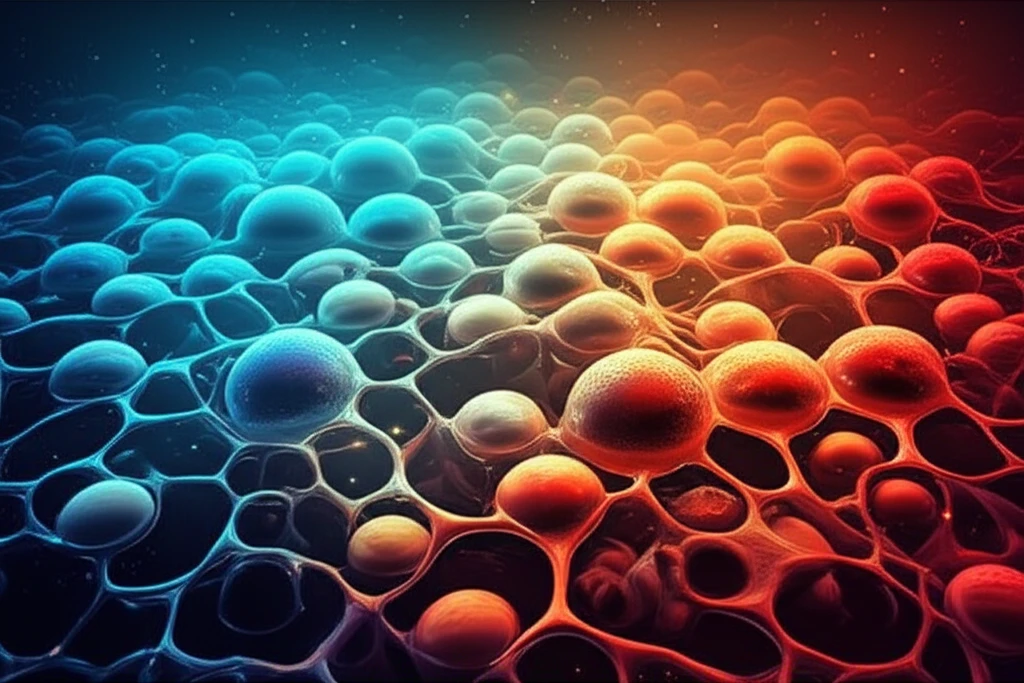
Stem cells within a 3D matrix at varying densities.

Cell Density: The Unseen Key to Maximizing Stem Cell Therapy?

"Unlock the potential of stem cells by optimizing cell load in 3D matrices for revolutionary in-vitro and in-vivo environments."


Stem cells, with their remarkable ability to transform into various cell types, hold immense promise for regenerative medicine. Yet, harnessing their full potential requires a deep understanding of the factors that influence their behavior. Among these, cell density—the number of cells packed into a specific volume—has emerged as a critical, yet often overlooked, variable.

The microenvironment in which stem cells reside profoundly affects their actions. Think of it like a bustling city versus a quiet town: the surroundings dictate how cells interact, grow, and perform their specialized functions. Cell density is a key aspect of this environment, influencing everything from nutrient availability to cell-to-cell communication.

Recent research has shed light on the importance of optimizing cell density in stem cell therapies. By carefully controlling the number of cells within three-dimensional (3D) matrices, scientists are fine-tuning stem cell behavior for more predictable and effective therapeutic outcomes. This article explores how cell density acts as a master regulator, shaping the future of regenerative medicine.

How Does Cell Density Impact Stem Cell Behavior?

Stem cells within a 3D matrix at varying densities.

The density at which stem cells are cultured or delivered can significantly alter their behavior, affecting processes such as cell viability, metabolism, proliferation, and the production of therapeutic factors. The impact varies depending on whether the cells are in a controlled in vitro (laboratory) setting or within the complex in vivo (living organism) environment.

In in vitro settings, studies show that higher cell densities can lead to more sustained and controlled production of specific factors. This is often attributed to enhanced cell-to-cell interactions, which promote a more balanced renewal of cells within the matrix. However, in in vivo environments, the scenario can be quite different. Higher cell densities may result in rapid space saturation and oxygen depletion, leading to implant failure.

  • Nutrient Availability: Higher densities can lead to quicker depletion of essential nutrients and accumulation of waste products.
  • Cell Communication: Cell-to-cell signaling is amplified at higher densities, influencing differentiation and proliferation.
  • Oxygen Levels: Densely packed cells can consume oxygen faster, potentially creating hypoxic conditions.
  • Matrix Integrity: Cell density can affect the structural integrity and remodeling of the surrounding matrix.
These factors collectively dictate the overall success and functionality of stem cell-based therapies. Therefore, optimizing cell density is not just about maximizing cell numbers, but about creating an environment that fosters long-term cell survival, function, and therapeutic efficacy.

The Future of Stem Cell Therapies

The optimization of cell load and microenvironment is essential to improve cell therapy outcomes. It tailors and enhances cell survival and performance. With more understanding in in vitro and in vivo context, we can accelerate the application of cell-based treatments. These advances, that consider cell density and its impact, allow better stem cell products for clinical treatments.

About this Article -

This article was crafted using a human-AI hybrid and collaborative approach. AI assisted our team with initial drafting, research insights, identifying key questions, and image generation. Our human editors guided topic selection, defined the angle, structured the content, ensured factual accuracy and relevance, refined the tone, and conducted thorough editing to deliver helpful, high-quality information.See our About page for more information.

Everything You Need To Know

1

What exactly is cell density?

Cell density refers to the number of cells packed into a specific volume. It's a crucial factor that influences how stem cells behave. The surrounding environment, be it in vitro (laboratory) or in vivo (living organism), impacts how cells interact, grow, and perform their specialized functions. Higher cell densities in 3D matrices, for example, can lead to quicker depletion of essential nutrients and accumulation of waste products, as well as impacting the structural integrity and remodeling of the surrounding matrix.

2

Why is optimizing cell density so important for stem cell therapies?

Optimizing cell density is vital because it directly affects the success and functionality of stem cell-based therapies. It is not merely about maximizing cell numbers; it's about creating an environment that fosters long-term cell survival, function, and therapeutic efficacy. By carefully controlling the number of cells within 3D matrices, scientists can fine-tune stem cell behavior for more predictable and effective therapeutic outcomes. This impacts cell viability, metabolism, proliferation, and the production of therapeutic factors.

3

How does cell density affect stem cells differently in in vitro versus in vivo environments?

In in vitro settings, higher cell densities often lead to enhanced cell-to-cell interactions, which promote a more balanced renewal of cells within the matrix. This can result in a more sustained and controlled production of specific factors. Conversely, in in vivo environments, higher cell densities may result in rapid space saturation and oxygen depletion, potentially leading to implant failure. Nutrient availability, cell communication, oxygen levels, and matrix integrity are all impacted differently based on the environment, and therefore cell density.

4

What specific factors are influenced by cell density in stem cell cultures?

Cell density impacts stem cell behavior through several key factors: nutrient availability, cell communication, oxygen levels, and matrix integrity. Higher densities can lead to quicker depletion of essential nutrients and accumulation of waste products. Cell-to-cell signaling is amplified at higher densities, influencing differentiation and proliferation. Densely packed cells can consume oxygen faster, potentially creating hypoxic conditions. Cell density can affect the structural integrity and remodeling of the surrounding matrix. These factors collectively dictate the overall success and functionality of stem cell-based therapies.

5

How is the understanding of cell density impacting the future of stem cell therapies?

Understanding and optimizing cell density is shaping the future of regenerative medicine by allowing for better stem cell products for clinical treatments. By focusing on the microenvironment, particularly cell load within 3D matrices, researchers are paving the way for more effective and predictable stem cell therapies. It tailors and enhances cell survival and performance, and is essential to improve cell therapy outcomes. The impact of cell density in both in vitro and in vivo environments helps accelerate the application of cell-based treatments.

Newsletter Subscribe

Subscribe to get the latest articles and insights directly in your inbox.