
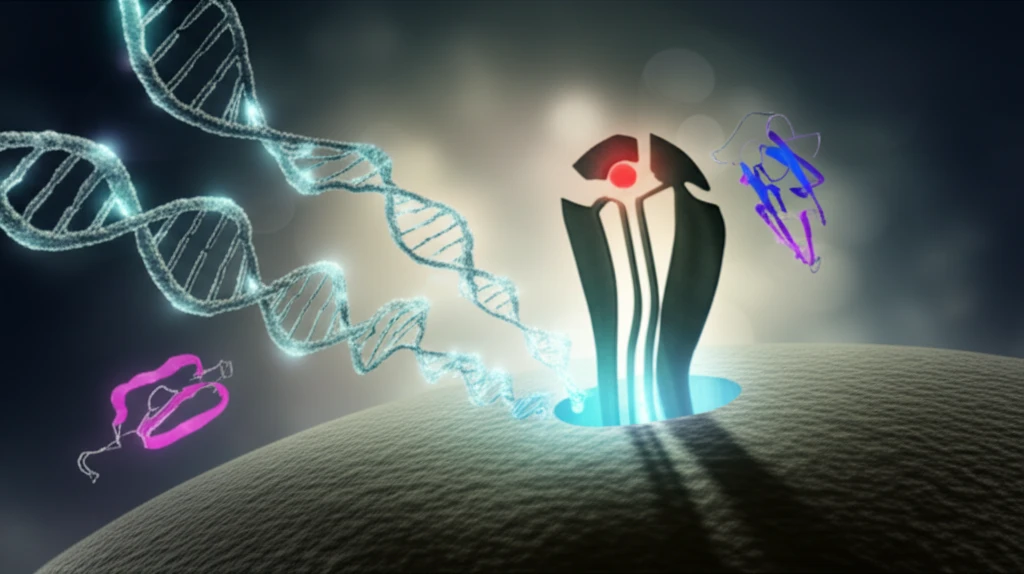
Cell Communication Unlocked: How miRNAs and NRP1 Could Revolutionize Cancer Treatment

"Discover the groundbreaking research on how neuropilin-1 (NRP1) acts as a key receptor for microRNAs, potentially transforming our approach to cancer therapy."
Extracellular miRNAs are emerging as significant markers in various diseases, exhibiting remarkable stability in biological fluids. These tiny molecules play a vital role in intercellular communication, protected from degradation either through encapsulation in microparticles or by binding to proteins like AGO2. Understanding how these protected miRNAs are taken up by cells is crucial.
While encapsulated miRNAs may enter cells via endocytosis or membrane fusion, protein-bound miRNAs require a receptor mechanism for cellular uptake. The central question researchers are now asking is: do natural cell-membrane receptors exist that capture and internalize protein-bound, functional miRNAs? This search led researchers to explore neuropilin-1 (NRP1).
Neuropilin-1 (NRP1) is a receptor known for binding to various ligands, including vascular endothelial growth factor (VEGF). It's highly efficient at mediating ligand internalization and is expressed in endothelial, normal, and cancer cells, making it a prime candidate for miRNA uptake. This article delves into the groundbreaking research demonstrating NRP1's ability to bind and internalize miRNAs, opening new avenues for cancer therapy.
How NRP1 Acts as a Gateway for miRNAs
Researchers have discovered that NRP1 acts as a high-affinity receptor for miRNAs, facilitating their entry into cells. This process is crucial because the miRNAs, once inside, maintain their functionality, influencing key cellular processes such as proliferation, migration, and tube formation in endothelial cells. These findings highlight NRP1's significant role in mediating miRNA uptake and function.
- High Affinity Binding: NRP1 binds miRNAs with high affinity, initiating the internalization process.
- Functional Impact: Once internalized, miRNAs regulate critical cellular functions like proliferation and migration.
- Specificity: Anti-NRP1 antibodies and siRNA confirm NRP1's role in miRNA uptake.
- Distinct Mechanism: VEGF does not compete with miRNAs for NRP1 binding.
Implications and Future Directions
This research illuminates the critical role of NRP1 in capturing and internalizing miRNAs and AGO2/miRNA complexes, which influences cell behavior. Targeting intercellular communication mechanisms offers promising avenues for cancer therapy, presenting an opportunity to modulate tumor growth, metastasis, and immune responses.
Further research is needed to fully elucidate the intricacies of NRP1-mediated miRNA uptake. Identifying specific miRNA targets and how they influence cellular processes will pave the way for developing targeted therapies. Future investigations should explore the structural aspects of the NRP1-miRNA interaction and the specific signaling pathways involved.
By unlocking the mechanisms of miRNA signaling, we can develop innovative therapeutic strategies that precisely target cancer cells while sparing healthy tissue. This could lead to a new era of personalized medicine, with treatments tailored to the unique miRNA profiles of individual tumors, enhancing efficacy and minimizing side effects.