
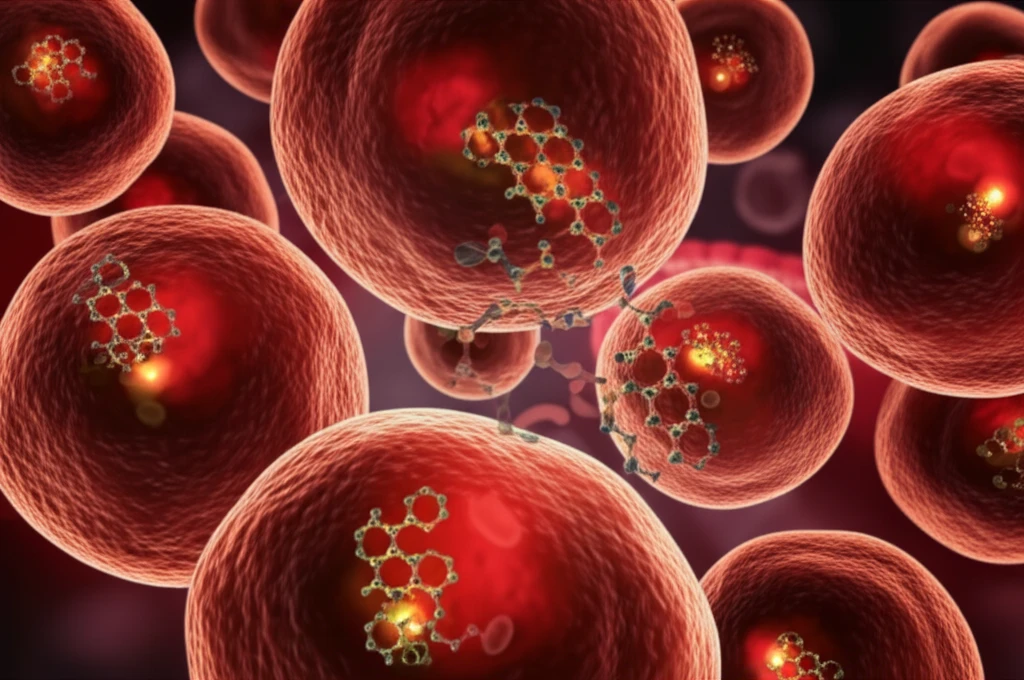
Cardamonin molecular structure inhibiting cancer cell growth.

Cardamonin: The Spice That Fights Colon Cancer?

"New research reveals how this natural compound found in cardamom may inhibit colon neoplasia through modulation of microRNA expression, offering a potential dietary strategy in cancer prevention."


Colorectal cancer is a leading cause of cancer-related deaths, sparking considerable interest in preventative strategies, including dietary interventions. Among these, cardamonin, a spice-derived nutraceutical, has emerged as a promising candidate. Recent research has begun to explore its therapeutic potential, particularly in the context of colon cancer.

A study published in Scientific Reports investigated the effects of cardamonin in an Azoxymethane (AOM) induced mouse model of colorectal cancer. The results shed light on cardamonin's ability to inhibit tumor development and its underlying mechanisms of action.

This article delves into the findings of this research, exploring how cardamonin modulates microRNA expression to suppress colonic neoplasia and offers new hope for dietary interventions in preventing colorectal cancer.

Cardamonin's Impact on Colon Cancer Development: What the Study Shows

Cardamonin molecular structure inhibiting cancer cell growth.

The study divided mice into groups, with some receiving AOM to induce colorectal cancer. These groups were then treated with either a vehicle or cardamonin, starting either simultaneously with AOM injections or 16 weeks after the first AOM injection. This design allowed researchers to assess both the preventive and therapeutic effects of cardamonin.

The results demonstrated that cardamonin treatment led to significant inhibition of tumor incidence and multiplicity. Specifically, cardamonin reduced:

  • Tumor incidence
  • Tumor multiplicity
  • Ki-67 and B-catenin positive cells (markers of cell proliferation)
  • Activation of NF-kB signaling
These findings suggest that cardamonin can effectively interfere with the early stages of colon cancer development and also suppress the growth of existing tumors. Importantly, the activation of NF-kB signaling, a key player in inflammation and cancer, was also reduced after cardamonin treatment.

The Future of Cardamonin in Cancer Prevention

This study provides compelling evidence for the chemopreventive potential of cardamonin in colorectal cancer. By demonstrating its ability to modulate microRNA expression and suppress tumor growth in a mouse model, the research opens new avenues for exploring dietary interventions in cancer prevention.

Further research is needed to fully understand the mechanisms of action and to determine the optimal dosage and delivery methods for cardamonin. Clinical trials in humans are necessary to confirm these findings and to assess the safety and efficacy of cardamonin as a cancer preventive agent.

However, the initial results are promising, suggesting that this natural compound found in cardamom could become a valuable tool in the fight against colorectal cancer. For individuals seeking to reduce their risk of colon cancer, incorporating cardamom into their diet may be a simple yet effective strategy, alongside other established preventive measures.

About this Article -

This article was crafted using a human-AI hybrid and collaborative approach. AI assisted our team with initial drafting, research insights, identifying key questions, and image generation. Our human editors guided topic selection, defined the angle, structured the content, ensured factual accuracy and relevance, refined the tone, and conducted thorough editing to deliver helpful, high-quality information.See our About page for more information.

This article is based on research published under:

DOI-LINK: 10.1038/s41598-017-14253-8, Alternate LINK

Title: Cardamonin Inhibits Colonic Neoplasia Through Modulation Of Microrna Expression

Subject: Multidisciplinary

Journal: Scientific Reports

Publisher: Springer Science and Business Media LLC

Authors: Shirley James, Jayasekharan S. Aparna, Aswathy Mary Paul, Manendra Babu Lankadasari, Sabira Mohammed, Valsalakumari S. Binu, Thankayyan R. Santhoshkumar, Girijadevi Reshmi, Kuzhuvelil B. Harikumar

Published: 2017-10-24

Everything You Need To Know

1

How does cardamonin impact colon cancer development, according to recent studies?

Research indicates that cardamonin can significantly inhibit tumor development in a mouse model of colorectal cancer. It achieves this by reducing tumor incidence and multiplicity, decreasing Ki-67 and B-catenin positive cells (markers of cell proliferation), and suppressing the activation of NF-kB signaling. These findings suggest that cardamonin interferes with the early stages of colon cancer development and can suppress the growth of existing tumors.

2

What methods were used to study the effects of cardamonin on colorectal cancer?

The study published in Scientific Reports, used an Azoxymethane (AOM) induced mouse model of colorectal cancer. Mice were divided into groups, with some receiving AOM to induce colorectal cancer. These groups were then treated with either a vehicle or cardamonin, starting either simultaneously with AOM injections or 16 weeks after the first AOM injection. The researchers assessed both the preventive and therapeutic effects of cardamonin by observing tumor incidence, multiplicity, and markers of cell proliferation.

3

Why is the reduction of NF-kB signaling important in the context of cardamonin and cancer?

NF-kB signaling is crucial because it plays a significant role in inflammation and cancer development. Its activation can promote tumor growth and survival. The study showed that cardamonin treatment reduced the activation of NF-kB signaling in the mouse model. This reduction suggests that cardamonin's anti-cancer effects may be partly due to its ability to modulate inflammatory pathways.

4

How does cardamonin modulate microRNA expression, and what are the implications for cancer?

MicroRNAs (miRNAs) are small, non-coding RNA molecules that regulate gene expression. In the context of cancer, miRNAs can act as either tumor suppressors or oncogenes (cancer-promoting genes). Cardamonin's ability to modulate microRNA expression means it can potentially influence the expression of genes involved in cell growth, apoptosis (programmed cell death), and other cancer-related processes, thereby inhibiting or preventing tumor development. The specific microRNAs affected by cardamonin and their precise roles in colorectal cancer are areas for further investigation.

5

What are the next steps needed to translate these findings into potential treatments or preventative measures for humans?

While this research offers a promising outlook on dietary interventions for colorectal cancer prevention, it is essential to note that the study was conducted on a mouse model. Further research is needed to determine whether cardamonin has the same effects in humans. Future clinical trials are necessary to evaluate the safety and efficacy of cardamonin as a dietary intervention for preventing or treating colorectal cancer. Additionally, understanding the optimal dosage and long-term effects of cardamonin supplementation will be crucial for its potential use in humans.

Newsletter Subscribe

Subscribe to get the latest articles and insights directly in your inbox.