
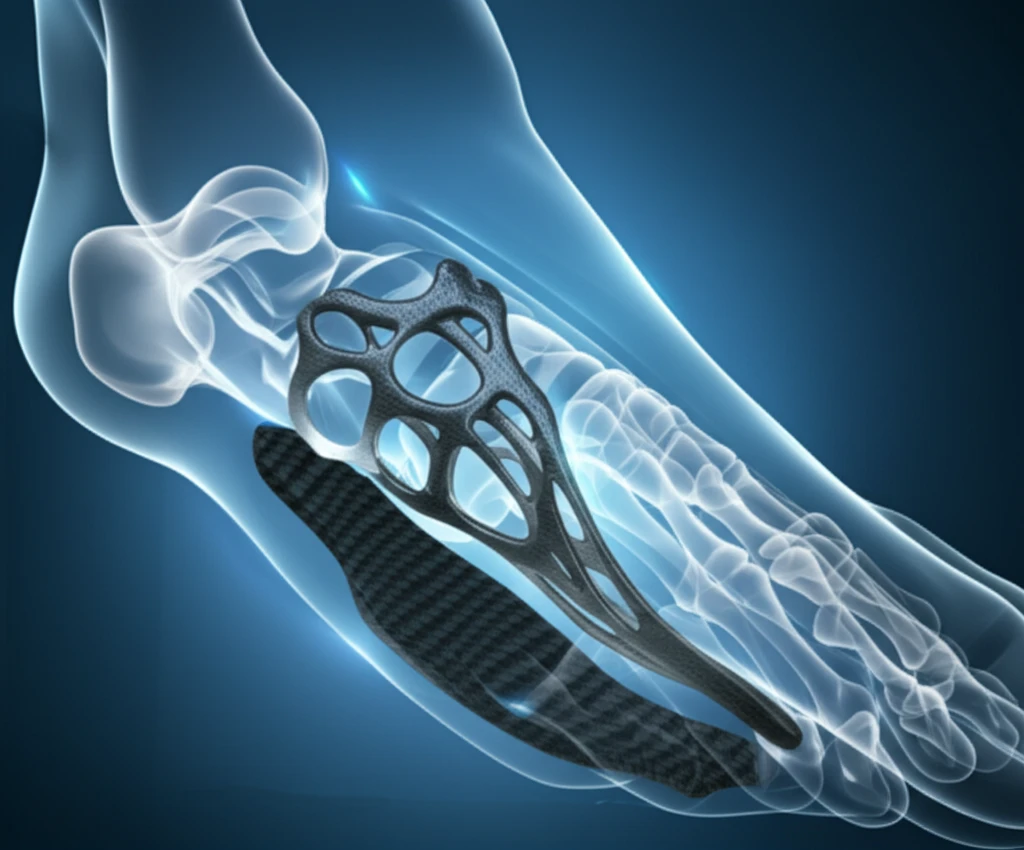
Carbon Fiber Plates: A Modern Solution for Ankle Fractures?

"Explore how carbon fiber plates are changing ankle fracture fixation, offering benefits in healing and post-operative care."
Ankle fractures are a common orthopaedic issue, accounting for approximately 9% of all fractures. When surgical intervention is necessary, various fixation methods are employed, including traditional metal plates and screws. However, a growing trend involves the use of carbon fiber plates, offering a potentially advantageous alternative to conventional materials like stainless steel and titanium.
Carbon fiber implants aren't entirely new to the orthopaedic world. They have been utilized in other areas, such as the humerus, femur, and spine, for several years. The rationale behind their use stems from their unique properties, including a strength-to-weight ratio that rivals metal, coupled with improved radiolucency, allowing for better visualization during and after surgery.
This article delves into a retrospective case series that examined the efficacy of carbon fiber plates in ankle fracture fixation. By analyzing patient outcomes and comparing them to historical data using traditional fixation methods, we aim to provide a clear picture of the potential benefits and limitations of this innovative approach.
Are Carbon Fiber Plates as Effective as Traditional Metal Implants?
A retrospective study was conducted, focusing on patients who underwent ankle fracture fixation with carbon fiber plates by a single surgeon between January 2013 and May 2015. The study collected data on time to fracture consolidation, return to function, and any complications encountered.
- Equal Time to Consolidation: Carbon fiber plates demonstrated a similar timeframe for fracture healing compared to traditional metal implants.
- Wound Healing: No significant differences were observed in wound healing rates between the two groups.
- Return to Function: Patients with carbon fiber plates experienced a return to function comparable to those with metal implants.
The Future of Ankle Fracture Fixation: Is Carbon Fiber the Answer?
The study suggests that carbon fiber plates are a viable alternative to traditional metal implants for ankle fracture fixation, particularly in patients requiring close post-operative monitoring. Their equivalent performance in consolidation, wound healing, and return to function, coupled with the benefit of improved fracture site visualization, makes them an attractive option.
While the results are promising, it's essential to acknowledge that this was a retrospective case series conducted by a single surgeon. Further research, including larger, multi-center studies, is needed to validate these findings and explore the long-term outcomes associated with carbon fiber plates.
The information provided in this article is intended for general knowledge and informational purposes only, and does not constitute medical advice. It is essential to consult with a qualified healthcare professional for any health concerns or before making any decisions related to your health or treatment. Always seek the advice of your physician or other qualified health provider with any questions you may have regarding a medical condition.