
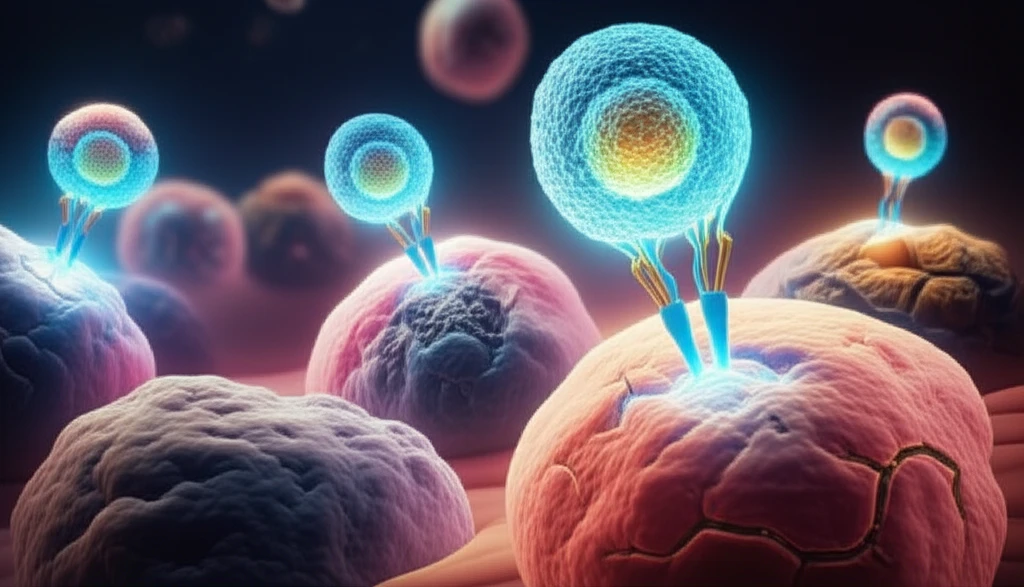
Illustration of CAR-T cells attacking cancer cells

CAR-T Cell Therapy: A Revolutionary Approach to Fighting Cancer

"Understanding Personalized Immunotherapy and Its Impact on Cancer Treatment"


In the relentless battle against cancer, medical science continually seeks innovative treatments. Among the most promising advancements is CAR-T cell therapy, a form of immunotherapy that has revolutionized cancer treatment. This personalized approach utilizes the patient's own immune cells to target and destroy cancer cells, offering hope where traditional methods have faltered.

This article delves into the world of CAR-T cell therapy, exploring its mechanisms, clinical efficacy, potential side effects, and the future implications for cancer treatment. We'll break down the science behind this revolutionary treatment, making it accessible and understandable for everyone.

As we explore the intricacies of CAR-T cell therapy, we aim to empower you with knowledge. We'll discuss the latest developments, clinical trial results, and what this innovative therapy means for patients and their families.

How CAR-T Cell Therapy Works: A Step-by-Step Guide

Illustration of CAR-T cells attacking cancer cells

CAR-T cell therapy is a highly personalized treatment that involves several key steps. The process begins with collecting T cells from the patient's blood. These T cells are a type of white blood cell that plays a crucial role in the immune system.

Once the T cells are harvested, they are sent to a laboratory where they are modified. This modification involves introducing a special receptor called a Chimeric Antigen Receptor (CAR) onto the surface of the T cells. This CAR is designed to recognize and bind to specific proteins (antigens) on cancer cells, such as CD19, which is found on certain lymphoma and leukemia cells.

  • Collection: T cells are extracted from the patient's blood.
  • Modification: The T cells are genetically engineered to express CARs.
  • Expansion: The modified T cells are multiplied in the lab.
  • Infusion: The CAR-T cells are infused back into the patient.
  • Action: CAR-T cells bind to cancer cells and kill them.
After the CAR-T cells are modified and multiplied, they are infused back into the patient's body. These cells then seek out and bind to cancer cells, triggering an immune response that leads to the destruction of the cancer cells. This targeted approach minimizes damage to healthy cells, offering a more effective and less toxic treatment option.

The Future of CAR-T Cell Therapy

CAR-T cell therapy represents a significant leap forward in cancer treatment. Its potential to harness the body's own immune system to fight cancer is truly remarkable. While there are challenges, including the high cost and potential side effects, ongoing research and development are constantly improving the efficacy and safety of this innovative therapy. As we move forward, CAR-T cell therapy promises to be a key player in the future of cancer treatment, offering renewed hope for patients worldwide.

About this Article -

This article was crafted using a human-AI hybrid and collaborative approach. AI assisted our team with initial drafting, research insights, identifying key questions, and image generation. Our human editors guided topic selection, defined the angle, structured the content, ensured factual accuracy and relevance, refined the tone, and conducted thorough editing to deliver helpful, high-quality information.See our About page for more information.

Everything You Need To Know

1

What is CAR-T cell therapy and why is it considered revolutionary?

CAR-T cell therapy is a groundbreaking form of immunotherapy used to treat cancer. It's revolutionary because it's a personalized approach that uses a patient's own T cells, a type of white blood cell crucial for the immune system, to target and destroy cancer cells. The T cells are modified to express a Chimeric Antigen Receptor (CAR), which recognizes specific proteins on cancer cells, offering hope where traditional methods may have failed. This targeted approach minimizes damage to healthy cells, leading to a more effective and less toxic treatment.

2

Can you outline the steps involved in CAR-T cell therapy?

CAR-T cell therapy involves a series of key steps: First, T cells are collected from the patient's blood. These T cells are then genetically modified in a laboratory to express Chimeric Antigen Receptors (CARs) on their surface. These CARs are designed to recognize and bind to specific antigens, like CD19, found on cancer cells. The modified CAR-T cells are then multiplied in the lab to increase their numbers. Finally, these CAR-T cells are infused back into the patient, where they seek out, bind to, and destroy cancer cells.

3

What are Chimeric Antigen Receptors (CARs) and what role do they play in CAR-T cell therapy?

Chimeric Antigen Receptors (CARs) are artificially engineered receptors introduced onto the surface of T cells during CAR-T cell therapy. Their primary role is to enable T cells to recognize and bind to specific antigens (proteins) present on cancer cells. By equipping T cells with CARs, scientists can redirect the immune system to target and destroy cancer cells effectively. For example, CARs can be designed to target CD19, a protein found on lymphoma and leukemia cells, allowing the modified T cells to precisely attack these cancerous cells while minimizing harm to healthy cells.

4

What are the potential challenges and future directions of CAR-T cell therapy?

While CAR-T cell therapy is a significant advancement, it faces challenges such as high costs and potential side effects. Ongoing research and development focus on improving its efficacy and safety. The future of CAR-T cell therapy involves expanding its application to treat other types of cancer and reducing the risk of adverse effects. As technology advances, CAR-T cell therapy promises to be a key player in the future of cancer treatment, offering renewed hope for patients worldwide. Research is also exploring ways to make CAR-T cell therapy more accessible and affordable.

5

How does CAR-T cell therapy differ from traditional cancer treatments like chemotherapy or radiation?

CAR-T cell therapy differs significantly from traditional cancer treatments like chemotherapy or radiation in its approach. Chemotherapy and radiation are systemic treatments that target rapidly dividing cells, which can affect both cancer cells and healthy cells, leading to various side effects. In contrast, CAR-T cell therapy is a personalized immunotherapy that harnesses the patient's own immune system to specifically target cancer cells. By modifying T cells with Chimeric Antigen Receptors (CARs), the therapy ensures that the immune system recognizes and attacks only the cancer cells, minimizing damage to healthy tissues. This targeted approach can lead to more effective and less toxic outcomes compared to traditional methods.

Newsletter Subscribe

Subscribe to get the latest articles and insights directly in your inbox.