
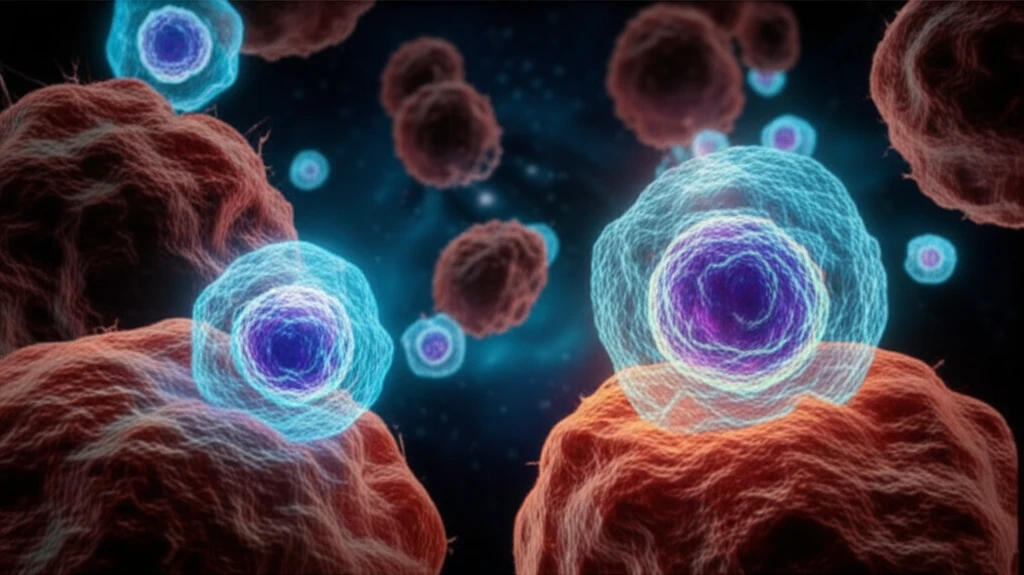
CAR-T cells attacking cancer cells

CAR-T Cell Therapy: A New Dawn for Personalized Cancer Immunotherapy

"Explore how CAR-T cell therapy is revolutionizing cancer treatment, offering new hope for patients with leukemia and lymphoma by harnessing the power of their own immune systems."


The field of cancer treatment is constantly evolving, and one of the most promising recent advances is CAR-T cell therapy. This innovative approach harnesses the power of the patient's own immune system to fight cancer, offering new hope for individuals with certain types of leukemia and lymphoma. In this comprehensive guide, we'll delve into the intricacies of CAR-T cell therapy, exploring its mechanisms, clinical trial results, potential benefits, and challenges.

CAR-T cell therapy stands for Chimeric Antigen Receptor T-cell therapy. It involves modifying a patient's T cells, a type of immune cell, to express receptors that can recognize and bind to specific antigens (proteins) on cancer cells. These modified T cells, now equipped to target and destroy cancer cells, are then infused back into the patient.

Two CAR-T cell therapies, tisagenlecleucel (Kymriah) and axicabtagene ciloleucel (Yescarta), have already been licensed for the treatment of specific patients with leukemia and lymphoma. These therapies represent the forefront of personalized cancer treatments, offering a new wave of hope for those who have not responded to traditional therapies.

How Does CAR-T Cell Therapy Work?

CAR-T cells attacking cancer cells

CAR-T cell therapy is a complex process that involves several key steps:

  • T Cell Collection: T cells are collected from the patient's blood through a process called apheresis.

  • Genetic Modification: In the laboratory, the collected T cells are genetically modified using a viral vector. This vector introduces a gene that codes for a chimeric antigen receptor (CAR). The CAR is designed to recognize a specific antigen found on cancer cells, such as CD19, a protein commonly expressed on B-cell lymphomas and leukemias.
  • Expansion: The modified T cells, now expressing the CAR, are expanded in the laboratory to create a large number of CAR-T cells.
  • Infusion: The expanded CAR-T cells are infused back into the patient's bloodstream.
  • Cancer Cell Targeting: Once infused, the CAR-T cells circulate throughout the body and seek out cancer cells expressing the target antigen.
  • Activation and Destruction: When a CAR-T cell encounters a cancer cell with the target antigen, it binds to it, activating the CAR-T cell. This activation triggers the CAR-T cell to release cytotoxic molecules that kill the cancer cell.
By specifically targeting cancer cells while sparing healthy cells, CAR-T cell therapy offers a more precise and potentially less toxic approach to cancer treatment than traditional chemotherapy or radiation therapy.

The Future of CAR-T Cell Therapy

CAR-T cell therapy is a rapidly evolving field with immense potential to transform cancer treatment. Ongoing research is focused on expanding its application to other types of cancer, improving its safety and efficacy, and developing strategies to overcome resistance. As research progresses and technology advances, CAR-T cell therapy is poised to become an increasingly important tool in the fight against cancer, offering new hope and improved outcomes for patients worldwide.

About this Article -

This article was crafted using a human-AI hybrid and collaborative approach. AI assisted our team with initial drafting, research insights, identifying key questions, and image generation. Our human editors guided topic selection, defined the angle, structured the content, ensured factual accuracy and relevance, refined the tone, and conducted thorough editing to deliver helpful, high-quality information.See our About page for more information.

Everything You Need To Know

1

What is CAR-T cell therapy and how does it work in treating cancer?

CAR-T cell therapy, which stands for Chimeric Antigen Receptor T-cell therapy, is a revolutionary personalized cancer treatment. It involves modifying a patient's own T cells, a type of immune cell, to recognize and attack cancer cells. The process begins with collecting T cells from the patient's blood through apheresis. These T cells are then genetically modified in a lab using a viral vector to express Chimeric Antigen Receptors (CARs). The CARs are designed to target specific antigens on cancer cells, like CD19. The modified T cells are expanded, and then infused back into the patient. Once in the body, these CAR-T cells seek out and bind to cancer cells, activating and destroying them. This targeted approach aims to provide a more effective and less toxic treatment than traditional methods.

2

What are the key steps involved in CAR-T cell therapy?

The key steps in CAR-T cell therapy include: T Cell Collection, where T cells are harvested from the patient via apheresis; Genetic Modification, where the T cells are modified in a laboratory using a viral vector to express Chimeric Antigen Receptors (CARs); Expansion, where the modified CAR-T cells are grown in the lab to create a large number; Infusion, the expanded CAR-T cells are infused back into the patient's bloodstream; Cancer Cell Targeting, where the CAR-T cells circulate and identify cancer cells with the target antigen; and Activation and Destruction, where the CAR-T cells bind to the cancer cells, activating them to release cytotoxic molecules that kill the cancer cells.

3

Which types of cancer are currently being treated with CAR-T cell therapy?

Currently, CAR-T cell therapy has been licensed for the treatment of specific patients with leukemia and lymphoma. Two specific therapies mentioned are tisagenlecleucel (Kymriah) and axicabtagene ciloleucel (Yescarta). The CAR-T cell therapy is showing promising results in treating these blood cancers, offering hope where traditional treatments have failed. Research is ongoing to extend its application to other types of cancer.

4

How does CAR-T cell therapy differ from traditional cancer treatments like chemotherapy and radiation?

CAR-T cell therapy offers a significant advantage over traditional treatments like chemotherapy and radiation. Unlike these methods, which often target all rapidly dividing cells, potentially harming healthy cells, CAR-T cell therapy is designed to be more precise. The CAR-T cells are specifically engineered to recognize and bind to cancer cells, leaving healthy cells unharmed. This targeted approach can lead to fewer side effects and potentially improve the effectiveness of treatment, offering a more personalized and less toxic approach to cancer treatment.

5

What is the future of CAR-T cell therapy and what advancements are expected?

The future of CAR-T cell therapy is bright, with ongoing research focused on expanding its application to treat a wider range of cancers. Researchers are actively working on improving the safety and efficacy of the treatment and developing strategies to overcome resistance to therapy. Advancements may include CAR-T cell therapies for solid tumors, improved CAR designs for more effective targeting, and strategies to manage and mitigate potential side effects. As research progresses, CAR-T cell therapy is expected to become an even more important tool in the fight against cancer, offering hope and improved outcomes for patients worldwide.

Newsletter Subscribe

Subscribe to get the latest articles and insights directly in your inbox.