
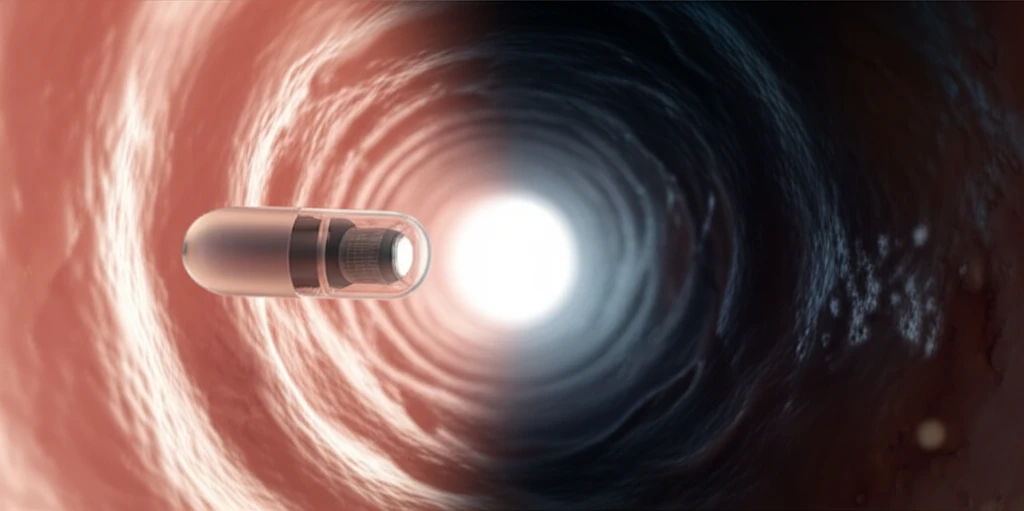
Capsule Endoscopy: Clear vs. Unclear Intestine

Capsule Endoscopy Prep: Is Timing Everything for Better Results?

"Discover how the timing of bowel preparation impacts the clarity and effectiveness of capsule endoscopy."


Capsule endoscopy (CE) has transformed how doctors examine the small intestine, offering a non-invasive way to diagnose various conditions. This involves swallowing a small, camera-equipped capsule that transmits images as it moves through your digestive tract. But, like any diagnostic procedure, the quality of the results depends heavily on preparation.

One crucial aspect of CE preparation is bowel preparation, which aims to clear the intestine for better visualization. The goal is simple: a clean intestine allows for clearer images, leading to more accurate diagnoses. However, the optimal timing for this prep has been a topic of debate among healthcare professionals.

Traditionally, intestinal lavage (IL) has been administered either the day before or on the same day as the procedure. But does the timing truly matter? Recent research sheds light on this question, providing insights that could help improve your CE experience. Let’s dive into the details of a study that explores the impact of bowel preparation timing on CE outcomes.

The Study: Comparing Prep Timing for Capsule Endoscopy

Capsule Endoscopy: Clear vs. Unclear Intestine

A study published in Clinical Endoscopy (2015) investigated whether the timing of intestinal lavage (IL) affects the diagnostic yield of capsule endoscopy. Researchers at the University of Alabama at Birmingham conducted a randomized, controlled trial to compare same-day versus day-before IL administration.

The study involved 34 patients referred for CE, divided into two groups. Group A received IL approximately 14 hours before CE, while Group B received it about 4 hours before the procedure. The primary goal was to assess the quality of bowel preparation using a validated grading scale. Secondary outcomes included completion rates to the cecum, small bowel transit time, and the detection of mucosal abnormalities.

  • Participants: 34 patients undergoing capsule endoscopy.
  • Groups:
    • Group A: Intestinal lavage 14 hours before CE.
    • Group B: Intestinal lavage 4 hours before CE.
  • Primary Outcome: Quality of bowel preparation.
  • Secondary Outcomes: Completion rates, small bowel transit time, mucosal abnormalities.
The results indicated that there were no significant differences between the two groups in terms of mucosal abnormalities (77% vs. 82%) or diagnostic yield (47% vs. 53%). Additionally, the study found no significant association between the quality of small bowel preparation and the timing of the purgative for IL. The researchers concluded that day-before IL is equivalent to same-day IL in overall preparation quality, proportion of complete studies, small bowel transit time, frequency of identified abnormalities, and overall diagnostic yield.

Key Takeaways and Implications

This study suggests that the timing of bowel preparation may not significantly impact the outcomes of capsule endoscopy. Whether you opt for day-before or same-day intestinal lavage, the overall quality and diagnostic yield appear to be similar. However, individual experiences can vary, and it’s essential to follow your doctor's specific instructions. If you have concerns about your preparation or the procedure itself, don't hesitate to discuss them with your healthcare provider. Open communication ensures a smoother, more effective diagnostic process.

About this Article -

This article was crafted using a human-AI hybrid and collaborative approach. AI assisted our team with initial drafting, research insights, identifying key questions, and image generation. Our human editors guided topic selection, defined the angle, structured the content, ensured factual accuracy and relevance, refined the tone, and conducted thorough editing to deliver helpful, high-quality information.See our About page for more information.

This article is based on research published under:

DOI-LINK: 10.5946/ce.2015.48.3.234, Alternate LINK

Title: A Single-Center Randomized Controlled Trial Evaluating Timing Of Preparation For Capsule Enteroscopy

Subject: Gastroenterology

Journal: Clinical Endoscopy

Publisher: The Korean Society of Gastrointestinal Endoscopy

Authors: Katherine R. Black, Wiley Truss, Cynthia I. Joiner, Shajan Peter, Frederick H. Weber

Published: 2015-01-01

Everything You Need To Know

1

What is Capsule Endoscopy (CE) and why is preparation important?

Capsule Endoscopy (CE) is a non-invasive procedure that uses a small, camera-equipped capsule to examine the small intestine. Good preparation, specifically bowel preparation using intestinal lavage (IL), is crucial because a clean intestine allows for clearer images, leading to more accurate diagnoses. Without proper bowel preparation, visualization can be impaired, potentially affecting the detection of mucosal abnormalities and overall diagnostic yield.

2

What is intestinal lavage (IL) and what are the traditional timings for it in relation to Capsule Endoscopy (CE)?

Intestinal lavage (IL) is a process used for bowel preparation, aiming to clear the intestine before a Capsule Endoscopy (CE). Traditionally, intestinal lavage (IL) has been administered either the day before or on the same day as the Capsule Endoscopy (CE) procedure to ensure the best possible visualization of the small intestine. The goal of intestinal lavage (IL) is to remove any residual content that might obstruct the camera's view, enhancing the clarity of the images and the accuracy of the diagnostic findings.

3

According to the study, does the timing of intestinal lavage (IL) significantly impact the diagnostic yield of Capsule Endoscopy (CE)?

The study published in *Clinical Endoscopy* (2015) found no significant differences in diagnostic yield of Capsule Endoscopy (CE) between administering intestinal lavage (IL) the day before versus the same day. Specifically, the study indicated that the quality of bowel preparation, proportion of complete studies, small bowel transit time, frequency of identified abnormalities, and overall diagnostic yield were similar whether intestinal lavage (IL) was performed 14 hours before or 4 hours before Capsule Endoscopy (CE). This suggests that either timing can be effective for bowel preparation.

4

What were the primary and secondary outcomes assessed in the study comparing different timings of intestinal lavage (IL) for Capsule Endoscopy (CE)?

In the study, the primary outcome was the quality of bowel preparation, assessed using a validated grading scale. The secondary outcomes included completion rates to the cecum, small bowel transit time, and the detection of mucosal abnormalities. The researchers aimed to determine if the timing of intestinal lavage (IL)—either 14 hours before or 4 hours before Capsule Endoscopy (CE)—affected these outcomes. The absence of significant differences in these outcomes suggests flexibility in the timing of intestinal lavage (IL) without compromising the effectiveness of Capsule Endoscopy (CE).

5

Given that the study found no significant difference between same-day and day-before intestinal lavage (IL), what factors should patients consider when deciding on the timing of their bowel preparation for Capsule Endoscopy (CE)?

Although the study indicated that the timing of intestinal lavage (IL) might not significantly impact Capsule Endoscopy (CE) outcomes, individual experiences can vary. Patients should primarily follow their doctor's specific instructions. Open communication with healthcare providers is essential to address any concerns about preparation or the procedure itself. Factors such as personal convenience, potential side effects of intestinal lavage (IL) at different times, and any specific instructions from the gastroenterologist should be taken into account to ensure a smoother and more effective diagnostic process. Discussing these aspects can help tailor the preparation to individual needs and preferences.

Newsletter Subscribe

Subscribe to get the latest articles and insights directly in your inbox.