
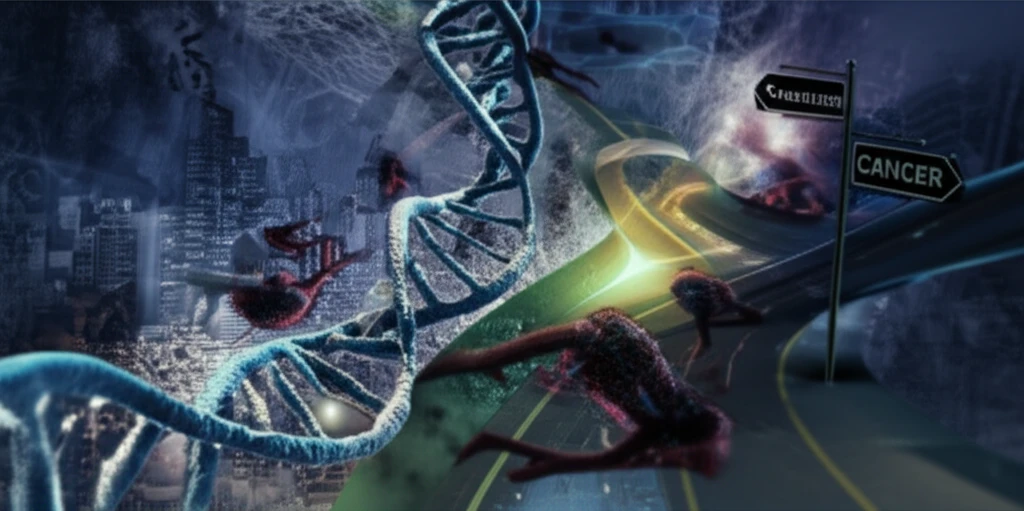
Surreal digital illustration of DNA as a city, depicting cancer research and potential treatment.

Cancer's Hidden Architecture: How Researchers Are Rewriting the Story of Pancreatic Tumors

"New research uncovers how tiny changes in our DNA's structure could hold the key to unlocking more effective cancer treatments."


Imagine a bustling city, with skyscrapers, parks, and winding streets. Now, picture that city as your body, and the buildings and roads as the incredibly complex structures inside your cells. For decades, scientists have been trying to understand how these cellular structures, especially the DNA, work together to keep us healthy. Recently, researchers have turned their attention to the three-dimensional organization of DNA, which could be a key to understanding cancer.

New research, published in the Journal of Cellular Biochemistry, delves into the architecture of human cells, specifically focusing on pancreatic cancer. The study reveals how specific inhibitors that block the activity of certain enzymes can significantly alter the way DNA is arranged. This shift in DNA organization could potentially disrupt the growth and spread of cancer cells.

This article explains these complex findings, breaking down the science behind the study and highlighting the implications for future cancer treatments. We'll explore how understanding the subtle shifts in our DNA's structure could lead to more personalized and effective therapies, offering new hope in the fight against cancer.

Deciphering the DNA Blueprint: A Closer Look at Chromatin

Surreal digital illustration of DNA as a city, depicting cancer research and potential treatment.

To grasp the significance of this research, it's essential to understand chromatin. Think of chromatin as the packaging material for your DNA. Within each of your cells, DNA is tightly coiled and wound around proteins called histones. This DNA-protein complex is called chromatin, and it’s not just a passive storage unit. The way chromatin is structured influences which genes are 'turned on' or 'turned off,' affecting cell behavior.

Scientists use different methods to map the way DNA interacts, including a technique called tethered chromatin capture (TCC). Using TCC, the researchers identified specific regions, or domains, within the cells' DNA. These domains were then further categorized based on their characteristics, such as whether they're active (genes being expressed), repressed (genes turned off), or somewhere in between. The study identified six distinct sub-domains, each associated with specific epigenetic states. One of these states, for example, is sensitive to treatment with histone acetyltransferase (HAT) inhibitors. HAT inhibitors are drugs that can alter how genes are regulated.

  • Topologically Associated Domains (TADs): These are like city blocks, where DNA within the block frequently interacts.
  • Boundary Regions: These act like streets between the blocks, separating different TADs.
  • Gap Domains: Essentially, empty spaces within the DNA structure.
The most fascinating aspect of this study is how these domains change when exposed to drugs that inhibit histone acetyltransferases (HATs). By comparing the DNA structure before and after treatment, researchers discovered that the inhibitors significantly altered the way the DNA was organized, particularly in the areas that were most epigenetically active. These findings suggest that we can manipulate the DNA structure, and that this structure is directly linked to cancer progression.

A Promising Future for Cancer Treatment

The research described in the study provides crucial insights into the way cancer cells operate at a fundamental level. The findings emphasize the importance of the three-dimensional structure of DNA, opening doors for new therapeutic strategies. By targeting the specific structures and processes that are disrupted in cancer cells, scientists hope to create more effective treatments. This could include personalized medicine approaches that consider an individual's unique DNA structure, offering a more targeted approach to fighting cancer. Continued research in this area holds the potential to transform cancer care, leading to improved outcomes and a brighter future for patients. Further research will identify new targets for treatments that improve the lives of people battling pancreatic cancer and other forms of the disease.

About this Article -

This article was crafted using a human-AI hybrid and collaborative approach. AI assisted our team with initial drafting, research insights, identifying key questions, and image generation. Our human editors guided topic selection, defined the angle, structured the content, ensured factual accuracy and relevance, refined the tone, and conducted thorough editing to deliver helpful, high-quality information.See our About page for more information.

This article is based on research published under:

DOI-LINK: 10.1002/jcb.27449, Alternate LINK

Title: Three‐Dimensional Analysis Reveals Altered Chromatin Interaction By Enhancer Inhibitors Harbors Tcf7L2‐Regulated Cancer Gene Signature

Subject: Cell Biology

Journal: Journal of Cellular Biochemistry

Publisher: Wiley

Authors: Diana L. Gerrard, Yao Wang, Malaina Gaddis, Yufan Zhou, Junbai Wang, Heather Witt, Shili Lin, Peggy J. Farnham, Victor X. Jin, Seth E. Frietze

Published: 2018-12-11

Everything You Need To Know

1

What is the significance of chromatin in the context of understanding cancer?

Chromatin is crucial in understanding cancer because it's the packaging material for DNA within our cells. The way chromatin is structured, which involves DNA coiled around histones, influences which genes are active or inactive. This gene regulation directly impacts cell behavior, including the development and progression of cancer. Understanding chromatin's structure allows researchers to identify how cancer cells might be misregulating gene expression, offering potential targets for therapy. Altering chromatin structure using specific inhibitors can disrupt the growth and spread of cancer cells.

2

How do scientists study the organization of DNA, and what techniques are used?

Scientists use various techniques to map DNA interactions, with tethered chromatin capture (TCC) being a key method. TCC helps researchers identify specific regions within the DNA, called domains, and categorize them based on their characteristics. These domains are categorized based on their epigenetic state. The study identified six distinct sub-domains. Other methods might include microscopic imaging and biochemical assays. These techniques help visualize and analyze the intricate three-dimensional organization of DNA, allowing researchers to understand how different parts of the DNA interact and influence gene expression. This is crucial for understanding how changes in DNA structure can contribute to cancer.

3

What are Topologically Associated Domains (TADs), Boundary Regions, and Gap Domains, and why are they important?

TADs are like city blocks, where DNA within the block frequently interacts. Boundary Regions act like streets, separating different TADs. Gap Domains are essentially empty spaces within the DNA structure. These structural elements are important because they help organize the DNA within the cell nucleus, influencing how genes are regulated. Changes in these domains, particularly in response to drugs like histone acetyltransferase (HAT) inhibitors, can significantly alter gene expression patterns, potentially disrupting cancer progression. Understanding these domains provides insights into the underlying mechanisms of cancer.

4

How can drugs that inhibit histone acetyltransferases (HATs) affect DNA structure and cancer progression?

Drugs that inhibit HATs can significantly alter the organization of DNA, particularly in the areas that are most epigenetically active. HAT inhibitors change the way chromatin is structured, thereby affecting which genes are turned on or off. In the context of cancer, these drugs can disrupt the activity of cancer cells by altering the structure of their DNA. The study shows that these inhibitors alter the way the DNA was organized, particularly in the areas that were most epigenetically active. These findings suggest that we can manipulate the DNA structure, which is directly linked to cancer progression, offering a potential therapeutic strategy.

5

What are the potential implications of this research for the future of cancer treatment?

This research opens doors for new therapeutic strategies by providing crucial insights into how cancer cells operate at a fundamental level, specifically targeting the three-dimensional structure of DNA. The findings emphasize the importance of personalized medicine approaches that consider an individual's unique DNA structure, offering a more targeted approach to fighting cancer. Researchers hope to create more effective treatments by targeting the specific structures and processes that are disrupted in cancer cells. Continued research in this area holds the potential to transform cancer care, leading to improved outcomes and a brighter future for patients, especially those battling pancreatic cancer and other forms of the disease.

Newsletter Subscribe

Subscribe to get the latest articles and insights directly in your inbox.