
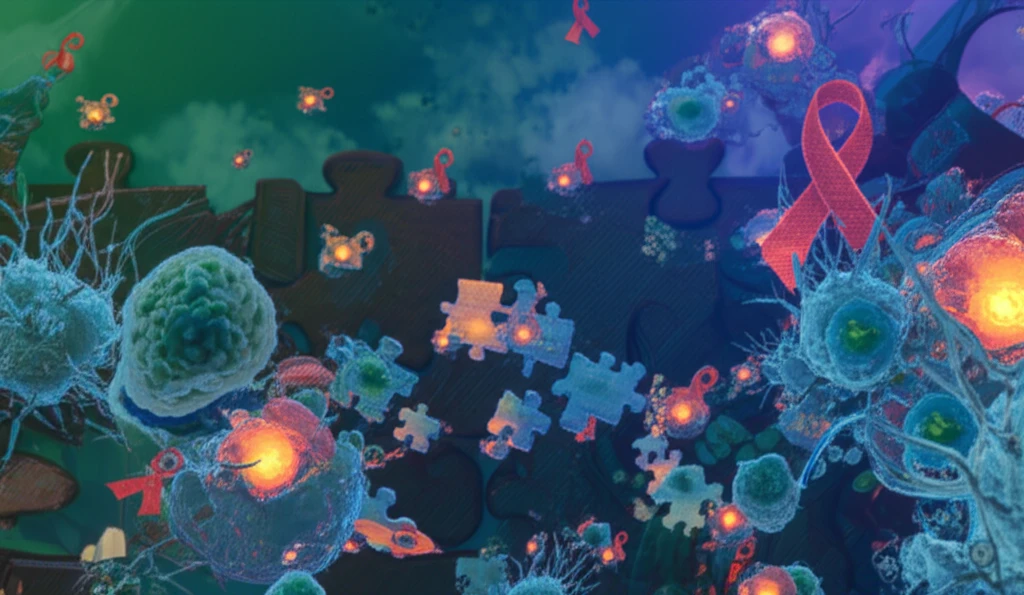
Immune cells attacking cancer cells with puzzle pieces fitting symbolizing personalized medicine.

Cancer Vaccines: Are We Finally at the Bedside?

"Exploring the latest advancements and challenges in personalized cancer vaccines, from bench to bedside."


The immune system possesses significant potential for cancer therapy, offering individualized, precision-driven, and robust approaches. However, challenges such as immune evasion, tolerance development, and sustaining tumor rejection responses remain. Recent FDA approvals of checkpoint inhibitors like anti-CTLA4 and anti-PD-1 have revitalized cancer immunology by demonstrating that tolerance can be overcome to induce lasting immune responses in patients.

Active immunization with multivalent tumor-associated antigens (TAA) presents an ongoing challenge. Researchers have developed two distinct methods to generate multivalent antigens capable of causing tumor regression in prostate cancer and melanoma. In prostate cancer, specific multivalent peptide mimetics were generated using phage display synthetic peptide libraries, showing metastatic tumor regression in animal models.

For melanoma, a vaccinia virus-based antigen retrieval technology was used to generate a multivalent antigenic vaccine with a well-defined antigenic repertoire. A protocol for this melanoma vaccine has been FDA-approved for clinical trials, signaling progress in personalized cancer treatments.

Harnessing the Power of Multivalent Antigens: A Two-Pronged Approach

Immune cells attacking cancer cells with puzzle pieces fitting symbolizing personalized medicine.

The development of cancer vaccines has shifted towards strategies that can effectively stimulate the immune system to recognize and attack cancer cells. Key to this approach is the use of multivalent antigens, which present multiple targets to the immune system, increasing the likelihood of a robust and sustained response. Two innovative methods have shown promise in generating these multivalent antigens.

In prostate cancer, researchers have focused on creating specific multivalent peptide mimetics. These are designed using phage display synthetic peptide libraries. This approach allows for the generation of molecules that mimic the structure of tumor-associated antigens, stimulating the immune system to target and destroy metastatic tumors.

  • Phage Display Technology: Utilizes libraries of synthetic peptides displayed on bacteriophages (viruses that infect bacteria) to identify peptides that bind specifically to cancer-related targets.
  • Peptide Mimetics: These are synthetic peptides designed to mimic the structure and function of natural antigens, stimulating a targeted immune response.
  • Animal Model Success: The peptide mimetics have demonstrated the ability to induce metastatic tumor regression in animal models, indicating their potential for therapeutic use.
For melanoma, researchers have employed a vaccinia virus-based antigen retrieval technology. This method involves using vaccinia virus to infect melanoma cells and then using the membrane components of these cells as a vaccine. The vaccinia virus, in the process of budding from the cell membrane, carries with it a diverse array of melanoma-associated antigens, creating a multivalent vaccine.

The Future of Cancer Immunotherapy: Combination Therapies and Personalized Approaches

These advancements highlight the potential of cancer vaccines as a key component of future cancer therapies. Defining the humoral and cellular immune responses, along with combining active vaccine strategies with other treatment modalities, including checkpoint inhibitors (anti-CTLA4 and anti-PD-1), is crucial. Vaccine candidates represent a new generation of immune-therapeutics that can prolong cancer-free survival and prevent secondary recurrences.

The integration of active immune responses with negative checkpoint inhibitors challenges existing paradigms and aims to bridge the gap between humoral and cellular immunity by activating pre-existing dormant immune responses. This combined approach offers hope for more effective and personalized cancer treatments.

As research continues, the focus will likely shift towards refining these multivalent vaccine strategies, optimizing their delivery, and combining them with other immunotherapeutic agents to achieve more durable and complete responses in patients. The era of personalized cancer vaccines is steadily approaching, promising improved outcomes and a brighter future for cancer patients.

About this Article -

This article was crafted using a human-AI hybrid and collaborative approach. AI assisted our team with initial drafting, research insights, identifying key questions, and image generation. Our human editors guided topic selection, defined the angle, structured the content, ensured factual accuracy and relevance, refined the tone, and conducted thorough editing to deliver helpful, high-quality information.See our About page for more information.

This article is based on research published under:

DOI-LINK: 10.13052/ijts2246-8765.2016.003, Alternate LINK

Title: Cancer Vaccines: Bench To Bedside

Subject: General Medicine

Journal: International Journal of Translational Science

Publisher: River Publishers

Authors: Neha Tuli, Rachana Maniyar, Robert Bednarczyk, Ghada Ben Rahoma, Sarnath Singh, Jan Geliebter, Abraham Mittelma, Marc Wallack, Debabrata Banerjee, Raj K. Tiwari

Published: 2016-01-01

Everything You Need To Know

1

How do cancer vaccines work to fight cancer?

Cancer vaccines leverage the immune system to target and attack cancer cells. A key strategy involves using multivalent antigens, which present multiple targets to the immune system, enhancing the likelihood of a robust and sustained immune response. This approach aims to stimulate the immune system to recognize and eliminate cancer cells.

2

What are multivalent peptide mimetics, and how are they being used in prostate cancer research?

Researchers are exploring multivalent peptide mimetics, which are synthetic peptides designed to mimic the structure of tumor-associated antigens. They utilize phage display synthetic peptide libraries to identify peptides that bind specifically to cancer-related targets. In animal models, these peptide mimetics have demonstrated the ability to induce metastatic tumor regression, showcasing their potential for therapeutic applications.

3

Can you explain vaccinia virus-based antigen retrieval technology in melanoma treatment?

This technology uses the vaccinia virus to infect melanoma cells. As the virus buds from the cell membrane, it retrieves a diverse array of melanoma-associated antigens, creating a multivalent vaccine. A protocol using this approach has been FDA-approved for clinical trials, indicating progress in personalized cancer treatments.

4

How can cancer vaccines be combined with checkpoint inhibitors like anti-CTLA4 and anti-PD-1, and what is the goal of this combination?

Checkpoint inhibitors like anti-CTLA4 and anti-PD-1 work by blocking the signals that prevent T cells from attacking cancer cells. Combining these with cancer vaccines aims to enhance the immune response. While checkpoint inhibitors help to unleash the immune system, vaccines are designed to teach the immune system specifically what to attack. This combination seeks to create a more robust and targeted anti-cancer response.

5

What are some of the biggest challenges in developing effective cancer vaccines, and how are researchers trying to overcome them?

Challenges include immune evasion (cancer cells avoiding immune detection), tolerance development (the immune system not responding to cancer cells), and sustaining tumor rejection responses. Active immunization with multivalent tumor-associated antigens (TAA) is one approach, but it requires overcoming these challenges to ensure the immune system effectively targets and eliminates cancer cells without causing harmful side effects.

Newsletter Subscribe

Subscribe to get the latest articles and insights directly in your inbox.