
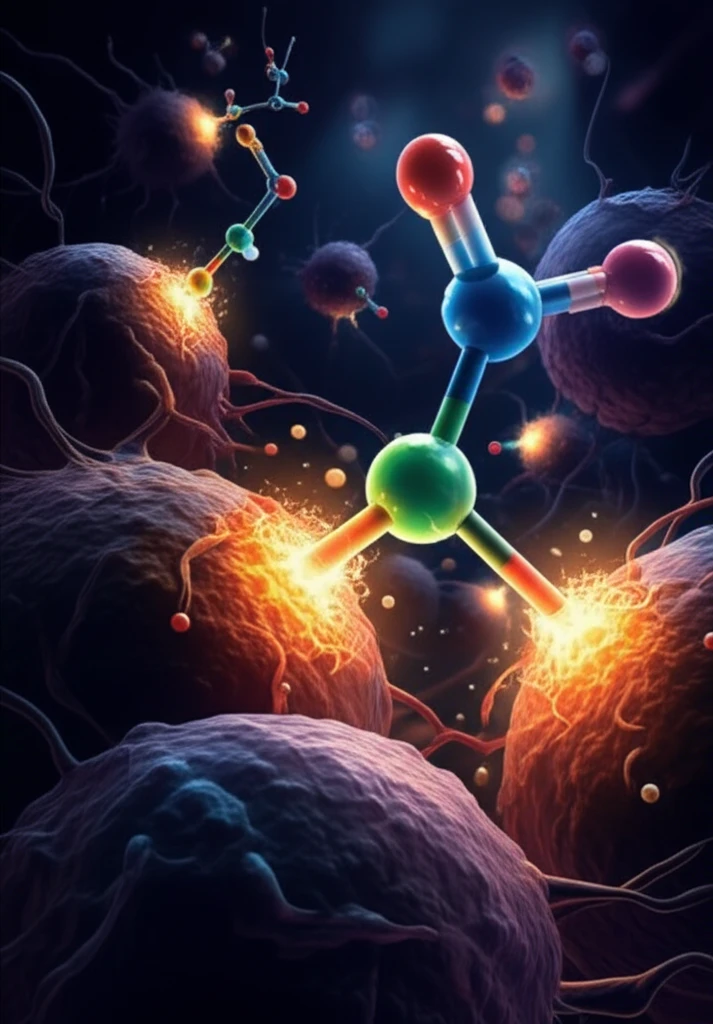
Cancer Breakthrough: Scientists Discover Promising New Drug Derived from Nature

"Groundbreaking research unveils novel fusidic acid derivatives with potent anti-cancer properties, offering hope for innovative treatments."
Cancer, a relentless adversary, continues to cast a long shadow over global health. Despite advances in treatment, the fight against this complex disease demands constant innovation. Now, a glimmer of hope emerges from a groundbreaking study that unveils the potential of novel fusidic acid derivatives in combating cancer. This research, published in the European Journal of Medicinal Chemistry, marks a significant step forward in the search for effective and targeted cancer therapies.
The study, led by a team of dedicated scientists, focused on the synthesis and screening of new derivatives of fusidic acid. This naturally occurring antibiotic, already in clinical use, has now shown promise beyond its antibacterial properties. The researchers explored how modifying the structure of fusidic acid could unlock its potential as an anti-cancer agent. Their work revealed that these new derivatives exhibit impressive anti-tumor activity, opening doors to a new era in cancer treatment.
This article delves into the details of the research, exploring the methods used, the remarkable findings, and the potential implications for cancer patients. We'll examine the science behind these derivatives, the way they work, and the potential for new, more effective treatments that could revolutionize cancer care. Join us as we uncover this exciting scientific breakthrough.
Unveiling the Power of Fusidic Acid Derivatives: A New Weapon Against Cancer
The central focus of the research was the synthesis and evaluation of a series of novel fusidic acid (FA) derivatives. FA is a steroid-based antibiotic, known for its antibacterial properties. The research team strategically modified the FA molecule, introducing amino-terminal groups at the 3-hydroxyl position. This modification was key, as it appeared to unlock the compound's ability to target and combat cancer cells. The researchers screened these derivatives against various cancer cell lines, searching for compounds with potent anti-tumor effects.
- Synthesis of Derivatives: Scientists synthesized a range of novel fusidic acid derivatives.
- Targeting Cancer Cells: The derivatives were designed to target cancer cells effectively.
- Screening Process: The compounds were screened against various cancer cell lines to find the most effective ones.
- Compound 4's Success: Compound 4 exhibited strong anti-proliferative activity, indicating its potential as an anti-cancer agent.
A New Dawn for Cancer Treatment: What's Next?
The discovery of these novel fusidic acid derivatives represents a significant leap forward in cancer research. The promising results, especially from compound 4, warrant further investigation and development. Future research will likely focus on optimizing the structure of these derivatives, conducting more in-depth studies on their mechanisms of action, and conducting clinical trials to evaluate their safety and efficacy in humans. As the fight against cancer continues, discoveries like this provide hope and underscore the importance of scientific exploration in the pursuit of better treatments.