
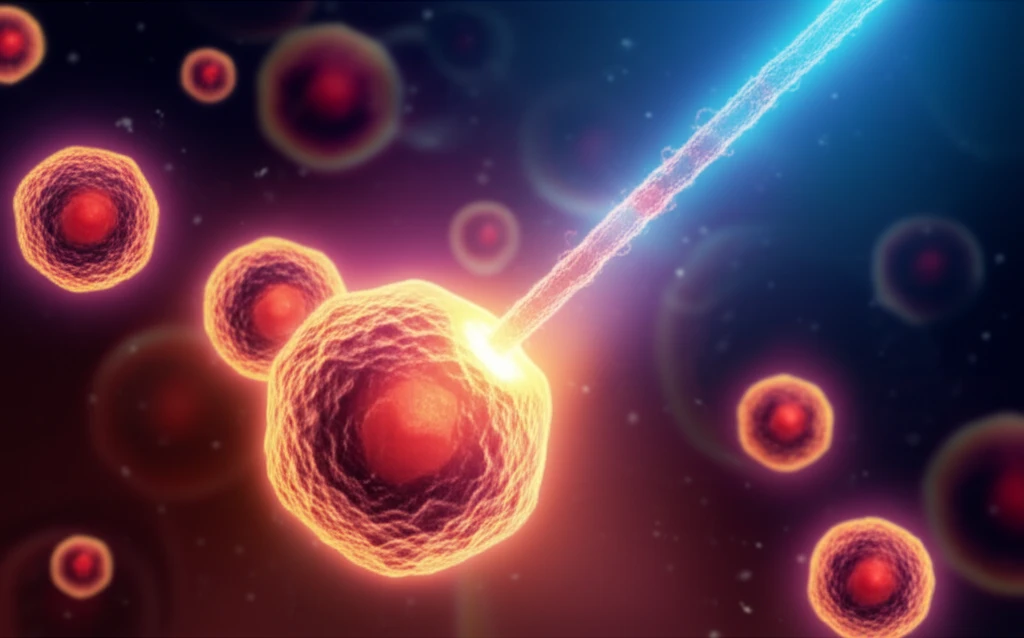
Illustration of cancer cells being targeted by a new treatment, symbolizing hope and scientific progress.

Cancer Breakthrough: Scientists Discover New Way to Overcome Drug Resistance

"Groundbreaking research reveals a novel approach to combat cancer by targeting a key protein involved in tumor growth and drug resistance."


In the relentless battle against cancer, scientists are constantly seeking new strategies to improve treatment efficacy and patient survival. One of the biggest challenges in cancer treatment is drug resistance, where cancer cells adapt and become impervious to chemotherapy and other therapies. Recent research has unveiled a promising new approach that could revolutionize cancer treatment by overcoming drug resistance.

This groundbreaking study focuses on a specific protein called MET, which plays a crucial role in the growth, spread, and drug resistance of many types of cancer. The researchers have developed a novel method to target MET, potentially leading to more effective treatments. This research provides insights into cancer biology and offers a glimmer of hope for better outcomes for patients.

This article will explore the details of the research, explaining how scientists are targeting MET to improve cancer treatment. We will delve into the innovative approach, the promising results, and the potential impact on patients. We will also consider what this means for the future of cancer therapy and the possibility of more effective treatments.

Unlocking the Secrets of MET: A Key Player in Cancer

Illustration of cancer cells being targeted by a new treatment, symbolizing hope and scientific progress.

The protein MET, also known as the hepatocyte growth factor receptor (HGFR), has long been recognized as a critical factor in cancer. MET is involved in various aspects of cancer development, including cell growth, the spread of cancer cells (metastasis), and the development of drug resistance. The activation of MET is often linked to a poor prognosis for patients.

The research team created an anti-MET VHH pool to target and neutralize MET. This strategy could overcome limitations of traditional drugs. The team found that this VHH pool strongly promotes MET degradation through a specific cellular pathway. As a result, the anti-MET VHH pool has a remarkable effect: It blocks MET activity and reduces the level of MET protein. This dual action leads to the suppression of cancer cell growth, viability, and colony formation in the lab, and it also inhibits tumor growth in animal models.

  • MET promotes cancer cell survival, which means cancer cells can live longer and grow more.
  • MET plays a role in metastasis, aiding cancer cells in spreading throughout the body.
  • MET contributes to drug resistance, making cancer cells less responsive to treatment.
The researchers' findings highlight the importance of targeting not only the activity of MET but also its overall presence within cancer cells. By reducing the amount of MET, the treatment strategy aims to provide more comprehensive control over cancer progression and drug resistance. This comprehensive approach represents a significant advancement in cancer therapy.

A New Era for Cancer Treatment

This research signifies a promising stride in the fight against cancer. By targeting the MET protein, scientists have discovered a potential strategy to overcome drug resistance and improve treatment outcomes. This novel approach, along with additional research and clinical trials, has the potential to significantly impact the lives of individuals affected by cancer, offering a new path toward more effective treatments and improved survival rates.

About this Article -

This article was crafted using a human-AI hybrid and collaborative approach. AI assisted our team with initial drafting, research insights, identifying key questions, and image generation. Our human editors guided topic selection, defined the angle, structured the content, ensured factual accuracy and relevance, refined the tone, and conducted thorough editing to deliver helpful, high-quality information.See our About page for more information.

This article is based on research published under:

DOI-LINK: 10.1158/1535-7163.mct-18-0351, Alternate LINK

Title: Anti-Met Vhh Pool Overcomes Met-Targeted Cancer Therapeutic Resistance

Subject: Cancer Research

Journal: Molecular Cancer Therapeutics

Publisher: American Association for Cancer Research (AACR)

Authors: Zhipeng Su, Yunchun Han, Qichen Sun, Xiaoxiao Wang, Ting Xu, Wei Xie, Xing Huang

Published: 2019-01-01

Everything You Need To Know

1

What is the main challenge in cancer treatment that this research addresses?

The primary challenge addressed by this research is drug resistance in cancer. Cancer cells often become resistant to chemotherapy and other therapies, making treatments less effective. The research focuses on overcoming this resistance to improve treatment outcomes and patient survival.

2

What is MET, and why is it a crucial target in this cancer research?

MET, also known as the hepatocyte growth factor receptor (HGFR), is a protein involved in cancer development. It plays a key role in cell growth, metastasis (the spread of cancer), and drug resistance. Targeting MET is crucial because its activation is linked to a poor prognosis for patients. The research aims to inhibit MET activity and reduce its presence within cancer cells to combat these detrimental effects.

3

How does the new approach target MET to combat cancer?

The research utilizes an anti-MET VHH pool to target and neutralize MET. This method promotes MET degradation through a specific cellular pathway. This dual action of blocking MET activity and reducing the level of MET protein suppresses cancer cell growth, viability, and colony formation in the lab, and it also inhibits tumor growth in animal models.

4

What are the key benefits of targeting MET, as highlighted in this research?

Targeting MET offers multiple benefits. First, it suppresses cancer cell growth and viability. Second, it inhibits metastasis, preventing the spread of cancer cells. Third, it combats drug resistance, making cancer cells more susceptible to treatment. By reducing the amount of MET, the treatment aims to provide more comprehensive control over cancer progression.

5

What are the potential implications of this research for the future of cancer therapy?

This research signifies a promising advancement in the fight against cancer. By targeting the MET protein, scientists have discovered a potential strategy to overcome drug resistance and improve treatment outcomes. This novel approach, with further research and clinical trials, could lead to more effective treatments and improved survival rates for individuals affected by cancer. This comprehensive approach represents a significant advancement in cancer therapy.

Newsletter Subscribe

Subscribe to get the latest articles and insights directly in your inbox.