
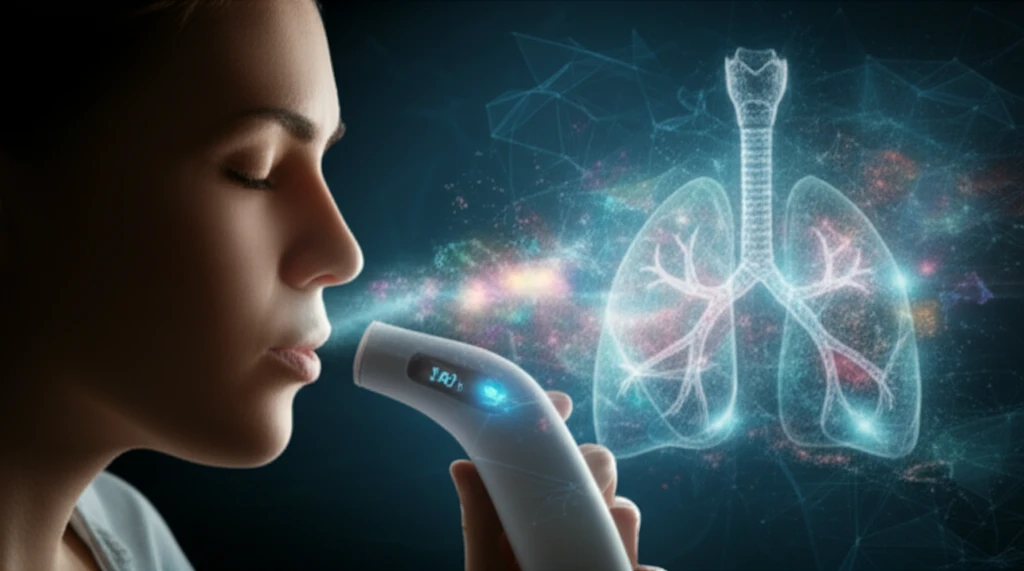
Surreal illustration of a person using a futuristic device to measure exhaled breath temperature for asthma control.

Can Your Breath Reveal Your Asthma Control? A New Biomarker Shows Promise

"Exhaled breath temperature (EBT) might be the non-invasive monitoring tool you've been waiting for. Find out how this pilot study is changing asthma management."


Asthma, a chronic respiratory disease, is characterized by inflammation and bronchospasm. Monitoring the degree of inflammation has always been challenging. Historically, doctors rely on patient-reported symptoms and recent history, which can be subjective. Those experiencing frequent asthma attacks, nighttime symptoms, or exercise-induced breathing difficulties are generally classified as having uncontrolled asthma.

While methods like bronchoscopy with biopsy can provide direct evidence of bronchial inflammation, they are invasive. There’s a need for objective, non-invasive measurements to track inflammation in asthma patients. Now, emerging research suggests that measuring exhaled breath temperature (EBT) may offer a promising solution.

A pilot study investigated the potential of EBT as a biomarker for asthma control. By exploring this innovative, non-invasive method, the study aimed to determine if EBT could effectively monitor patients with uncontrolled asthma.

Exhaled Breath Temperature (EBT): A New Way to Monitor Asthma?

Surreal illustration of a person using a futuristic device to measure exhaled breath temperature for asthma control.

The pilot study, conducted at the Federal University of São Paulo, Brazil, involved nine atopic patients diagnosed with uncontrolled asthma. The study excluded individuals with respiratory infections, cardiovascular diseases, or those unable to perform the necessary breathing maneuvers.

At the beginning of the study, each patient underwent spirometry (a lung function test) and EBT measurement. All patients were then prescribed inhaled budesonide/formoterol for six weeks. Patients with severe asthma also received oral prednisolone for the first five days.

  • EBT Measurement: A portable exhaled breath collector, similar to a thermos, was used. Patients exhaled repeatedly into the device through a valve mouthpiece for 5-10 minutes until the temperature stabilized.
  • Pulmonary Function Test: Spirometry was performed to measure FEV₁ (forced expiratory volume in one second), an indicator of lung function.
  • Medication: Patients used inhaled budesonide/formoterol every 12 hours, with additional doses as needed for symptom relief. Severe cases also received oral prednisolone initially.
After six weeks, the same tests were repeated. The results indicated a statistically significant increase in FEV₁ and a significant decrease in EBT from the first to the second visit. All patients reported an improvement in asthma symptoms. This suggests that uncontrolled asthma is associated with elevated EBT, which decreases as asthma is brought under control.

The Future of Asthma Monitoring: What EBT Could Mean for You

The study's findings suggest that EBT could serve as a valuable parameter in assessing asthma control. Unlike more invasive methods, EBT measurement is simple, non-invasive, and can potentially provide real-time feedback on airway inflammation.

While promising, this is just a pilot study with a small sample size. Further research is needed to validate these findings and explore the full potential of EBT in asthma management. Factors such as the device's usability in different age groups need to be addressed for widespread adoption.

For individuals with asthma, EBT monitoring could lead to more personalized and effective treatment strategies. By providing an objective measure of airway inflammation, EBT has the potential to improve asthma control, reduce exacerbations, and enhance overall quality of life.

About this Article -

This article was crafted using a human-AI hybrid and collaborative approach. AI assisted our team with initial drafting, research insights, identifying key questions, and image generation. Our human editors guided topic selection, defined the angle, structured the content, ensured factual accuracy and relevance, refined the tone, and conducted thorough editing to deliver helpful, high-quality information.See our About page for more information.

Everything You Need To Know

1

What is exhaled breath temperature (EBT), and how might it change asthma management?

Exhaled breath temperature, or EBT, is a non-invasive method that measures the temperature of a patient’s exhaled breath. The pilot study suggests EBT could potentially serve as a biomarker for assessing asthma control by providing real-time feedback on airway inflammation. This is especially helpful because traditional methods rely on subjective patient-reported symptoms.

2

How did exhaled breath temperature (EBT) change when asthma was brought under control in the pilot study?

The pilot study showed that uncontrolled asthma is associated with elevated exhaled breath temperature, or EBT. As asthma came under control with the inhaled budesonide/formoterol treatment, patients experienced a significant decrease in EBT along with improved lung function, as measured by FEV₁ and reported improvements in asthma symptoms. Severe cases also involved oral prednisolone during the initial phase.

3

How exactly was the exhaled breath temperature (EBT) measured in the pilot study, and what other tests were conducted?

The exhaled breath temperature measurement, or EBT, was performed using a portable exhaled breath collector. Patients exhaled repeatedly into the device through a valve mouthpiece for 5-10 minutes until the temperature stabilized. Spirometry was performed to measure FEV₁, an indicator of lung function.

4

What are the limitations of current asthma monitoring methods, and how might exhaled breath temperature (EBT) address these?

Currently, asthma monitoring often relies on patient-reported symptoms, which can be subjective, and invasive methods like bronchoscopy with biopsy. Exhaled breath temperature offers an objective, non-invasive alternative. By measuring EBT, doctors may gain a more accurate understanding of airway inflammation, potentially reducing reliance on subjective assessments and invasive procedures.

5

Who was included in the pilot study on exhaled breath temperature (EBT), and what are the next steps in researching its potential?

The pilot study focused on atopic patients diagnosed with uncontrolled asthma. Individuals with respiratory infections, cardiovascular diseases, or those unable to perform the necessary breathing maneuvers were excluded. While the results are promising, additional research involving a larger and more diverse population is needed to confirm the findings and explore the full potential of exhaled breath temperature as a tool for asthma management across different patient profiles and severities.

Newsletter Subscribe

Subscribe to get the latest articles and insights directly in your inbox.