
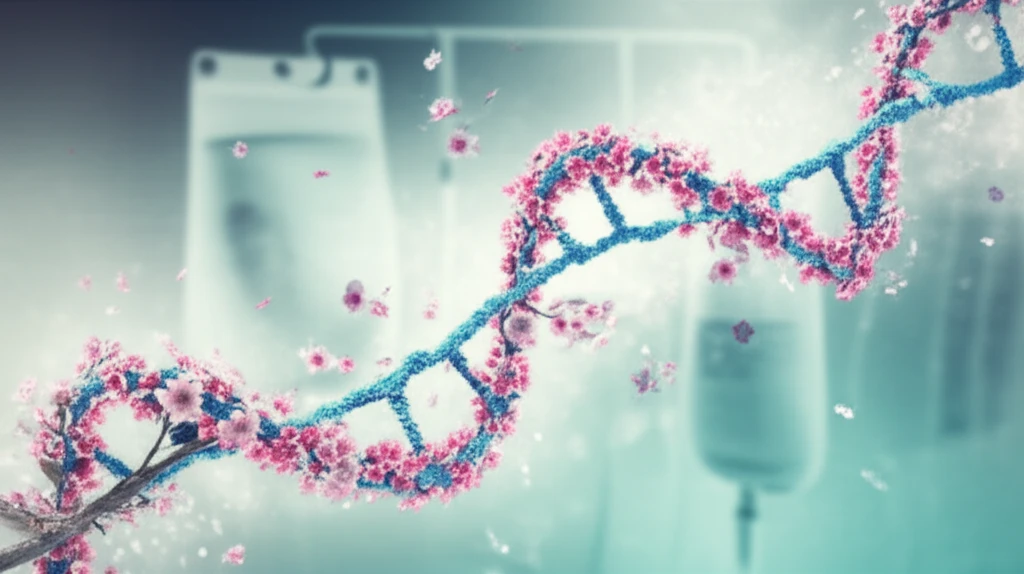
DNA strand with cherry blossom branch symbolizing ALDH2 gene and Japanese heritage in cancer treatment.

Can You Tolerate Alcohol in Breast Cancer Treatment? What to Know About Paclitaxel and ALDH2

"A recent study explores the safety of paclitaxel, a chemotherapy drug containing alcohol, for Japanese breast cancer patients with a specific genetic variation affecting alcohol tolerance."


Paclitaxel (PTX), a crucial medication in the fight against breast cancer, uses alcohol as a solvent, creating a potential issue for patients with alcohol intolerance. This is particularly relevant in certain populations where alcohol sensitivity is more common.

One key player in how our bodies process alcohol is an enzyme called aldehyde dehydrogenase 2 (ALDH2). ALDH2 helps break down aldehydes, which are produced when we drink alcohol. Some people have a genetic variation that makes ALDH2 less effective, leading to a buildup of acetaldehyde, a toxic compound. This can cause unpleasant symptoms like facial flushing, nausea, and a general feeling of being unwell after drinking even small amounts of alcohol.

A recent study published in Breast Cancer investigated the safety of using paclitaxel in Japanese patients with a specific ALDH2 genetic variation (ALDH2 GA genotype) associated with reduced alcohol tolerance. The research sought to determine if these patients could safely receive paclitaxel without experiencing severe alcohol-related side effects.

Understanding the ALDH2 Gene and Alcohol Intolerance

DNA strand with cherry blossom branch symbolizing ALDH2 gene and Japanese heritage in cancer treatment.

The ALDH2 gene provides instructions for making the aldehyde dehydrogenase 2 enzyme. This enzyme is primarily responsible for clearing acetaldehyde, a toxic byproduct of alcohol metabolism. When ALDH2 doesn't function properly, acetaldehyde accumulates in the bloodstream, leading to various unpleasant symptoms. Individuals with a less active form of ALDH2 often experience:

Many people of East Asian descent have a genetic variation in the ALDH2 gene that results in a less active enzyme. This is why alcohol intolerance is more prevalent in these populations. The specific variation studied in the research is the ALDH2 GA genotype.

  • Facial flushing
  • Nausea
  • Headache
  • Increased heart rate
In the context of breast cancer treatment, the presence of alcohol in paclitaxel formulations raises concerns for patients with ALDH2 deficiency. The study aimed to evaluate whether patients with the ALDH2 GA genotype could safely tolerate paclitaxel treatment.

Implications for Breast Cancer Patients

The study suggests that paclitaxel can be safely administered to patients with the ALDH2 GA genotype, provided it's done carefully. However, it also highlights the importance of further research to determine if ALDH2 genotyping is necessary for all patients before paclitaxel treatment. Further studies are needed to determine the impact in patients with ALDH2 AA genotype to generalize the utility of ALDH2 genotype testing before Paclitaxel usage.

About this Article -

This article was crafted using a human-AI hybrid and collaborative approach. AI assisted our team with initial drafting, research insights, identifying key questions, and image generation. Our human editors guided topic selection, defined the angle, structured the content, ensured factual accuracy and relevance, refined the tone, and conducted thorough editing to deliver helpful, high-quality information.See our About page for more information.

This article is based on research published under:

DOI-LINK: 10.1007/s12282-018-0918-9, Alternate LINK

Title: Aldehyde Dehydrogenase 2 Genotype In Tolerability Of Alcohol Contained In Paclitaxel In Japanese Breast Cancer Patients

Subject: Pharmacology (medical)

Journal: Breast Cancer

Publisher: Springer Science and Business Media LLC

Authors: Toshinari Yagi, Koto Fujiishi, Akiko Hasegawa, Tomoyuki Otsuka, Tetsuhiro Yoshinami, Minako Nishio, Fumie Fujisawa, Naotoshi Sugimoto, Fumio Imamura

Published: 2018-10-22

Everything You Need To Know

1

What is paclitaxel, and why does it matter if it contains alcohol?

Paclitaxel is a chemotherapy medication used to treat breast cancer. It contains alcohol as a solvent to help deliver the drug. This is significant because some individuals, particularly those with a genetic variation affecting alcohol metabolism, may experience adverse reactions due to the alcohol content. The implications of this include the need to carefully consider a patient's alcohol tolerance and genetic makeup before administering paclitaxel.

2

What is the ALDH2 gene, and why is it important for alcohol tolerance?

The ALDH2 gene provides instructions for making the aldehyde dehydrogenase 2 enzyme. This enzyme is important because it is responsible for breaking down acetaldehyde, a toxic byproduct of alcohol metabolism. If ALDH2 doesn't function properly due to genetic variations like the ALDH2 GA genotype, acetaldehyde can accumulate in the body, leading to unpleasant symptoms. This is significant because it directly impacts how well someone can tolerate alcohol, including the alcohol present in medications like paclitaxel.

3

What is the ALDH2 GA genotype, and how does it affect alcohol sensitivity?

The ALDH2 GA genotype is a specific genetic variation in the ALDH2 gene that is associated with reduced alcohol tolerance. Individuals with this genotype have a less effective aldehyde dehydrogenase 2 enzyme, leading to a buildup of acetaldehyde when they consume alcohol or receive medications containing alcohol. This is significant because it can cause unpleasant side effects such as facial flushing, nausea, and headaches. The implications for breast cancer patients are that they may be more sensitive to the alcohol in paclitaxel.

4

What did the study investigate, and why is it important for breast cancer patients?

The study investigated the safety of administering paclitaxel to Japanese breast cancer patients with the ALDH2 GA genotype. The significance of the study is in determining whether these patients can safely receive paclitaxel without experiencing severe alcohol-related side effects. The implications of the study's findings are that careful administration of paclitaxel may be possible in these patients. However, further research is needed to understand the impact in patients with ALDH2 AA genotype and to determine if ALDH2 genotyping is necessary for all patients before paclitaxel treatment.

5

What are the typical symptoms of alcohol intolerance when someone has an ALDH2 deficiency?

Symptoms of alcohol intolerance related to ALDH2 deficiency include facial flushing, nausea, headache, and increased heart rate after consuming even small amounts of alcohol. These symptoms occur because the body is not efficiently breaking down acetaldehyde. These symptoms are important because they are indicators of the patient's alcohol tolerance and can help determine whether the patient will be able to handle the alcohol content in paclitaxel.

Newsletter Subscribe

Subscribe to get the latest articles and insights directly in your inbox.