
Can We Stop Coastal Erosion? Unveiling New Tech to Save Our Shorelines

"Innovative computer modeling is helping engineers understand and combat the destructive forces of soil scour and seepage that threaten coastal structures."
Coastal erosion, exacerbated by the increasing frequency and intensity of storms and rising sea levels, poses a significant threat to coastal communities worldwide. The stability of vital infrastructure, including breakwaters and seawalls, is constantly challenged by the relentless forces of nature.
One of the critical mechanisms contributing to structural failure is the destabilization of the ground beneath these structures. Events like the Tohoku-Kanto earthquake in 2011 highlighted the devastating consequences when coastal defenses are undermined by soil scour and seepage flow. These phenomena can weaken the foundations of breakwaters, leading to collapse and widespread damage.
To address this challenge, researchers are turning to advanced computer modeling techniques to better understand and predict how soil and water interact around coastal structures. By simulating the complex interplay of forces, engineers can develop more effective strategies for preventing erosion and ensuring the long-term stability of our coastlines.
Understanding Soil Scour and Seepage Flow: The Hidden Dangers to Coastal Structures
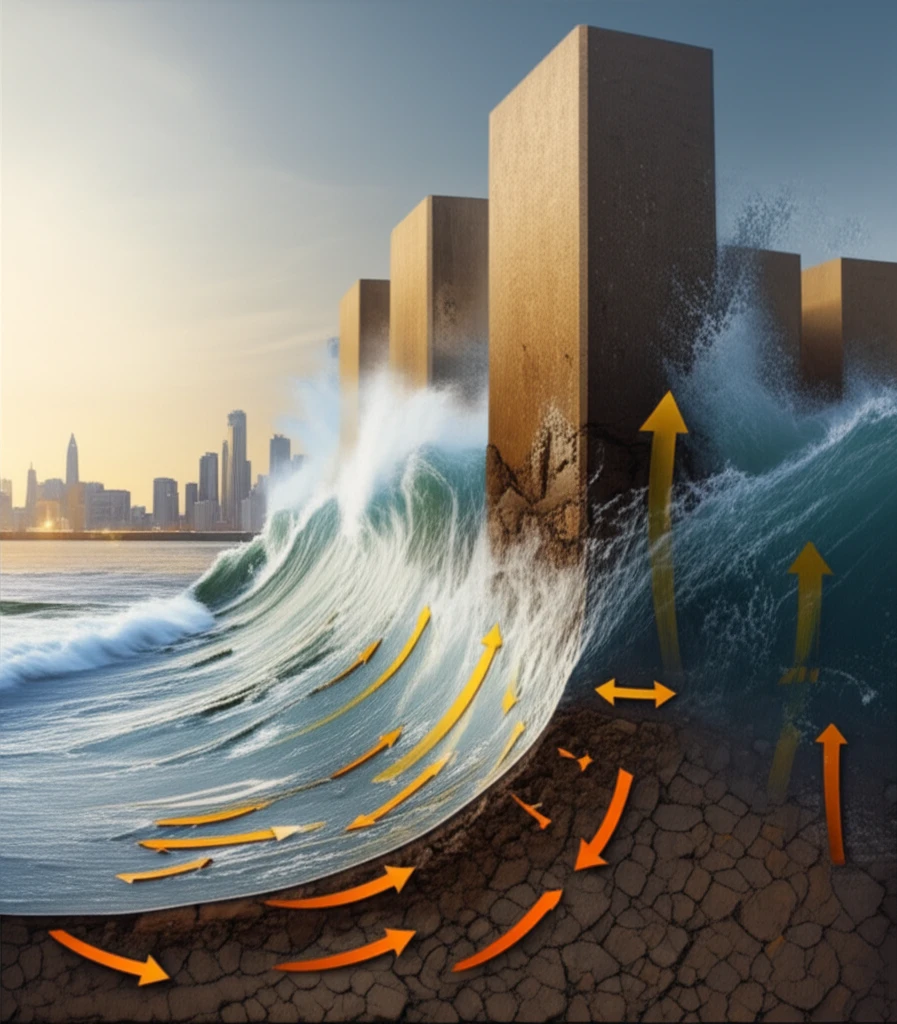
Soil scour and seepage flow are two interconnected processes that can significantly compromise the integrity of coastal defenses. Soil scour refers to the erosion of soil particles around the base of a structure, often caused by currents, waves, or overflowing water. This erosion weakens the foundation, making the structure more vulnerable to collapse.
- Water Level Differences: Fluctuations in water levels create pressure gradients that drive seepage flow.
- Soil Erosion: The constant movement of water can dislodge soil particles, leading to scour.
- Piping: Seepage can create underground channels that weaken the soil structure.
The Future of Coastal Defense: Innovation and Adaptation
The development and refinement of simulation tools like the stabilized ISPH method offer a promising path forward in the fight against coastal erosion. By providing a more comprehensive understanding of the complex interactions between soil, water, and coastal structures, these tools empower engineers to design more resilient defenses and protect vulnerable communities. As climate change continues to exacerbate the challenges facing our coastlines, innovation and adaptation will be essential to safeguarding our future.