
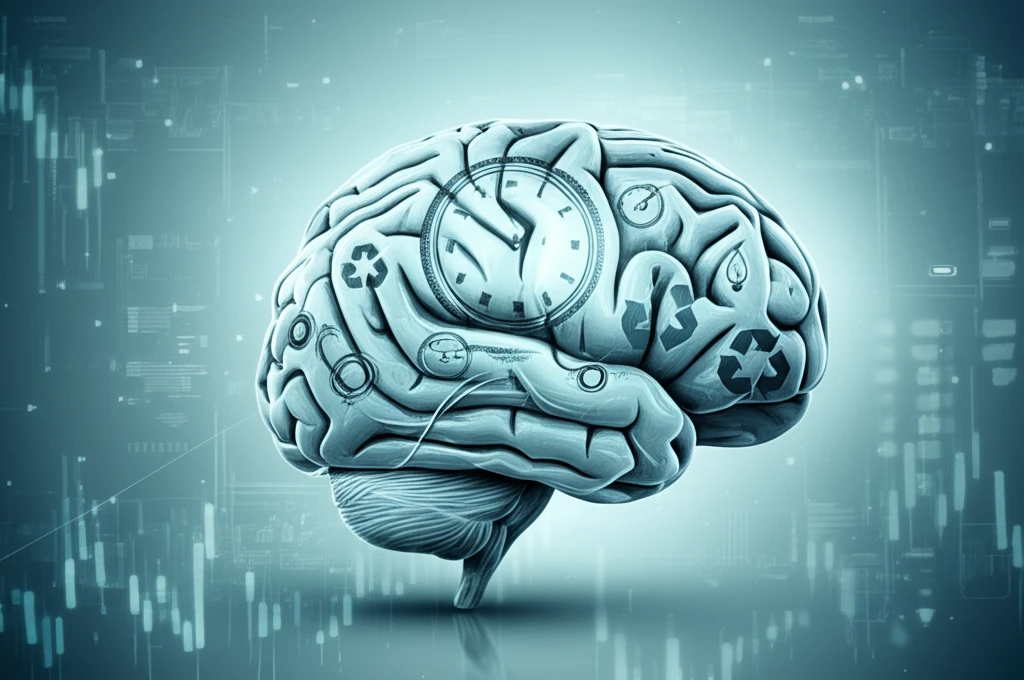
Can We Fight Brain Damage with Our Body's Own Recycling System?

"New Research Uncovers the Link Between Circadian Rhythms, Autophagy, and Stroke Vulnerability"
Our bodies are remarkably synchronized machines. Many of our functions ebb and flow throughout the day, influenced by our internal clocks, known as circadian rhythms. These rhythms govern everything from sleep cycles to hormone release, and even our susceptibility to illness.
Intriguingly, research is revealing that the time of day when certain health events occur can significantly impact their severity. For instance, asthma attacks and strokes are more frequent in the morning, while nighttime ischemic injuries may be less severe. This points to the crucial role of our internal clock in influencing our body’s response to disease.
Now, scientists are digging deeper into the cellular mechanisms behind these time-dependent differences. One area of focus is autophagy, the body's vital recycling system that clears out damaged cells and proteins. A recent study sheds light on the fascinating interplay between circadian rhythms, autophagy, and vulnerability to brain damage following a stroke. This research could pave the way for innovative approaches to protect the brain and improve stroke outcomes.
Autophagy Fluctuates with Our Internal Clock
Autophagy—the body's cellular recycling system—doesn't operate at a constant rate throughout the day. Research shows that autophagy flux in the liver correlates with feeding times, reaching its highest levels in the afternoon, decreasing during nighttime fasting, and increasing again in the morning. Studies have also found that autophagic vacuoles peak before feeding begins and reach their lowest point after animals start eating. This rhythmic pattern suggests that the timing of cellular cleanup is closely tied to our daily cycles of eating and fasting.
How Scientists Study the Autophagy-Clock Connection
Researchers have established that autophagy and circadian rhythms are interconnected through shared molecular mechanisms. Studies demonstrate that autophagy exhibits robust circadian rhythms in mouse liver, accompanied by cyclic induction of genes involved in the process. Interestingly, increased autophagic activity in mouse brains has been shown to shorten the circadian rhythm cycle, suggesting autophagy plays an active role in regulating our internal clocks. Understanding these interactions could potentially lead to novel approaches for treating metabolic and neurological diseases.
A Brief History of Autophagy Research
The study of autophagy has evolved significantly since its initial discovery in the 1960s. While researchers have long known that cells possess mechanisms for recycling damaged components, the connection between this process and circadian rhythms is a more recent area of investigation. The field has progressed from basic observations of cellular recycling to understanding the complex molecular clockwork that governs these processes.
Autophagy: Your Brain's Natural Cleaning Crew
Imagine a bustling city that relies on a dedicated cleaning crew to keep everything running smoothly. That’s essentially what autophagy does for your cells. It's a fundamental process where cells break down and recycle damaged components, including proteins and organelles. This process is critical for maintaining cellular health and preventing the buildup of toxic debris.
- Recycling Cellular Waste: Autophagy identifies and breaks down damaged proteins and organelles, preventing toxic buildup.
- Maintaining Cellular Health: By removing cellular debris, autophagy ensures that cells function optimally.
- Responding to Stress: Autophagy ramps up during stressful conditions like nutrient deprivation to provide cells with energy and building blocks.
New Discoveries in Circadian-Autophagy Interactions
Recent research has revealed that clock genes play a crucial role in regulating autophagy and cell survival. Studies show that clock gene regulation promotes the survival of cardiac muscle cells through mechanisms that bi-directionally influence autophagy. Furthermore, the circadian clock protein BMAL1 has been found to broadly influence autophagy processes, providing evidence that circadian clock proteins play a role in neurodegenerative diseases. These findings suggest that targeting the circadian-autophagy axis could offer new therapeutic strategies for conditions ranging from heart disease to neurodegeneration.
The Reverse Direction: Can Autophagy Reset Our Clocks?
While much research focuses on how circadian rhythms control autophagy, some evidence suggests the relationship works in both directions. Autophagy can modulate circadian rhythms by breaking down proteins that regulate the circadian clock. This bidirectional relationship complicates our understanding of the system, as it suggests that cellular recycling processes may actively reshape our internal timing mechanisms rather than simply following them.
Comparing Autophagy Across Different Cell Types
Research indicates that autophagy rhythms may vary across different tissues and cell types. While liver autophagy shows strong circadian patterns tied to feeding cycles, other tissues may follow different temporal programs. This tissue-specific variation suggests that optimizing autophagy for health benefits may require personalized approaches rather than one-size-fits-all recommendations.
Protecting Our Brains: The Future of Autophagy Research
The findings underscore the complex relationship between our internal clocks and the cellular processes that protect our brains. By further unraveling the mechanisms that link circadian rhythms and autophagy, scientists hope to develop targeted therapies that enhance the brain's resilience to stroke and other neurological conditions. Perhaps one day, we can harness the power of our body's own recycling system to safeguard our cognitive health and well-being. The hope is to prevent cell-death and reduce the chance of stroke.
Expert Insights on the Circadian-Autophagy Axis
Researchers emphasize that understanding the mutual regulatory mechanisms between autophagy and circadian rhythms is essential for maintaining cellular equilibrium. Studies demonstrate that autophagy activation can attenuate circadian clock oscillators through the ATG5 pathway, highlighting the complexity of these interactions. Experts suggest that the circadian-autophagy axis represents a promising therapeutic target, with mechanistic insights offering new opportunities for treating age-related and metabolic diseases.
Aging, Clock Genes, and the Future of Autophagy Research
Emerging research highlights the critical crosstalk between clock gene expression and autophagy in the context of aging. Both autophagy and the circadian clock work to counteract tissue degeneration and support longevity in many organisms. However, evidence indicates that aging compromises these protective mechanisms, suggesting that interventions targeting the circadian-autophagy connection could help maintain healthspan and combat age-related decline.
Nutritional Signals and Systemic Balance
The cyclic regulation of autophagy depends heavily on nutritional signals, creating a complex interplay between eating patterns and cellular health. Research shows an association between the cyclic regulation of autophagy and the dependence of autophagic rhythm on nutritional signals. This connection presents both challenges and opportunities, as it suggests that dietary timing could be leveraged to optimize autophagy, though the precise mechanisms underlying this relationship require further investigation.
Applying Circadian Science to Daily Life
Chronobiologist Emily Manoogian has dedicated her career to understanding how timing affects health. Her work demonstrates that aligning daily behaviors—such as eating and sleeping—with our natural circadian rhythms can significantly impact well-being. This practical application of circadian-autophagy research suggests that simple lifestyle adjustments, like timing meals appropriately, could help optimize our body's cellular recycling processes.