
Can This Natural Compound Stop Colon Cancer in Its Tracks? The Alpinumisoflavone Breakthrough

"New research highlights the potential of alpinumisoflavone, a natural compound, in combating colorectal cancer by disrupting DNA repair mechanisms."
Colorectal cancer (CRC) remains a significant global health challenge, accounting for a substantial portion of cancer-related deaths worldwide. While current treatment options like surgery, chemotherapy, and radiotherapy offer some benefits, advanced CRC continues to have a high mortality rate, underscoring the urgent need for new therapeutic approaches.
In the search for innovative cancer treatments, researchers are increasingly turning to natural compounds for their potential therapeutic properties. One such compound, alpinumisoflavone (AIF), derived from the traditional Chinese herb D. eriocarpa, has shown promise in preclinical studies. This article delves into the groundbreaking research exploring AIF's ability to combat colorectal cancer by disrupting a critical DNA repair mechanism.
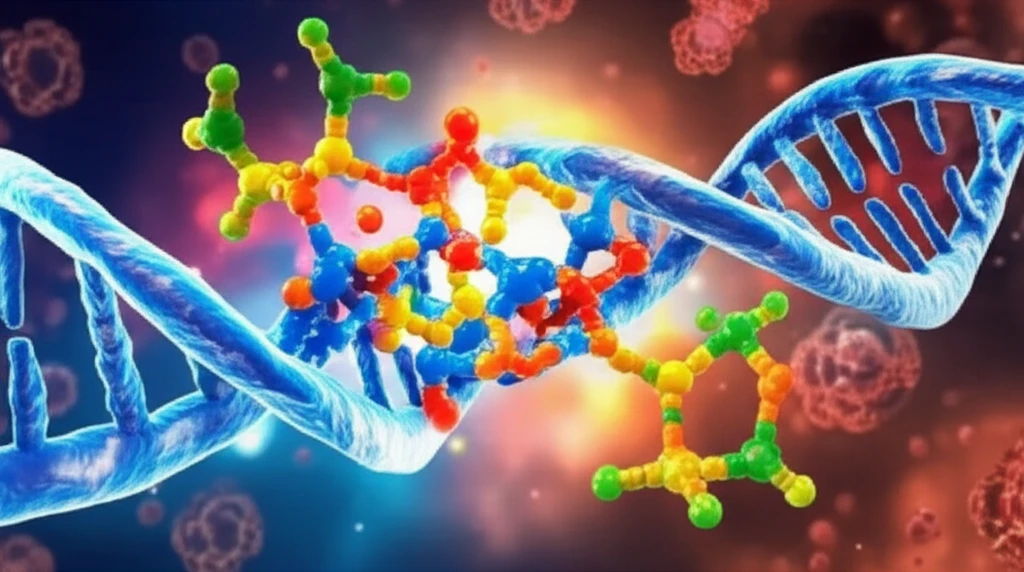
Recent studies have uncovered AIF's ability to induce DNA damage in colorectal cancer cells by targeting RAD51, a protein crucial for DNA repair. By blocking RAD51's function, AIF may prevent cancer cells from repairing damaged DNA, ultimately leading to cell death. This article examines the evidence supporting AIF's potential as a novel therapeutic agent for colorectal cancer.
The Current Colorectal Cancer Burden
The latest U.S. data reported 155,662 new colorectal cancers in 2023 and 54,468 deaths from colorectal cancer in 2024. Federal reporting also tracks incidence, deaths, stage distribution, and five-year relative survival, while the American Cancer Society provides updated estimates of new cases and lifetime risk for men and women. Standard treatment may involve surgery, radiation therapy, chemotherapy, immunotherapy, or targeted therapy, used alone or in combination depending on cancer stage.
Established Treatment, Ongoing Limits
Colorectal cancer care generally relies on established medical treatments selected according to the disease and the patient’s circumstances. These approaches can be effective, but their benefits and limitations vary, and treatment decisions may involve balancing disease control against side effects and other risks. Any proposed natural compound therefore requires careful laboratory, safety, and clinical evaluation before it can be considered an accepted alternative.
From Conventional Care to New Concepts
The development of colorectal cancer treatment has progressed through increasingly specialized medical approaches rather than a single breakthrough. Research has gradually expanded attention from broad cancer treatment toward more precise biological targets and individualized care. Alpinumisoflavone belongs to this exploratory stage and should be viewed as a research subject, not an established milestone in clinical treatment.
Alpinumisoflavone: A Natural Disruptor of DNA Repair in Cancer Cells
The study, conducted using colorectal cancer cell lines (HCT-116 and SW480), revealed that AIF effectively inhibited CRC cell proliferation and promoted apoptosis (programmed cell death) in a dose-dependent manner. This means that higher concentrations of AIF led to a greater reduction in cancer cell growth and increased cell death.
- Inhibition of RAD51: AIF was found to significantly reduce the levels of RAD51 protein in CRC cells.
- Increased DNA Damage: The reduction in RAD51 led to an accumulation of DNA double-strand breaks, as evidenced by an increase in γ-H2AX foci, a marker of DNA damage.
- Enhanced Apoptosis: By preventing DNA repair, AIF triggers apoptosis in cancer cells, effectively eliminating them.
What Current Research Can and Cannot Show
Current research on colorectal cancer continues to examine new treatment strategies and ways to improve existing care. Reviews of emerging therapies can identify promising biological mechanisms, but they do not by themselves establish that a compound is safe or effective for patients. For alpinumisoflavone, claims about its potential remain subject to the evidence available from laboratory studies and the need for further clinical testing.
The Evidence Gaps Behind the Promise
A review of colorectal cancer therapies reports that conventional treatments are often non-specific and can produce numerous secondary complications. A 2025 review likewise emphasizes that deeper understanding of tumor biology and improved therapeutic strategies are still needed across surgery, chemotherapy, radiation therapy, and hormonal therapy. Although one article describes alpinumisoflavone as targeting and disabling RAD51, and a technical support guide addresses resistance research, these materials do not establish clinical benefit or eliminate the challenges of treatment resistance.
Alpinumisoflavone Versus Established Options
Natural compounds are being studied as possible ways to complement or enhance conventional chemotherapy in colorectal cancer. A comparative analysis of alpinumisoflavone acetate and doxorubicin states that in vivo studies and clinical trials are still needed to determine its therapeutic potential and position relative to established chemotherapeutics. Researchers are also comparing alpinumisoflavone with isoflavones including genistein, daidzein, and biochanin A, but such comparisons do not yet demonstrate that it is superior to those compounds or to standard treatment.
A Promising New Avenue for Colorectal Cancer Therapy
These findings suggest that alpinumisoflavone holds significant potential as a novel therapeutic agent for colorectal cancer. By targeting RAD51 and disrupting DNA repair, AIF may offer a new approach to combating this deadly disease.
A Promising Lead, Not a Proven Cure
Recent colorectal cancer reviews describe continued advances in treatment, including developments reported in late-phase clinical trials published between January 2024 and March 2025. A 2019 study specifically examined the cytotoxic activity of alpinumisoflavone from Erythrina poeppigiana against WiDr colon cancer cells, alongside Hela and HepG2 cancer cells. These findings support continued investigation, but cell-based cytotoxicity does not establish that alpinumisoflavone can treat colon cancer in people.
Where Colorectal Cancer Research Is Heading
Future colorectal cancer research is exploring immunotherapy, telomere-targeted therapies, and possible synergies between emerging treatment modalities. Clinical-trial mapping is also examining drug and treatment-strategy trends across different stages of colorectal cancer. The ASCO 2026 research recap highlights targeted therapy, immunotherapy, and circulating tumor DNA advances, suggesting that future care will increasingly depend on molecularly informed treatment decisions.
Precision Medicine and Unequal Complexity
Recent reviews describe colorectal cancer treatment as moving toward dynamic precision oncology. For patients with mismatch repair-deficient or microsatellite instability-high colorectal cancer, immunotherapy has become a cornerstone in first-line metastatic treatment and in some locally advanced perioperative settings. State-of-the-art management also emphasizes personalization, quality of life, circulating tumor DNA, and emerging treatment options, underscoring that effective care depends on tumor biology rather than a single universal therapy.
Treatment in Real-World Patients
Real-world evidence can help guide personalized treatment decisions, but potential confounding makes valid interpretation challenging. A retrospective observational study examined treatment patterns and clinical outcomes among first-line MSI-H/dMMR metastatic colorectal cancer patients. Separate reports describe an 80-year-old patient treated with multi-stage endoscopic minimally invasive therapy and a 62-year-old man who received a highly personalized plan after completing standard options, illustrating how care may be adapted to individual circumstances without proving that one approach works for everyone.
While these results are promising, further research is needed to fully understand AIF's effects and optimize its use in cancer treatment. Clinical trials are necessary to evaluate AIF's safety and efficacy in humans.
The discovery of AIF's anti-cancer properties highlights the importance of exploring natural compounds as a source of new drugs. With continued research, AIF could one day become a valuable tool in the fight against colorectal cancer.