
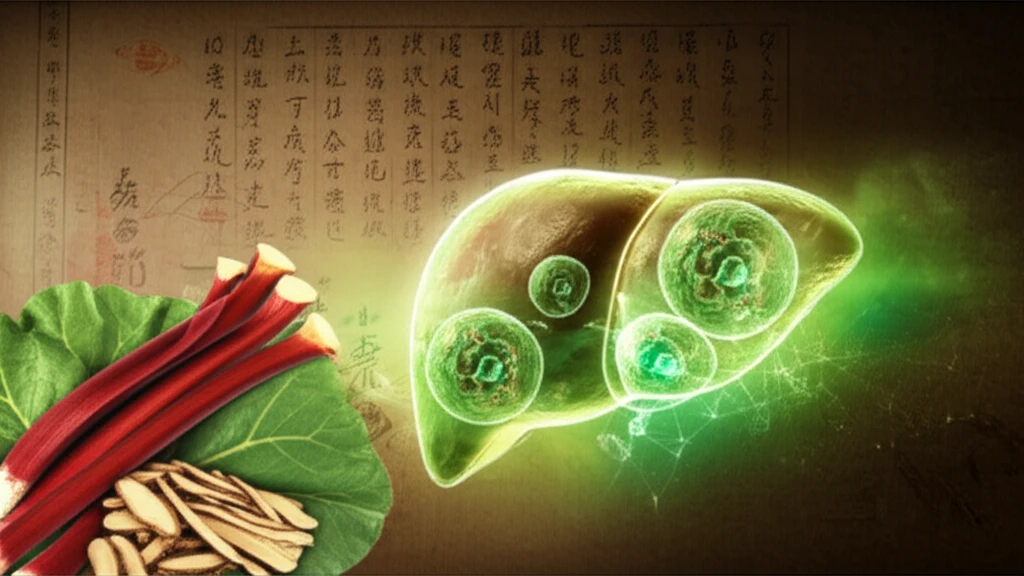
Can Rhubarb Extract Fight Liver Cancer? New Hope for Hepatocellular Carcinoma

"Scientists explore how rhubarb's natural compounds could offer a new strategy in the fight against liver cancer by targeting key signaling pathways."
Hepatocellular carcinoma (HCC), a common and deadly form of liver cancer, presents a significant global health challenge. While advancements in early detection and surgical techniques have improved outcomes, long-term survival rates remain unsatisfactory due to tumor recurrence and metastasis. Sorafenib, a first-line targeted drug, has limitations, underscoring the urgent need for safer, more effective treatments.
Traditional Chinese medicine (TCM) has long been a source of potential therapeutic agents, and Rheum palmatum (RP), commonly known as rhubarb, has garnered attention for its medicinal properties. Historically used to treat gastrointestinal and liver diseases, recent studies suggest that rhubarb extract possesses anti-cancer effects. This article explores the latest research investigating rhubarb's potential to combat HCC by targeting specific molecular pathways.
Researchers are particularly interested in how rhubarb extract impacts the STAT3 signaling pathway, which plays a crucial role in cancer cell growth and survival. By understanding these mechanisms, scientists hope to unlock new strategies for treating HCC and improving patient outcomes.
Liver Cancer: A Growing Global Concern
Liver cancer remains one of the leading causes of cancer-related mortality worldwide, with hepatocellular carcinoma (HCC) representing the most common form. The disease is often diagnosed at advanced stages, when treatment options are limited and prognosis is poor. Rising incidence rates in many regions underscore the urgent need for novel therapeutic approaches.
Conventional Treatments and Their Shortcomings
Current standard treatments for liver cancer include surgical resection, liver transplantation, systemic chemotherapy, and targeted therapies. However, these approaches are frequently limited by tumor recurrence, drug resistance, and significant side effects that diminish patients' quality of life. Many patients with advanced disease are ineligible for surgery, leaving them with few effective options.
Rhubarb's Long History in Traditional Medicine
Rhubarb has been used in traditional Chinese medicine for centuries, with historical applications including treating blood stasis and abnormal masses. Ancient recipes containing rhubarb were employed to address various tumor diseases, including liver cancer, and some of these formulations remain in clinical use today. Despite this extensive history, comprehensive scientific examination of rhubarb's anti-cancer properties and mechanisms is only now gaining momentum. Researchers emphasize the need to validate these traditional uses through modern pharmacological studies.
How Does Rhubarb Extract Target Liver Cancer?
The study, recently published in the Journal of Ethnopharmacology, investigated the effects of Rheum palmatum extract on HCC cells. Researchers found that RP extract significantly reduced the viability, migration, and invasion of HCC cells in vitro. This suggests that rhubarb may contain compounds that directly inhibit the growth and spread of liver cancer cells.
- Reduced Cell Viability: RP extract decreased the survival of HCC cells in a dose- and time-dependent manner.
- Inhibited Migration and Invasion: The extract hindered the ability of HCC cells to migrate and invade surrounding tissues.
- Suppressed STAT3 Phosphorylation: RP extract reduced the activation of STAT3 and its upstream kinases, JAK2 and Src.
- Downregulated STAT3 Target Genes: The extract decreased the expression of genes regulated by STAT3, including those involved in cell survival, proliferation, and angiogenesis.
- Reduced Tumor Growth In Vivo: RP extract suppressed the growth of HCC tumors in a mouse model.
New Findings on Rhubarb Extracts Against Liver Cancer
Recent animal studies have investigated the effects of various rhubarb extracts on liver cancer using diethylnitrosamine-induced rat models. Researchers tested rhubarb granules along with aqueous, ethyl acetate, and n-butanol extracts, administered over four weeks beginning in the eleventh week of tumor induction. Studies suggest that rhubarb anthraquinones may serve as potential anti-liver cancer agents, though researchers acknowledge significant limitations remain in understanding the full therapeutic potential and optimal dosing strategies.
Hepatotoxicity Concerns and the Toxicity-Efficacy Balance
While rhubarb shows promise as an anti-cancer agent, research has also documented hepatotoxicity associated with its use. Scientists note that rhubarb's pharmacological effects present a dual nature—capable of both protecting and damaging the liver depending on dosage and preparation. The evaluation of hepatotoxicity is considered particularly critical given rhubarb's continued clinical use for liver disease. Current research emphasizes that finding the appropriate balance between therapeutic efficacy and toxic effects remains a significant challenge that must be addressed before broader clinical application.
Rhubarb Versus Existing Cancer Therapies
Direct head-to-head comparisons between rhubarb extracts and conventional liver cancer treatments remain limited in the scientific literature. Early-stage research suggests natural compounds like rhubarb may offer advantages in terms of accessibility and potentially fewer side effects compared to some synthetic chemotherapeutics. However, these potential benefits must be weighed against the hepatotoxicity concerns and the need for standardized dosing. Rigorous comparative clinical trials are still needed to establish rhubarb's relative effectiveness against established treatment protocols.
A New Avenue for Liver Cancer Treatment?
The study provides compelling evidence that rhubarb extract may offer a new approach to treating hepatocellular carcinoma by targeting the STAT3 signaling pathway. While further research is needed to fully understand the mechanisms and optimize its use, rhubarb extract holds promise as a potential therapeutic agent for liver cancer.
Expert Perspectives on Rhubarb's Therapeutic Promise
Researchers studying rhubarb's anti-cancer properties generally agree that the compound holds genuine promise but requires substantially more investigation. The scientific community recognizes the gap between traditional use and modern evidence-based medicine, with experts calling for more rigorous preclinical and clinical studies. While the pharmacological data is encouraging, experts caution that traditional use alone does not constitute sufficient evidence for clinical adoption. Continued interdisciplinary collaboration between traditional medicine practitioners and modern pharmacologists is essential.
Addressing Individual Differences in Rhubarb's Effects
Future research on rhubarb's hepatotoxicity should account for individual variability, including factors such as gender, age, and genetic background. Current studies have not fully explored how specific physiological and pathological conditions influence whether rhubarb exerts hepatotoxic or hepatoprotective effects. Understanding these individual differences will be crucial for developing personalized treatment approaches and determining which patients might safely benefit from rhubarb-based therapies.
Rhubarb Extract as a Complementary Cancer Therapy
Research into rhubarb extract for liver cancer treatment represents part of a broader movement exploring natural compounds as potential cancer therapies. Recent studies highlight how rhubarb-derived substances like Rheum palmatum may target specific molecular pathways, including STAT3 signaling, to inhibit cancer cell growth and metastasis. This approach to cancer treatment from natural sources faces systemic challenges including standardization of extracts, regulatory approval pathways, and integration with existing treatment protocols.
Patient Hope and the Path Forward
For patients diagnosed with advanced liver cancer, emerging research on natural compounds like rhubarb extract offers a measure of hope amid limited treatment options. The journey from laboratory findings to clinically available therapies requires extensive testing and regulatory review that can span years or decades. Patient advocacy and increased research funding remain important factors in advancing promising natural cancer treatments toward mainstream medical acceptance.