
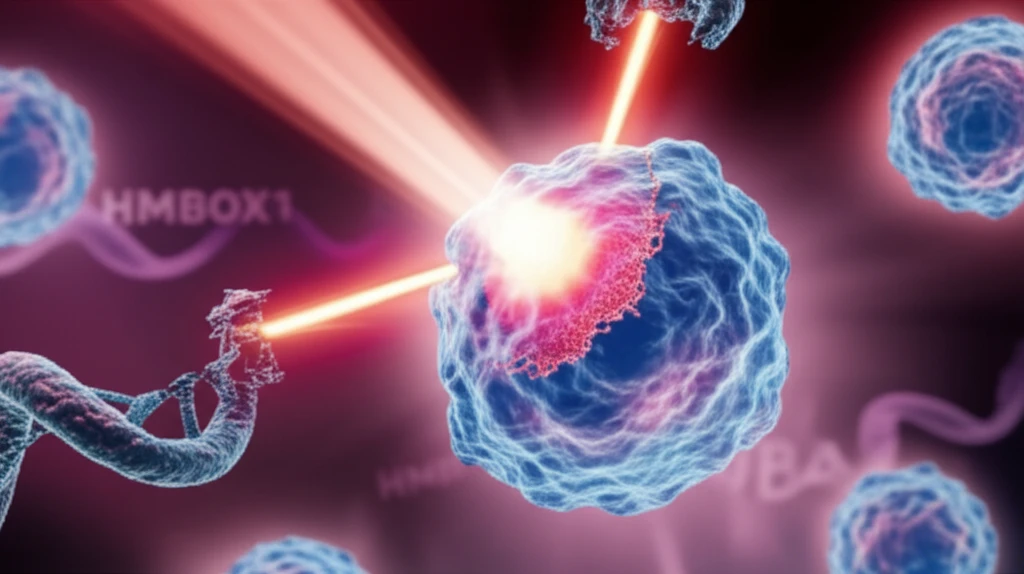
Can Targeting This Gene Improve Cervical Cancer Treatment?

"New research explores how HMBOX1 affects radiosensitivity in cervical cancer cells, offering potential for improved radiotherapy outcomes."
Cervical cancer remains a significant health challenge for women worldwide, being the second most common cancer diagnosed in women in developing countries. Radiotherapy, a cornerstone of cervical cancer treatment, isn't always successful, with recurrence rates highlighting the need for strategies to boost its effectiveness.
Researchers are constantly seeking new ways to improve cancer treatment by identifying factors that influence how cancer cells respond to radiation. One promising area of investigation focuses on genes that control telomeres, the protective caps on the ends of our chromosomes. Telomere length has been linked to radiosensitivity – how susceptible cancer cells are to radiation damage.
A recent study has shed light on the role of a gene called HMBOX1 (homeobox containing 1) in cervical cancer. This gene is known to affect telomere length, and the researchers aimed to understand if manipulating HMBOX1 could make cervical cancer cells more sensitive to radiation. This article breaks down their findings, exploring the potential implications for future cancer therapies.
HMBOX1: A Key to Radiosensitivity?
The study focused on how reducing HMBOX1 levels in cervical cancer cells impacts their sensitivity to radiation. Using lentivirus-based shRNAs, the research team created cell lines where HMBOX1 production was significantly decreased. These modified cells, along with control cells, were then exposed to radiation to observe the effects.
- Increased Radiosensitivity: Cells with less HMBOX1 were more susceptible to radiation, meaning lower doses were needed to achieve the same cell-killing effect.
- Telomere Shortening: HMBOX1 reduction led to shorter telomeres in the cancer cells.
- Increased Apoptosis: The rate of programmed cell death (apoptosis) increased in cells with less HMBOX1, especially after radiation exposure.
- Impaired DNA Repair: The ability of cancer cells to repair radiation-induced DNA damage was weakened when HMBOX1 was reduced. This involved decreased expression of key DNA repair proteins like ATM, ATR, and BRCA1.
The Future of Cervical Cancer Radiotherapy
This research offers a promising new avenue for improving cervical cancer treatment. By targeting HMBOX1, it may be possible to enhance the effectiveness of radiotherapy and reduce the risk of recurrence.
However, it's important to remember that this study was conducted on cell lines in a laboratory setting. Further research is needed to confirm these findings in animal models and, eventually, in human clinical trials.
If future studies validate these results, HMBOX1 could become a valuable target for developing new drugs or treatment strategies that make cervical cancer cells more vulnerable to radiation, ultimately leading to better outcomes for patients.