
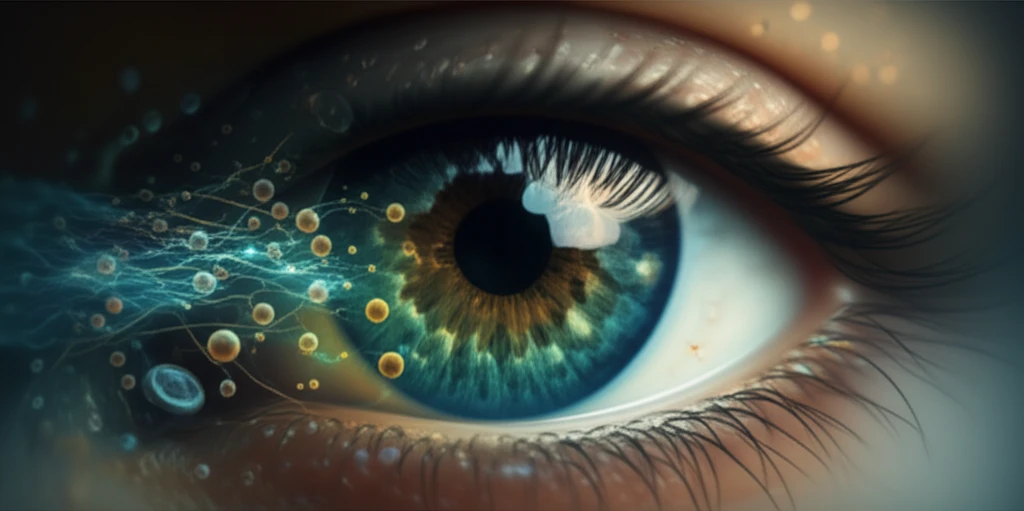
Restoring sight with stem cells: An artistic representation of stem cells repairing a damaged retina.

Can Stem Cells Unlock a Cure for Retinitis Pigmentosa? A New Hope for Restoring Sight

"Patient-specific iPSC-derived photoreceptor precursor cells show promise in investigating and potentially treating retinitis pigmentosa, offering hope for personalized regenerative medicine."


Retinitis pigmentosa (RP) is an inherited eye disease that causes a gradual decline in vision due to the degeneration of light-sensitive cells in the retina. Usher syndrome, a specific type of RP, also involves hearing loss, creating unique challenges and opportunities for treatment.

Current approaches like gene therapy aim to replace faulty genes in photoreceptor cells, but challenges remain, especially with large genes like USH2A, which is commonly mutated in Usher syndrome and RP. Identifying disease-causing mutations and understanding their effects is crucial for developing effective treatments.

Now, a new study offers a promising path forward: using patient-derived induced pluripotent stem cells (iPSCs) to model and potentially treat RP. This approach allows researchers to investigate the disease at a cellular level and develop personalized therapies, bringing hope for restoring sight to those affected by RP.

Turning Skin Cells into Retinal Cells: A Personalized Approach

Restoring sight with stem cells: An artistic representation of stem cells repairing a damaged retina.

Researchers took skin cells from a patient with RP caused by mutations in the USH2A gene. These skin cells were then reprogrammed into iPSCs, which have the remarkable ability to transform into any cell type in the body. The iPSCs were then carefully guided to develop into photoreceptor precursor cells, the cells that eventually become light-detecting cells in the retina.

What's so significant about this? Using patient-specific cells allows scientists to study the precise genetic mutations causing the individual's RP. It also opens the door for creating therapies tailored to their unique genetic makeup.

  • Identifying the Culprit Genes: The team combined next-generation sequencing with iPSC technology to pinpoint the disease-causing USH2A mutations in the patient.
  • Modeling the Disease: By analyzing the photoreceptor precursor cells derived from the patient's iPSCs, researchers could observe how the USH2A mutations disrupt normal cell function.
  • Uncovering the Mechanism: The study revealed that one mutation caused abnormal splicing of the USH2A gene, while the other led to protein misfolding and cellular stress.
The researchers then transplanted these photoreceptor precursor cells into mice with a retinal degeneration condition. The exciting result? The transplanted cells integrated into the mouse retina and developed into recognizable photoreceptor cells, suggesting that this approach could potentially replace damaged cells in humans.

A Future of Personalized Sight Restoration?

This research marks a significant step towards personalized medicine for RP. By creating stem cells from a patient's own skin cells, scientists can now study the disease mechanisms and potentially develop targeted therapies.

While challenges remain – like improving cell integration, demonstrating long-term effectiveness, and ensuring safety – this study offers a new avenue for treating RP and other degenerative retinal diseases. It also highlights the potential for stem cell-based therapies to address previously untreatable conditions.

The combination of advanced sequencing, iPSC technology, and transplantation techniques provides a powerful platform for understanding and combating retinal degeneration, bringing us closer to a future where vision loss can be reversed.

About this Article -

This article was crafted using a human-AI hybrid and collaborative approach. AI assisted our team with initial drafting, research insights, identifying key questions, and image generation. Our human editors guided topic selection, defined the angle, structured the content, ensured factual accuracy and relevance, refined the tone, and conducted thorough editing to deliver helpful, high-quality information.See our About page for more information.

This article is based on research published under:

DOI-LINK: 10.7554/elife.00824, Alternate LINK

Title: Patient-Specific Ipsc-Derived Photoreceptor Precursor Cells As A Means To Investigate Retinitis Pigmentosa

Subject: General Immunology and Microbiology

Journal: eLife

Publisher: eLife Sciences Publications, Ltd

Authors: Budd A Tucker, Robert F Mullins, Luan M Streb, Kristin Anfinson, Mari E Eyestone, Emily Kaalberg, Megan J Riker, Arlene V Drack, Terry A Braun, Edwin M Stone

Published: 2013-08-27

Everything You Need To Know

1

What is Retinitis pigmentosa (RP), and what are its implications?

Retinitis pigmentosa (RP) is a genetic eye disease that gradually causes vision loss due to the degeneration of photoreceptor cells in the retina. Usher syndrome, a specific type of RP, presents the additional challenge of hearing loss. These conditions result from mutations that impair the light-sensitive cells' function, leading to impaired vision. This understanding is crucial for developing effective treatments.

2

Why are induced pluripotent stem cells (iPSCs) important in the context of this research?

Induced pluripotent stem cells (iPSCs) are significant because they allow researchers to study and potentially treat RP at a cellular level. By reprogramming patient-derived skin cells into iPSCs, scientists can then guide these iPSCs to become photoreceptor precursor cells. This personalized approach enables the study of a patient's specific genetic mutations (like those in USH2A), facilitating the development of tailored therapies. The ability to create any cell type from iPSCs also opens doors to regenerative medicine strategies, like replacing damaged cells in the retina.

3

Why is the USH2A gene relevant to this research?

The USH2A gene is important because mutations in it are a common cause of both Retinitis pigmentosa (RP) and Usher syndrome. Research has shown that certain mutations in USH2A can cause abnormal splicing of the gene or lead to protein misfolding, resulting in cell dysfunction and the progression of RP. Understanding the specific effects of these mutations is vital for designing effective gene therapies or other targeted treatments for these conditions.

4

What is the significance of patient-specific iPSC-derived photoreceptor precursor cells?

Patient-specific iPSC-derived photoreceptor precursor cells are vital because they allow for personalized medicine approaches. Using cells created from a patient's own skin cells allows for the study of the specific genetic mutations causing the disease. This also opens the door for creating therapies tailored to their unique genetic makeup. These cells, guided to become light-detecting cells in the retina, can be used to model the disease, understand its mechanisms, and potentially develop treatments that address the individual's specific genetic defect, offering the promise of sight restoration.

5

What does the transplantation of photoreceptor precursor cells into mice suggest for future treatments?

The research on transplanting photoreceptor precursor cells into mice is significant as it suggests the potential for treating Retinitis pigmentosa (RP) in humans. When transplanted into mice with retinal degeneration, the cells integrated and developed into photoreceptor cells. This shows that this approach could potentially replace damaged photoreceptor cells in humans. This is a key step towards personalized medicine for RP, offering a pathway to develop targeted therapies and potentially restore sight to those affected by RP.

Newsletter Subscribe

Subscribe to get the latest articles and insights directly in your inbox.