
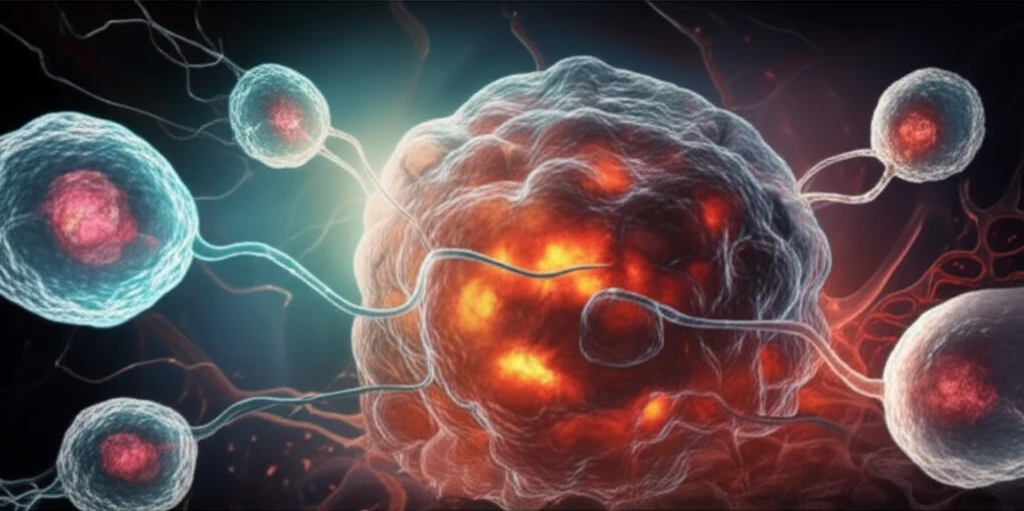
Can Stem Cells Conquer Cancer? Unpacking the Promise and Pitfalls of Cytotherapy

"A deep dive into how mesenchymal stem cells (MSCs) are being explored as a revolutionary approach to cancer treatment, revealing both exciting possibilities and crucial limitations."
For decades, the fight against cancer has primarily focused on targeting the genetic mutations within cancer cells themselves. However, a groundbreaking shift has occurred, recognizing the crucial role of the tumor microenvironment – the complex ecosystem surrounding the tumor – in its development and spread. This realization has opened doors to innovative strategies, with mesenchymal stem cells (MSCs) taking center stage.
MSCs, with their unique ability to home in on tumor sites and interact with the local environment, have become prime candidates for experimental cancer cytotherapy. Researchers are exploring how both naïve (unmodified) and genetically modified MSCs can be used to target and disrupt the tumor microenvironment, potentially revolutionizing cancer treatment.
This article unpacks the current state of MSC-based cancer cytotherapy, examining the existing research, dissecting the complexities, and highlighting the challenges that need to be addressed to pave the way for effective clinical trials.
MSC's Double-Edged Sword: Promoting or Suppressing Cancer?
The use of MSCs in cancer treatment is not without its controversies. Studies have revealed conflicting results, with MSCs sometimes appearing to promote tumor growth and metastasis, while in other instances, they demonstrate potent anti-cancer activity. This duality depends heavily on several factors:
- MSC Origin: The source of the MSCs (bone marrow, adipose tissue, umbilical cord) significantly impacts their behavior.
- Tumor Type: Certain MSCs may be more effective against specific cancers than others.
- Experimental Conditions: Variables such as cell dosage, administration route, and timing all play a crucial role in shaping the outcome.
The Future of MSCs in Cancer Treatment
Despite the challenges, MSC-based cancer cytotherapy holds immense promise. By addressing the inconsistencies, optimizing experimental parameters, and focusing on the most effective MSC types, researchers can pave the way for more consistent and successful clinical trials. This innovative approach has the potential to revolutionize cancer treatment by not only targeting cancer cells but also disrupting the environment that fuels their growth and spread.