
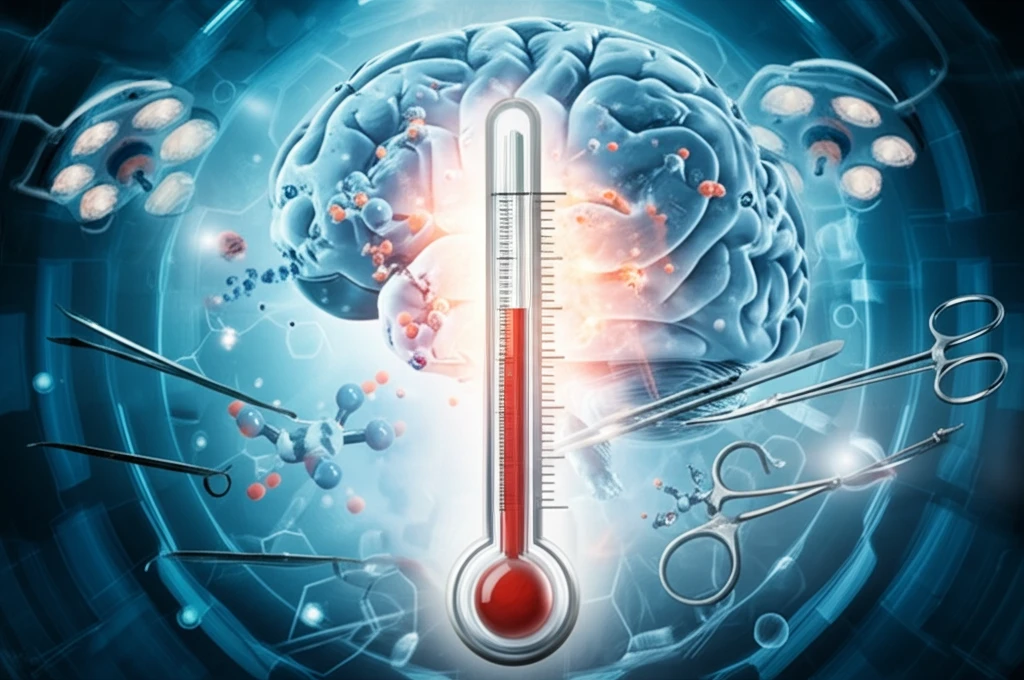
Can Serotonin Hold the Key to Preventing Hypothermia During Anesthesia?

"New research explores how serotonin receptors could help maintain body temperature during surgery, potentially reducing risks and improving patient outcomes."
Anesthesia is a critical part of many medical procedures, but it comes with risks. One common side effect is anesthesia-induced hypothermia (AIH), where a patient's body temperature drops dangerously low. This can lead to increased mortality, weakened immune responses, heart problems, and a higher chance of surgical wound infections. While techniques like warming fluids and forced-air heating systems exist, they aren't always effective and can even cause burns or other adverse effects.
A new approach focuses on how to help the body regulate its own temperature during anesthesia. Researchers have been looking at serotonin, a neurotransmitter known for its role in mood and well-being, and its potential to prevent AIH. Specifically, they've investigated whether stimulating certain serotonin receptors can help maintain a stable body temperature.
A recent study published in the European Journal of Pharmacology explores the use of a specific serotonin receptor agonist, WAY-163909, in preventing ketamine-induced hypothermia in mice. The findings suggest that targeting serotonin receptors could be a promising way to minimize the risks associated with AIH.
Serotonin's Role in Body Temperature Regulation: How Does It Work?
Serotonin (5-hydroxytryptamine, or 5-HT) is a neurotransmitter that plays a crucial role in many bodily functions, including mood regulation, sleep, and appetite. It also influences body temperature through its interaction with various receptors in the brain and peripheral nervous system.
- 5-HT2A Receptors: Linked to vasoconstriction, which helps conserve heat.
- 5-HT2C Receptors: Abundantly expressed in the hypothalamus and can increase body temperature and metabolic activity.
The Future of AIH Prevention: Serotonin-Based Therapies?
This research highlights the potential of targeting serotonin receptors to prevent anesthesia-induced hypothermia. While the study focused on ketamine-induced hypothermia in mice, the findings suggest a broader application for managing AIH during various surgical procedures. Further research is needed to explore the long-term effects, optimal dosages, and potential interactions with other anesthetic agents. However, the possibility of a pharmacological approach to maintaining body temperature during surgery offers a promising avenue for improving patient safety and outcomes.