
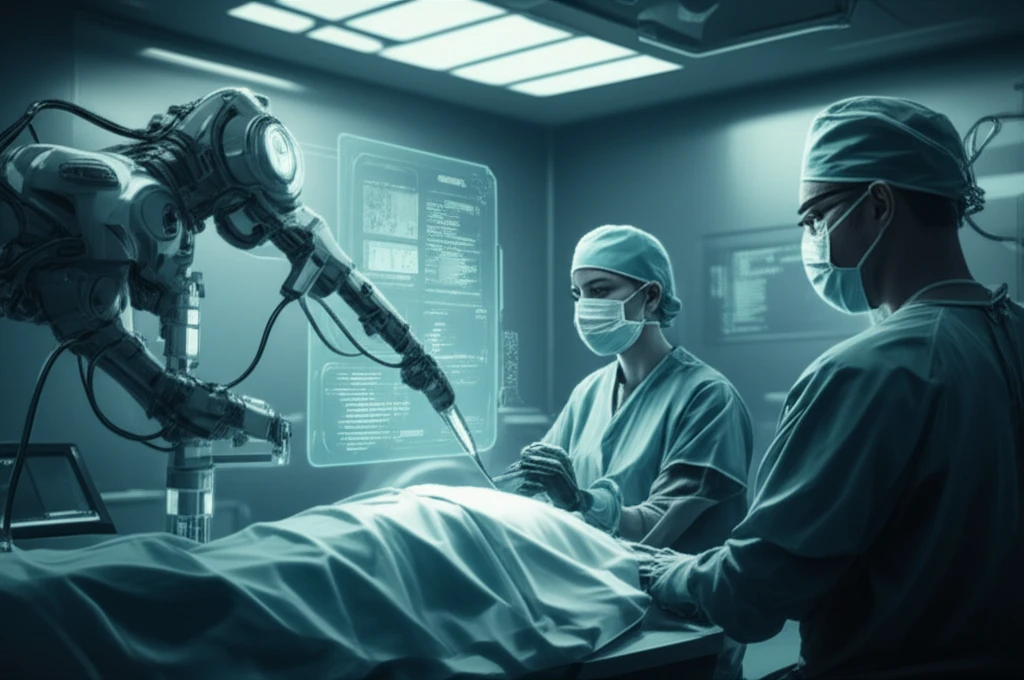
Futuristic operating room with a robot administering anesthesia.

Can Robots Replace Anesthesiologists? The Rise of Automated Sedation

"Explore the groundbreaking potential of automated propofol sedation in delicate procedures and what it means for the future of patient care and medical professionals."


For decades, the idea of machines assisting or even autonomously managing drug delivery in medical settings has transitioned from science fiction to reality. Closed-loop systems, which use algorithms to automatically adjust drug infusion rates based on real-time patient data, are increasingly being explored as a way to enhance the precision and safety of anesthesia and sedation.

A recent study published in "Anesthesia & Analgesia" explores the feasibility of using an automated propofol sedation system during transcatheter aortic valve implantation (TAVI), a minimally invasive procedure performed on patients too frail for open-heart surgery. This research marks a significant step toward integrating robotic systems into complex medical scenarios, potentially revolutionizing how sedation is administered and managed.

The study highlights the development and testing of a novel automated sedation system designed specifically for TAVI patients. This system not only automates drug delivery but also incorporates a decision support system that identifies and addresses respiratory and hemodynamic events. By providing real-time clinical suggestions and treatment options, the system aims to improve patient outcomes and reduce the burden on anesthesiologists.

Automated Sedation: A New Frontier in Patient Care

Futuristic operating room with a robot administering anesthesia.

The study enrolled twenty patients undergoing elective TAVI, with sedation administered via a closed-loop system designed for propofol delivery. The system's performance was evaluated based on its ability to maintain a target Bispectral Index (BIS) of 65, a measure of brain activity used to monitor sedation levels. BIS values were categorized into four levels: excellent, very good, good, and inadequate, based on their deviation from the target value.

To evaluate the system's effectiveness, researchers tracked several key parameters:

  • BIS Values: The primary measure of sedation depth, categorized to assess the quality of control.
  • Varvel Parameters: Used to evaluate the controller's performance, providing insights into the precision and stability of drug delivery.
  • Respiratory and Hemodynamic Events: Critical events such as low oxygen saturation, low respiratory rate, low mean arterial pressure, and low heart rate were documented to assess patient safety.
The results indicated that automated sedation was successful in 19 out of 20 patients undergoing TAVI. Secondary observations revealed excellent to good control of sedation during 69% of the procedure time. While fifteen patients experienced critical respiratory episodes, the system effectively detected and responded to these events, demonstrating its potential to maintain stable sedation levels even in high-risk patients.

The Future of Anesthesia: Balancing Innovation and Expertise

While the study's findings are promising, it's important to recognize that automated sedation systems are not intended to replace anesthesiologists entirely. Instead, these systems can serve as valuable tools to enhance patient safety, improve workflow efficiency, and allow medical professionals to focus on more complex aspects of patient care. As technology continues to advance, the integration of robotic systems into anesthesia and other medical specialties is likely to expand, paving the way for a future where healthcare is more precise, personalized, and accessible.

About this Article -

This article was crafted using a human-AI hybrid and collaborative approach. AI assisted our team with initial drafting, research insights, identifying key questions, and image generation. Our human editors guided topic selection, defined the angle, structured the content, ensured factual accuracy and relevance, refined the tone, and conducted thorough editing to deliver helpful, high-quality information.See our About page for more information.

This article is based on research published under:

DOI-LINK: 10.1213/ane.0000000000001737, Alternate LINK

Title: Feasibility Of Automated Propofol Sedation For Transcatheter Aortic Valve Implantation

Subject: Anesthesiology and Pain Medicine

Journal: Anesthesia & Analgesia

Publisher: Ovid Technologies (Wolters Kluwer Health)

Authors: Cédrick Zaouter, Thomas M. Hemmerling, Stefano Mion, Lionel Leroux, Alain Remy, Alexandre Ouattara

Published: 2017-11-01

Everything You Need To Know

1

What is automated propofol sedation, and how is it being used in medical procedures like TAVI?

Automated propofol sedation involves using closed-loop systems with algorithms to automatically adjust the infusion rate of propofol, a sedative drug, based on real-time patient data. This approach aims to enhance the precision and safety of sedation. In procedures like Transcatheter Aortic Valve Implantation (TAVI), automated systems are being explored to provide consistent and controlled sedation, potentially reducing risks and improving patient outcomes during this minimally invasive procedure.

2

How does the automated sedation system used in the TAVI study work, and what parameters does it monitor to ensure patient safety?

The automated sedation system for TAVI patients delivers propofol and incorporates a decision support system that identifies and addresses respiratory and hemodynamic events. It monitors parameters such as the Bispectral Index (BIS), which measures brain activity to gauge sedation depth, and Varvel parameters, which assess the precision and stability of drug delivery. Additionally, it tracks respiratory events like low oxygen saturation and low respiratory rate, as well as hemodynamic events such as low mean arterial pressure and low heart rate, to ensure patient safety and prompt intervention when necessary.

3

What were the key findings of the study on automated propofol sedation during TAVI procedures, and how successful was the system in maintaining target sedation levels?

The study indicated that automated sedation was successful in 19 out of 20 patients undergoing TAVI. The system demonstrated excellent to good control of sedation during 69% of the procedure time, as measured by the Bispectral Index (BIS). While fifteen patients experienced critical respiratory episodes, the system effectively detected and responded to these events, showcasing its ability to maintain stable sedation levels even in high-risk patients. The Varvel parameters helped in evaluating the controller's performance, ensuring the precision and stability of propofol delivery.

4

What are the potential benefits of using automated sedation systems in medical procedures, and how might these systems impact the role of anesthesiologists?

Automated sedation systems offer several potential benefits, including enhanced patient safety through precise and consistent drug delivery, improved workflow efficiency by automating routine tasks, and allowing anesthesiologists to focus on more complex aspects of patient care. These systems are not intended to replace anesthesiologists entirely but rather to serve as valuable tools that augment their capabilities. The integration of robotic systems may lead to a future where healthcare is more precise, personalized, and accessible, with anesthesiologists playing a crucial role in overseeing and managing these advanced technologies.

5

Beyond TAVI procedures, what other medical specialties or applications might benefit from the use of automated drug delivery and closed-loop systems for sedation and anesthesia?

Beyond TAVI procedures, several other medical specialties and applications could benefit from automated drug delivery and closed-loop systems. Delicate procedures, where precise and stable sedation is critical, such as endoscopic procedures, certain types of surgeries on frail patients, or even in intensive care units for long-term sedation management, could greatly benefit. Automated systems can ensure consistent Bispectral Index (BIS) values are maintained, reducing the risk of over- or under-sedation. The technology's ability to monitor and respond to respiratory and hemodynamic events in real-time makes it valuable in any setting where patient stability is paramount, potentially expanding its use across a wide range of medical fields.

Newsletter Subscribe

Subscribe to get the latest articles and insights directly in your inbox.