
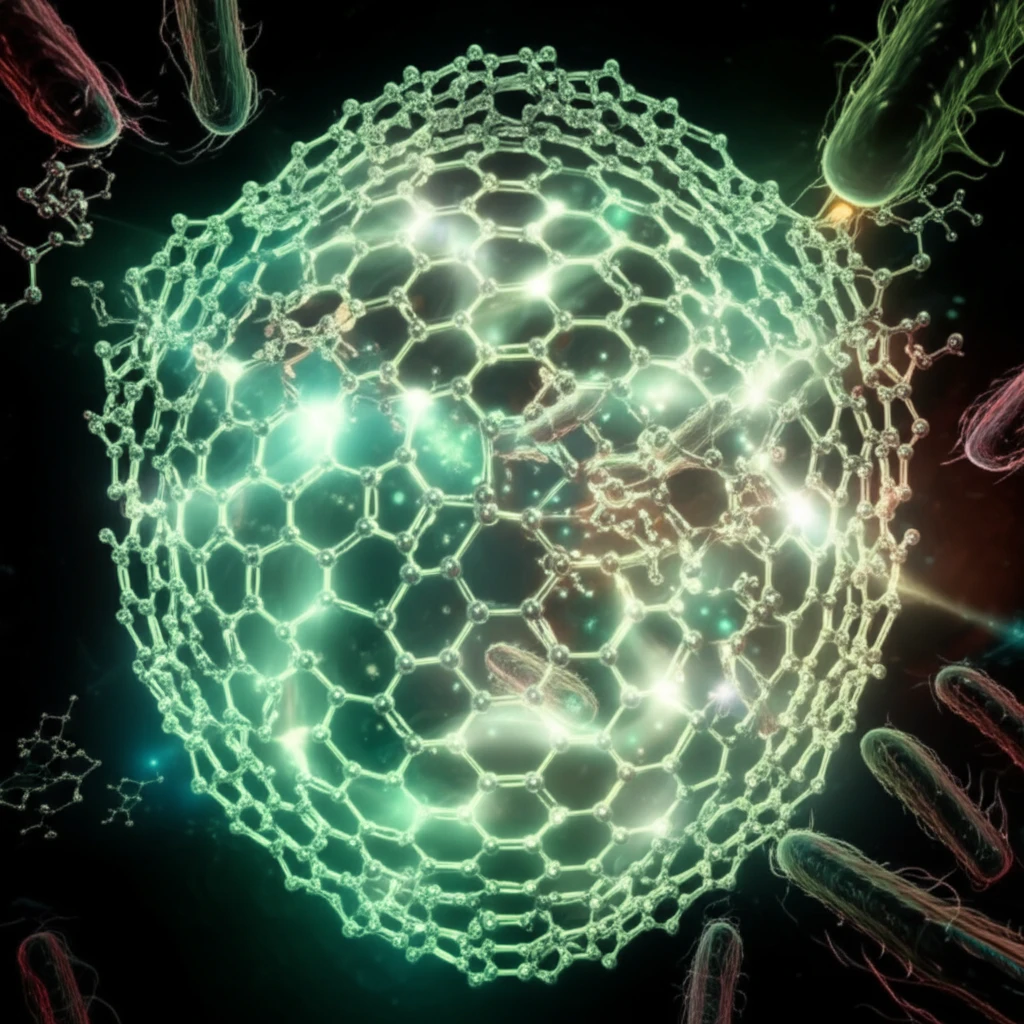
Pyridine molecules forming a protective shield against bacteria, symbolizing antimicrobial resistance.

Can Pyridine Hybrids Fight Superbugs? New Research Offers Hope

"Scientists synthesize novel compounds incorporating pyridine to combat antimicrobial resistance, revealing promising leads for future drugs."


The rise of antimicrobial resistance poses a significant threat to global health. As common infections become increasingly difficult to treat, scientists are exploring innovative approaches to develop new antimicrobial agents. One promising area of research involves the synthesis of novel heterocyclic compounds incorporating pyridine, a versatile building block with diverse biological activities.

Pyridine derivatives have long been recognized for their therapeutic potential, exhibiting antimicrobial, antiviral, and anticancer properties. Their unique molecular structure allows for various modifications, making them ideal candidates for drug development. Researchers aim to harness these properties to create effective solutions against resistant microorganisms by incorporating pyridine into new drug designs.

Recent studies have focused on creating and testing pyridine-based compounds to evaluate their effectiveness against various bacterial strains. These efforts involve synthesizing new molecules and assessing their antimicrobial activity through rigorous laboratory testing, paving the way for potential breakthroughs in combating drug-resistant infections.

The Science Behind Pyridine-Based Antimicrobials

Pyridine molecules forming a protective shield against bacteria, symbolizing antimicrobial resistance.

A recent study detailed the synthesis of novel 4-heteroarylpyridines, a class of compounds not previously reported. This was achieved through regioselective 1,3-dipolar cycloaddition reactions involving a specific enaminone and various nitrilimines. The resulting pyrazole derivatives underwent further chemical transformations, leading to the creation of pyrazolopyridazines and other pyridine analogs.

The process began with synthesizing 3-(dimethylamino)-1-(pyridin-4-yl)prop-2-en-1-one, an enaminone, which then reacted with nitrilimines to form pyrazole derivatives. These pyrazoles were converted into pyrazolopyridazines through hydrazinolysis. The enaminone also reacted with 6-aminothiouracil to yield a thione, which, upon reaction with hydrazonoyl chlorides, produced additional novel compounds. Scientists rigorously confirmed the structures of these new compounds using spectral data and elemental analyses.

  • Regioselective Cycloaddition: Utilized to create 4-heteroarylpyridines.
  • Chemical Transformations: Pyrazole derivatives converted to pyrazolopyridazines.
  • Structural Confirmation: Spectral data and elemental analyses used.
The study also explored the antimicrobial activities of the newly synthesized compounds. Key findings revealed that specific compounds exhibited notable antimicrobial effects compared to a reference drug, Cefepime. Computational studies supported these results, confirming the potential of the synthesized compounds as effective antimicrobial agents. Molecular docking simulations provided insights into how these compounds interact with bacterial enzymes, enhancing their inhibitory action. By understanding these mechanisms, researchers can refine and optimize pyridine-based compounds for better therapeutic outcomes.

Future Implications and the Fight Against Superbugs

This research highlights the potential of pyridine-based compounds in combating antimicrobial resistance. While further studies are needed, the synthesized compounds offer promising leads for developing new antimicrobial drugs. By understanding their mechanisms of action and optimizing their structures, scientists can pave the way for innovative treatments against superbugs, ultimately improving patient outcomes and safeguarding public health.

About this Article -

This article was crafted using a human-AI hybrid and collaborative approach. AI assisted our team with initial drafting, research insights, identifying key questions, and image generation. Our human editors guided topic selection, defined the angle, structured the content, ensured factual accuracy and relevance, refined the tone, and conducted thorough editing to deliver helpful, high-quality information.See our About page for more information.

Everything You Need To Know

1

What are pyridine-based compounds, and why are they significant in fighting superbugs?

Pyridine-based compounds are novel substances that incorporate pyridine, a heterocyclic building block known for its diverse biological activities. Their significance lies in their potential to combat antimicrobial resistance. Researchers are designing these compounds, like the synthesized 4-heteroarylpyridines, to overcome the challenges posed by superbugs, which are microorganisms that have developed resistance to multiple antimicrobial agents. These pyridine derivatives are being explored for their ability to inhibit bacterial growth, offering new avenues for drug development and improved treatment outcomes.

2

How were the new pyridine-based compounds synthesized, and what chemical processes were involved?

The synthesis of novel 4-heteroarylpyridines involved several key chemical processes. It began with a regioselective 1,3-dipolar cycloaddition reaction using an enaminone, specifically 3-(dimethylamino)-1-(pyridin-4-yl)prop-2-en-1-one, and various nitrilimines. This reaction created pyrazole derivatives. These pyrazole derivatives then underwent chemical transformations, including hydrazinolysis, to form pyrazolopyridazines and other pyridine analogs. The enaminone was also reacted with 6-aminothiouracil, yielding a thione that further reacted with hydrazonoyl chlorides to produce additional novel compounds. The structures of these new compounds were rigorously confirmed using spectral data and elemental analyses.

3

What evidence supports the effectiveness of these new pyridine compounds against bacteria?

The effectiveness of the new pyridine compounds is supported by several types of evidence. Firstly, specific compounds demonstrated notable antimicrobial effects in laboratory testing compared to a reference drug, Cefepime. Secondly, computational studies validated these findings, confirming the antimicrobial potential of the synthesized compounds. Molecular docking simulations provided insights into how the compounds interact with bacterial enzymes, indicating their mechanism of action and enhancing their inhibitory action. All of these findings suggest that these compounds have the potential to be effective antimicrobial agents.

4

Can you explain the role of 'Regioselective Cycloaddition' and 'Chemical Transformations' in the development of these compounds?

Regioselective Cycloaddition, specifically a 1,3-dipolar cycloaddition, was a crucial step in creating the 4-heteroarylpyridines. This process allowed researchers to control the position where new chemical groups attach to the pyridine ring, leading to specific desired structures. Chemical transformations were essential for modifying the initially formed pyrazole derivatives into pyrazolopyridazines and other pyridine analogs. These transformations involved reactions such as hydrazinolysis, which altered the structure of the compounds and potentially enhanced their antimicrobial properties. These processes are essential for fine-tuning the molecular structure of the pyridine compounds to achieve the desired biological activity and effectiveness against resistant bacteria.

5

What are the future implications of this research, and how might it impact the treatment of drug-resistant infections?

This research highlights the potential of pyridine-based compounds in combating antimicrobial resistance. The synthesized compounds offer promising leads for developing new antimicrobial drugs. By understanding their mechanisms of action and optimizing their structures, scientists can pave the way for innovative treatments against superbugs. The future implications of this research include the potential for new drugs with improved efficacy against drug-resistant infections, ultimately improving patient outcomes and safeguarding public health. Further studies are needed to refine these compounds and bring them to clinical use, marking a significant step forward in fighting the global threat of antimicrobial resistance.

Newsletter Subscribe

Subscribe to get the latest articles and insights directly in your inbox.