
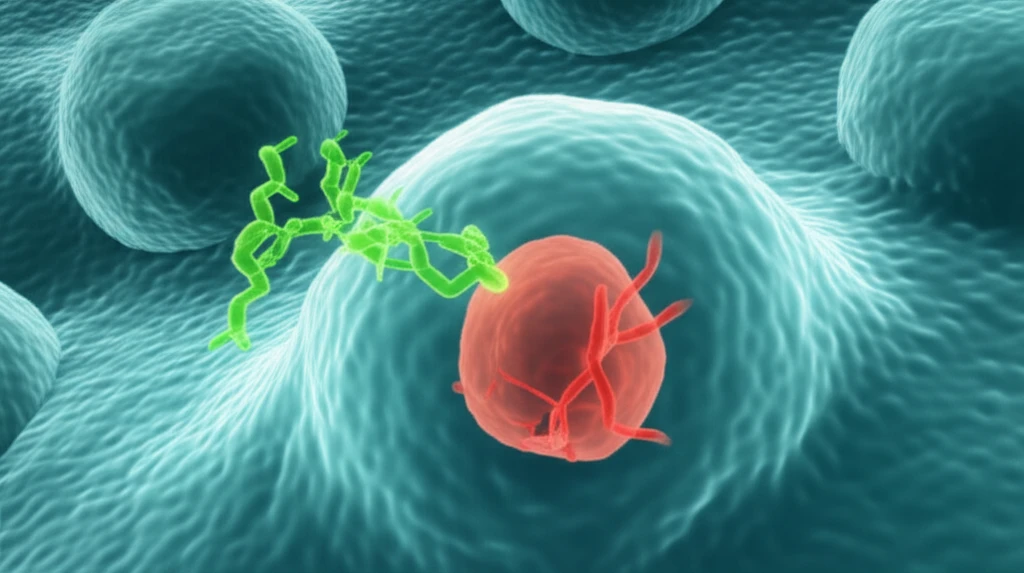
Microscopic view of Polyphyllin molecule disrupting the NF-kB pathway in a macrophage cell.

Can Polyphyllin I, a Natural Compound, Ease Arthritis Symptoms?

"New research suggests a key ingredient in Rhizoma of Paris polyphyllin, could fight inflammation by targeting the NF-κB pathway. Find out how this could change arthritis treatment."


Rheumatoid arthritis (RA) is a chronic autoimmune disease affecting millions worldwide. It's characterized by inflammation of the joints, leading to pain, swelling, and eventual joint damage. Current treatments focus on managing these symptoms, but scientists are constantly searching for more effective and targeted therapies.

One promising area of research involves natural compounds with anti-inflammatory properties. Polyphyllin I (PPI), a key component found in the Rhizoma of Paris polyphyllin plant, has garnered attention for its potential to inhibit tumor cell growth. Now, new studies suggest PPI may also hold the key to easing arthritis symptoms by targeting a critical inflammatory pathway.

This article will explore the latest research on PPI and its effects on arthritis, diving into how it works on a cellular level and what it could mean for future treatments. Whether you’re living with arthritis or simply interested in the latest health breakthroughs, read on to discover the exciting potential of this natural compound.

Unlocking PPI: How It Fights Arthritis at the Source

Microscopic view of Polyphyllin molecule disrupting the NF-kB pathway in a macrophage cell.

The recent study published in Frontiers in Immunology sheds light on how PPI tackles inflammation associated with rheumatoid arthritis. The researchers investigated PPI's effects on macrophages, which are immune cells that play a central role in the inflammation process of RA. The study revealed that PPI effectively interferes with the NF-κB pathway, a critical signaling pathway that regulates the production of pro-inflammatory substances.

To understand PPI's mechanism, researchers conducted experiments both in vitro (in cell cultures) and in vivo (in a collagen-induced arthritis mouse model). Here’s a breakdown of their key findings:

  • Reduced Cytokine Production: PPI lowered the production of inflammatory cytokines (IL-1β, TNF-α, IL-6) in macrophages stimulated by LPS/IFN-γ.
  • Inhibited Phosphorylation: PPI inhibited the phosphorylation of IKKα/β and p65, key proteins involved in the NF-κB pathway.
  • Prevented Nuclear Localization: PPI prevented p65, a subunit of NF-κB, from entering the nucleus, where it triggers inflammation.
  • Reduced Synovial Inflammation: In mice with collagen-induced arthritis, PPI reduced inflammation in the joints.
These results indicate that PPI's anti-inflammatory effects stem from its ability to disrupt the NF-κB pathway in macrophages, ultimately reducing the production of molecules that drive inflammation in the joints. This targeted approach is particularly exciting because it addresses the root cause of inflammation in RA, rather than just masking the symptoms.

The Future of Arthritis Treatment: Is PPI the Answer?

While these findings are promising, it's important to remember that this research is still in its early stages. More studies are needed to fully understand the potential benefits and risks of PPI as a treatment for rheumatoid arthritis. However, the results offer a glimmer of hope for individuals seeking alternative and targeted therapies to manage this debilitating condition. As research continues, PPI could pave the way for new and improved approaches to arthritis treatment, bringing relief and improved quality of life to millions.

About this Article -

This article was crafted using a human-AI hybrid and collaborative approach. AI assisted our team with initial drafting, research insights, identifying key questions, and image generation. Our human editors guided topic selection, defined the angle, structured the content, ensured factual accuracy and relevance, refined the tone, and conducted thorough editing to deliver helpful, high-quality information.See our About page for more information.

Everything You Need To Know

1

What is Polyphyllin I (PPI) and what is its potential role in treating arthritis?

Polyphyllin I (PPI) is a natural compound found in the Rhizoma of Paris polyphyllin plant. Research suggests that PPI could potentially ease arthritis symptoms by reducing inflammation. Specifically, PPI targets the NF-κB pathway, a critical signaling pathway that drives inflammation in rheumatoid arthritis (RA). By interfering with this pathway, PPI may help to reduce joint pain and damage associated with RA, offering a targeted approach to treatment.

2

How does Polyphyllin I (PPI) work at a cellular level to combat arthritis?

PPI works by targeting the NF-κB pathway within macrophages, which are immune cells central to the inflammatory process in rheumatoid arthritis. PPI inhibits the phosphorylation of IKKα/β and p65 proteins, preventing p65 from entering the nucleus. This action reduces the production of inflammatory cytokines such as IL-1β, TNF-α, and IL-6, thereby reducing inflammation in the joints. Studies show that PPI effectively lowers the production of these pro-inflammatory substances, thus addressing the root cause of inflammation.

3

What are the key findings from the recent research on Polyphyllin I (PPI) and its effects on arthritis?

The research reveals that PPI reduces cytokine production (IL-1β, TNF-α, IL-6) in macrophages. It inhibits the phosphorylation of IKKα/β and p65, which are crucial components of the NF-κB pathway. Furthermore, PPI prevents the p65 subunit of NF-κB from entering the nucleus, where it initiates inflammation. In a collagen-induced arthritis mouse model, PPI reduced inflammation in the joints. These findings collectively indicate PPI's ability to disrupt the NF-κB pathway and reduce inflammation.

4

What is the significance of the NF-κB pathway in rheumatoid arthritis, and how does targeting it with Polyphyllin I (PPI) offer a new approach to treatment?

The NF-κB pathway is a critical signaling pathway that regulates the production of pro-inflammatory substances, making it a central player in the inflammatory process of rheumatoid arthritis (RA). By targeting the NF-κB pathway, Polyphyllin I (PPI) aims to address the root cause of inflammation in RA rather than just managing symptoms. This approach is promising because it could potentially halt or slow the progression of the disease by reducing joint inflammation and damage. The ability of PPI to interfere with this pathway offers a targeted therapy that may improve the quality of life for those suffering from RA.

5

What are the next steps and what further research is needed to understand the potential of Polyphyllin I (PPI) as an arthritis treatment?

While the results are encouraging, it is important to remember that research on Polyphyllin I (PPI) is still in its early stages. More studies are needed to fully understand the potential benefits and risks of PPI as a treatment for rheumatoid arthritis. This includes more extensive clinical trials to assess the efficacy and safety of PPI in human subjects. Further research is required to determine the optimal dosage, long-term effects, and potential side effects of PPI. Additionally, studies exploring the bioavailability and mechanisms of action of PPI could contribute to a better understanding of its therapeutic potential.

Newsletter Subscribe

Subscribe to get the latest articles and insights directly in your inbox.