
Can Poly(I:C) Supercharge Cancer Treatment? Unlocking Apoptosis for a Healthier Future

"Explore how Poly(I:C), a unique TLR3 agonist, is being researched to revolutionize cancer therapy by directly inducing cancer cell apoptosis and enhancing immune responses."
In the ever-evolving landscape of cancer therapy, researchers are constantly seeking innovative approaches to combat this complex disease. One promising avenue of exploration involves harnessing the power of the body's own immune system to target and eliminate cancer cells. Immunotherapy, a treatment strategy that leverages the immune system's natural defenses, has emerged as a game-changer in oncology.
Within the realm of immunotherapy, Toll-like receptors (TLRs) have garnered significant attention as key regulators of immune responses. Among the TLR family, TLR3 stands out for its ability to recognize double-stranded RNA (dsRNA), a molecular pattern associated with viral infections and cellular stress. By activating TLR3, scientists aim to mimic the body's response to pathogens and trigger a potent anti-cancer immune response.
This article delves into the exciting research surrounding Poly(I:C), a synthetic analog of dsRNA and a potent TLR3 agonist. We'll explore how Poly(I:C) is being investigated as a potential cancer therapy, focusing on its ability to directly induce apoptosis (programmed cell death) in cancer cells and enhance the overall anti-tumor immune response. This innovative approach offers a beacon of hope for more effective and less toxic cancer treatments.
How Does Poly(I:C) Work? The Science Behind Cancer Cell Apoptosis
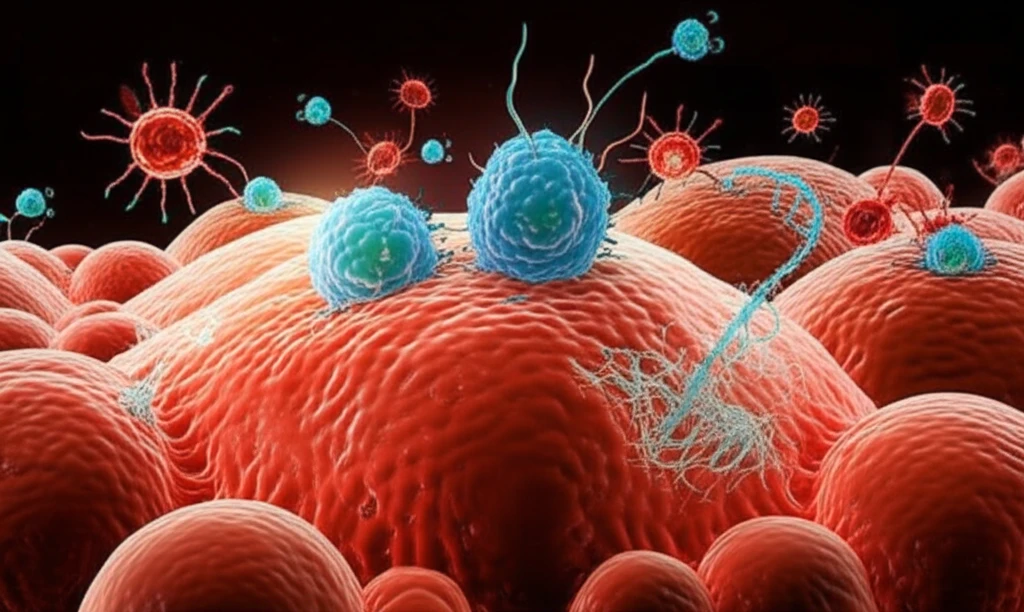
Poly(I:C) works primarily by activating the Toll-like receptor 3 (TLR3), which is expressed on various immune cells and cancer cells. Once activated, TLR3 initiates a cascade of intracellular signaling pathways that ultimately lead to apoptosis, or programmed cell death, in cancer cells. The activation of TLR3 also stimulates the production of interferons and other cytokines, which further enhance the immune response against the tumor. Besides its effect on immune cells, poly(I:C) has been proven to directly induce apoptosis in cancer cells expressing TLR3.
- TRIF Activation: TLR3 recruits the adaptor protein TRIF (TIR-domain-containing adapter-inducing interferon-β), which is essential for downstream signaling.
- IRF3 and NF-κB Activation: TRIF activates transcription factors like IRF3 and NF-κB, which promote the expression of inflammatory cytokines and interferons.
- Caspase Activation: TLR3 activation leads to the activation of caspases, a family of proteases that execute the apoptotic program.
- RIP1 and FADD Interaction: Receptor-Interacting Protein 1 (RIP1) interacts with Fas-Associated Death Domain (FADD), forming a death-inducing signaling complex (DISC).
The Future of Poly(I:C) in Cancer Therapy
Poly(I:C) holds great promise as a cancer therapy. Further research is needed to fully understand the potential of Poly(I:C) and how to maximize its effectiveness. As clinical trials continue and our understanding of TLR3 signaling deepens, Poly(I:C) may become a cornerstone of future cancer treatment strategies, offering new hope for patients worldwide.